
John Kinsella is a poet, an environmentalist, and a political activist who espouses the notion of “polysituatedness.” Wherever we travel, he proposes, we carry with us the places we have been, even places our forebears have been, and even places we have read about or imagined. The local is part of a planetary network, which creates the possibility of, and need for, solidarity across borders. But the local is also always particular and individual and is therefore threatened by the culture- and habitat-destroying forces of economic globalization.
Kinsella, who was born in Perth, comes from a family that emigrated from Ireland to Western Australia during the Great Famine, and he finds connections between the farm country of his youth and the land his family left on the other side of the world. “Down on the West Cork coast,” he remarks, “I feel as at home as I do in the Australian wheatbelt.” The place names he mentions in these poems locate him in the bays and headlands around the ancient town of Schull. At the same time, the migratory shorebirds he describes link those waters to far-distant regions—storm petrels to the tip of South Africa, curlews to the Arctic. The birds are emblems and embodiments of “polysituatedness.”
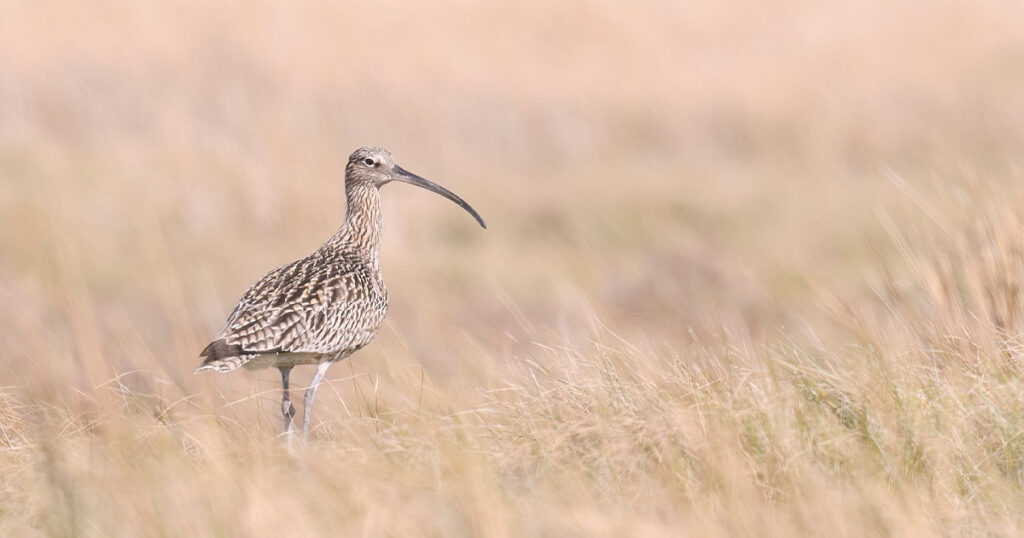
Long-billed curlews, whose population in Ireland all but disappeared over the past 50 years, are on “the red list.” “Curlew Irony in Bantry Harbour” is an elegy for a species on the verge of extinction, migrating into silence. But the poem suggests a kind of hope by linking the bird to a transcendental quest from medieval Irish legend. Every stanza ends by mentioning Brendan the Navigator. “Brendan” might be the name of the captain who has taken Kinsella out from Bantry Harbour to go birdwatching. It is also the name of the Irish saint known as “the Navigator.” Think of Brendan’s voyage to the Isle of the Blessed in search of the Garden of Eden as an archetype of the journey undertaken by generations of the Irish. Like those migrants, the curlew is “ready to follow” the adventurous saint.
“Dead Man’s Fingers (Metamorphosis)” links myth and nature in another way by comparing the head of Medusa, with its swirl of snakes, to the ghostly fingers of a seaweed brought to Ireland during the 19th century by European trade in the Pacific. These hands weirdly blend human and plant forms, linking histories of migration and commerce to the struggle for survival among plant species, “an entangling of stories of loss.”
In “Schull Dream of Parallel Lines with Les Murray,” Kinsella recounts a dream encounter with the celebrated Australian poet, who died in 2019. Working over a draft by Kinsella’s partner Tracy Ryan, the two poets argue about whether the “parallel lines” in front of them are hedgerows or handwriting. But this is a false opposition. Nature and culture are too intertwined to firmly differentiate. The poem ends with an incomplete maxim, “What’s left unfinished in life …” Surely must be finished in death is what is missing. Kinsella doesn’t give us that satisfying promise of conclusion, however. Like the curlew, we don’t know what’s ahead. Meanwhile all we leave behind are hedgerows and handwriting, “our imprints.”