
It was in early October, at the beginning of the school year, and I had just returned from work. My neighbor was in the lane in front of his house, busily sweeping the narrow sidewalk, and I greeted him. He comes every day to open up the house, water the plants, and tend to one thing or another. He takes immaculate care of the old homestead, though no one lives there anymore. He’s all about preserving the past.
He was surprised to see me—wasn’t I home earlier than usual?
No—fewer hours this year, I explained. The school was in trouble.
We stayed there talking in the lane, in no hurry, and he suggested that I could teach from my home. I’d easily find all the students I wanted.
But I love the school, I told him. I didn’t explain that I love it the way you love a scrawny, sway-backed horse in a field—for its past spirit and its stubborn endurance. On a fine fall day, you want to urge such a horse to run. “Oh please, kick up your heels a bit!” There’s still hope for the animal. But on a damp day, when trees drip and the horse stands knee-deep in a swirl of gray mist, you shudder. You remember when it had three times the heft and energy and silently ask, What will become of you?
It’s hard to believe now, but my tired old language school wasn’t always like this. When I started 12 years ago, all four classrooms were continuously occupied with a succession of classes, six to eight students each, and the impression was of a constant tide of pupils coming and going throughout the afternoon—always the same but always changing. I remember opening my door to find the waiting area full of adults, children, and teens. To my left, a student to greet; to my right, a parent to nod at; straight ahead, a pair of children tussling on the edges of their seats; beside them, a couple of teens with their heads together, whispering. It was a happy, chattering collection at all hours of the afternoon, enough to warm any cold heart. Then six p.m. arrived, and the place overflowed. I opened my door to the next class, eight-year-olds already lined up, pushing at the door, and stepped back as they tumbled in, a wave rushing up the beach, foaming and sparkling.
That was the state of affairs for my first five years. Then the pandemic hit, and the school closed for six months. When it reopened in the fall, half the students had decided to sit it out. One of the four teachers also chose not to return, which, with fewer classes to go around, was a good thing for the other three of us.
Even when things were back to normal and the masks muffling speech and the obligatory hand sanitizer and frequent airing of the classrooms were all relegated to the past, the enrollment continued to drop, each year another step backward, adding to the slow downward slide. We waited for the tide to turn. It never did. Now I open my door at six p.m. not to a sea of faces but to six silent teens, sitting with their phones—my six o’clock class. The six o’clock class. The only class I have with more than three students.
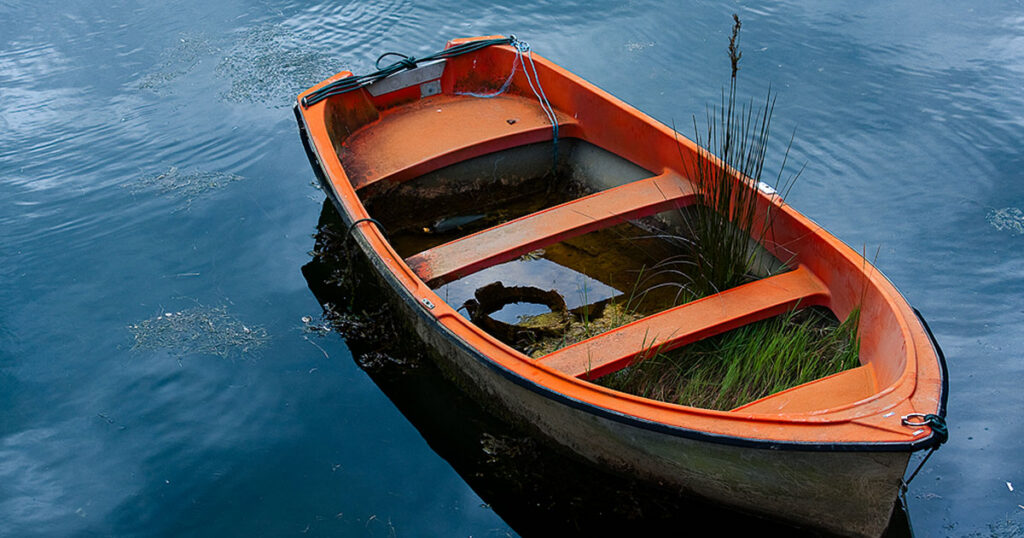
And all due to—what? More after-school English classes at the public schools? Tighter purse strings for families? The opening of a couple of new language schools in the area? Whatever the reason, the school has hit hard times. I’ve got four more years of teaching before I can retire. Will the school last four years? More than a tired workhorse, it seems like a leaky old ship, damaged from the storm.
If I didn’t want to teach privately, my neighbor continued, I could find work at one of the language schools in town, and spare myself the drive to the city. Save on time, gas, and stress.
But I don’t want to. Besides, how could I? Just think of my boss and colleagues. Jump ship and abandon them? No—I owe the academy so much. I can’t just quit. I told my neighbor so.
My neighbor, absolutely certain that I have no obligation of loyalty, contradicted me. If the ship is foundering, if it’s sinking, no duty exists to go down with it. If your survival is at stake—and earning your living is a matter of survival—then jump ship and save yourself. Save yourself, he repeated.
It’s not so easy. Besides, think of my age. It’s not that I’m afraid of change, exactly, but that I’m realistic.
My neighbor shook his head, tut tut.
Did he think I should take a more positive view, be more optimistic? I recalled my friend Mr. Kansas, who, recently widowed, was finding himself struggling in deep waters. Retired, no family, no old friends close by, just a few activities—what can he do to fill the empty hours? He needs a new friend to do things with, but will he go look for one? No, he will not. “Who’d want me?” he says. I echoed it to my neighbor—who’d take a chance on me with younger, fresher teachers available?
Tut-tut, my neighbor answered.
But I can’t jump. I don’t even know how.
Now, at the end of yet another school year, the ship is still afloat. But I know that in life, ships will sink one day. Even if you get off one doomed vessel and onto another, that one, too, is ultimately headed for the bottom, nothing to do about it. The ship I’m on—it’s more than the language academy. It’s my whole world. I am not alone here. Who on the ship will I keep company with as slowly, slowly it grows old and breaks up?
I look around. Already on deck the band is playing. The conductor listens to the final notes. He shakes his head. “Not quite.” The ship tilts.
Some passengers hear the music; some see only the water. Some still hear the music even as they feel the swell of the sea.
And the band? They seem to love playing. I listen. The ship tilts again. No need to panic. Not while the music plays.
“One more run through, and we’ll have it,” says the conductor. He looks off to where the water would pour in. “I think,” he says, “we’ll just have time.”
Will they? I step closer.