
My best friends from childhood are twins, so they always give and receive the happy birthday wish at the same time. It wouldn’t have to be at exactly the same time: One could leave a message on the other’s phone, I suppose. But in their case, I think it must always have been done together, the two united across the wires or through a satellite when not actually spending the day together. Still, someone has to say it first: One must start.
That was true too at birth. Same birthday, but one was born five minutes before the other. One was bathed before the other, walked first, sat on a horse’s back first, married first, had kids first, had a health scare first, retired first. To some of those firsts I know the answer, but not to all.
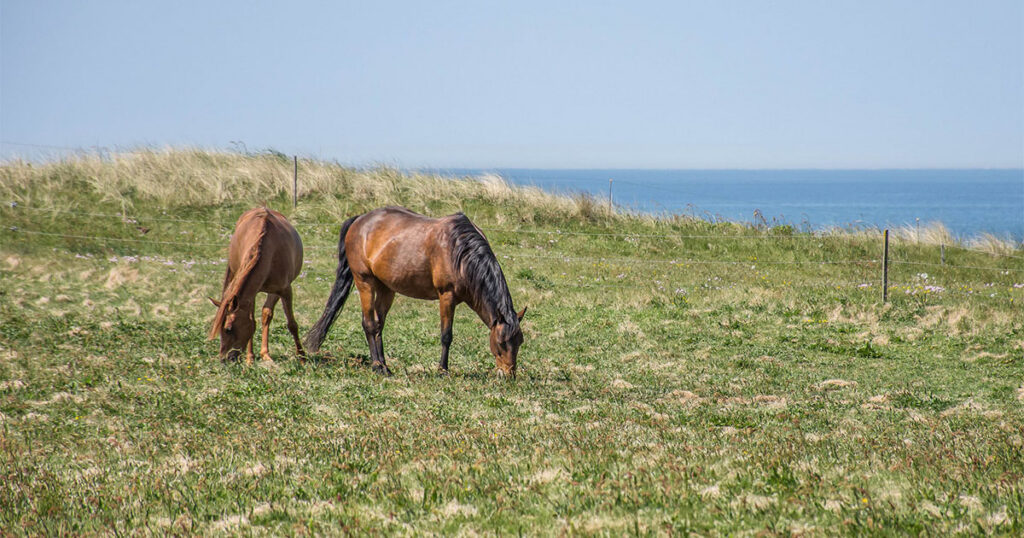
More important than who did it first would be to ask both of these friends what they would put on their list of remembered firsts. The firsts we remember are supposedly the important ones. I might start like this: Your first horses? I remember Ginger and Cinnamon. But there were so many in their lives, and others must have come before those two. Horses were essential—these are girls who rode horses to where the school bus picked them up. Horses, not bikes. On snowy days they didn’t trudge through six fresh inches but trotted. If I were to read about their childhood, I would picture a pair of princesses in long, full skirts, sitting sidesaddle. That’s because many of my favorite books from childhood were stories set in the 19th century, before cars, washing machines, electric lights, and school buses. The children in these books had instead fairy godmothers, white horses, wolves outside the manor walls, secret gardens, and long, long days to fill. Horses to saddle up every morning might fit in very well, though I know that the truth of my friends’ cold mornings was bitter, not sweet.
At least it was at the time, when clothes got dirty and fingers got frostbitten. But yes, sweet to look back on. Getting dressed beside the wood stove, the room lit by a kerosene lamp, the shadows dancing forth from corners as if summoned by the flickering light to show themselves. I did not live this childhood, but I was present some of the time. I bask a little in the warm images from those years, the winter evenings spent tucked into the corner behind the Fisher stove, the round table and the seats around it cut from stumps, the gas lamp mounted in the kitchen, the icebox that really was an icebox, not a fridge, and everything else that still stands whole and strong in memory, after more than half a century. Memory—it is how to hang onto what is gone.
And as time continues and more and more is lost as we keep on—our things, friends, family, and of course even the memories—then what? You house the past. It could be in your heart or perhaps in your bones. “Where is it for you?” I might ask each of these best friends. Is there comfort in knowing that what is gone and what’s forgotten are not lost.