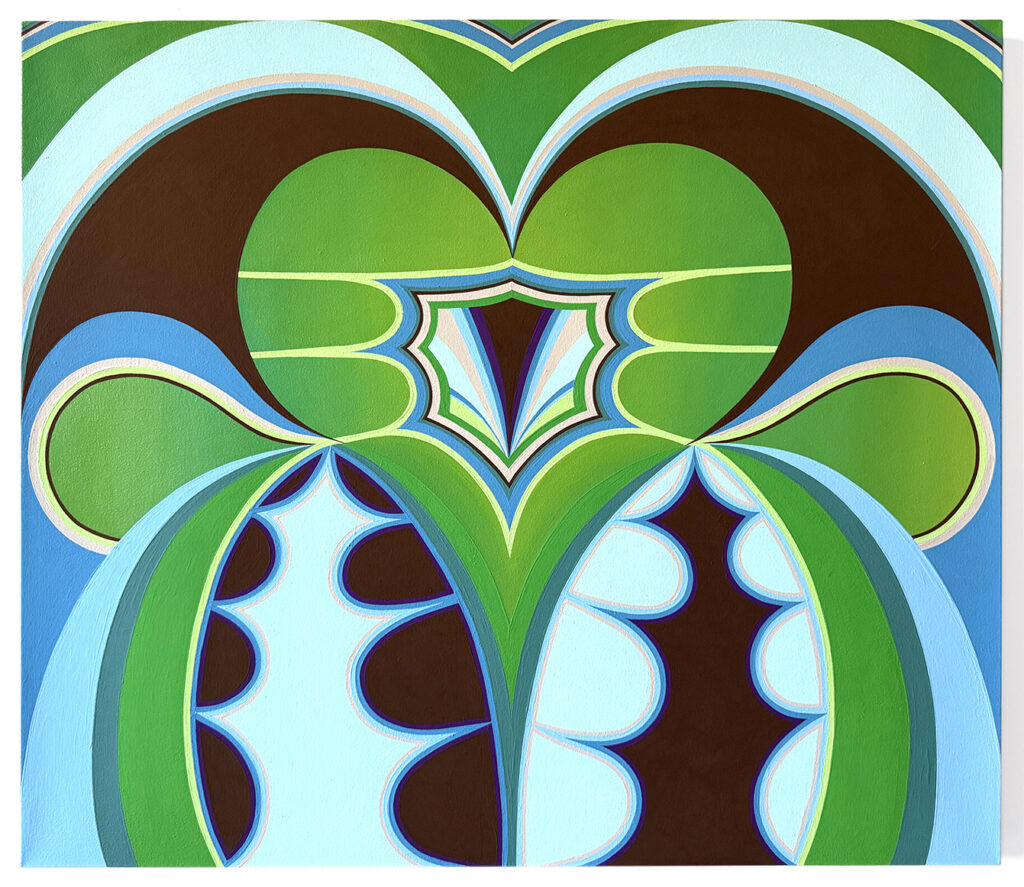
During the pandemic, painter Amie Cunat visited a sunflower farm in upstate New York and thought that the hundreds of tall sunflowers, their “heads” bent forward, looked like “a population of people’s bodies that were drooping in melancholic duress,” she says. “There was something about this voiceless group trying to express something that I kept thinking about.” For the past five years, Cunat has painted sunflower motifs in an attempt to understand the experience of collective isolation brought on by the pandemic. She incorporates amorphous shapes of monsters and aliens, too, because they’re “horrific things of essentially nameless experiences,” she says. “The horrifying nature of these creatures is bound up in the fact that we can’t identify them. How do we give the thing that’s nameless an identity? In my case, the vocabulary is color and form.” Several of these works are now part of a group exhibition, Cherry Autumn, Cataract Intervals, at Neighbors Gallery in Ithaca, New York.
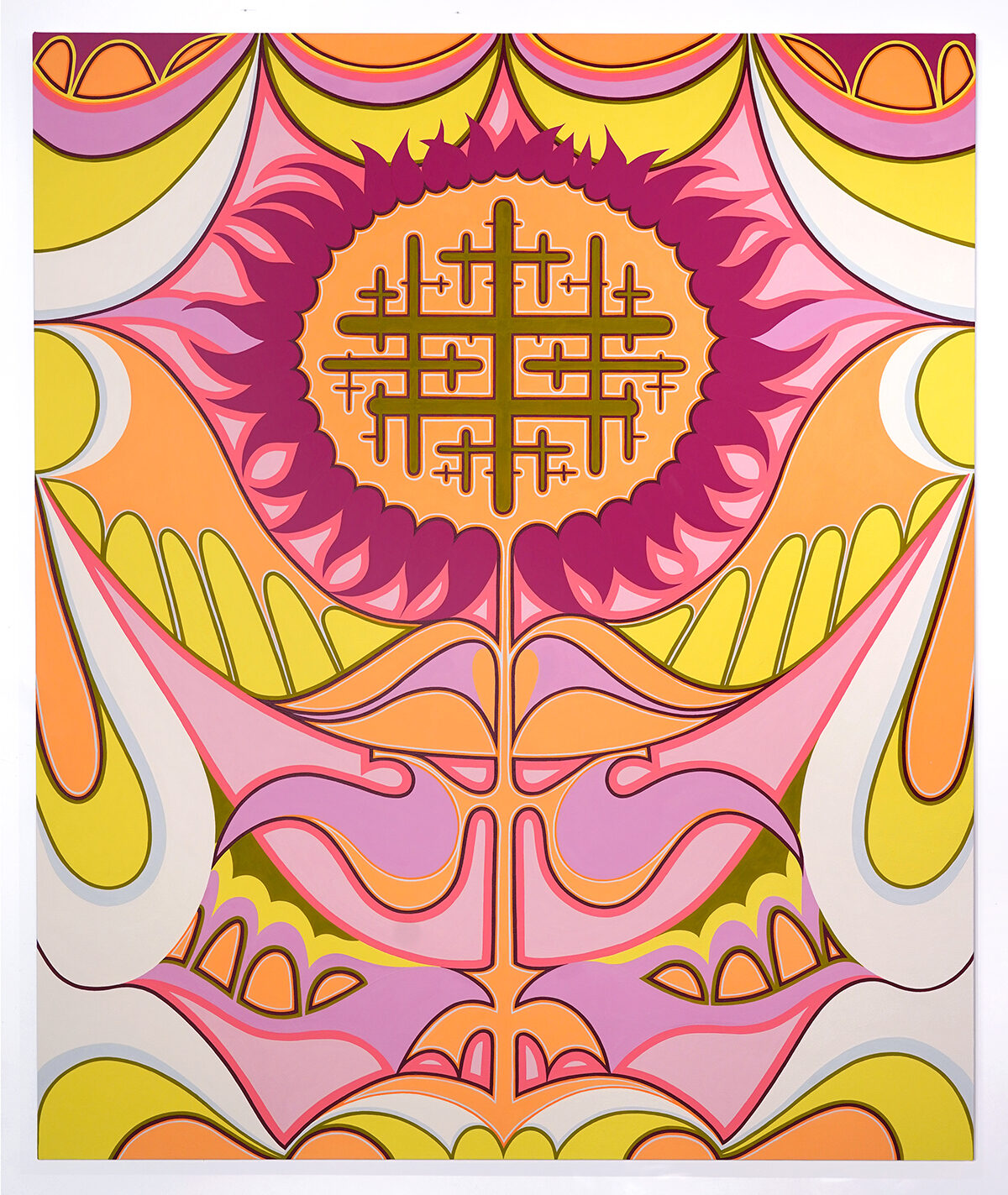 Tournesol, Opal, 2023, Flashe and acrylic on canvas, 72 x 60 inches. (Photo courtesy of the artist.)
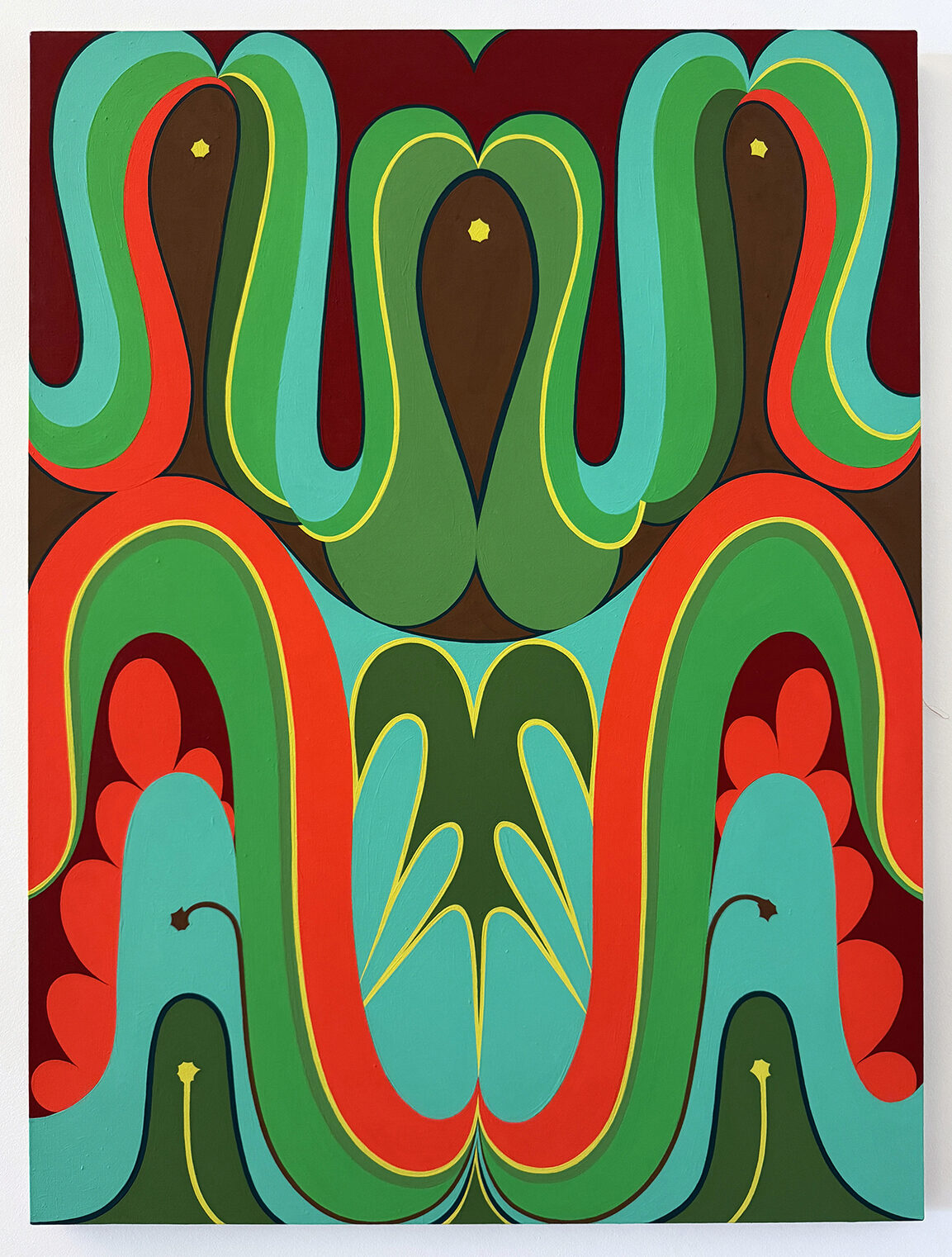
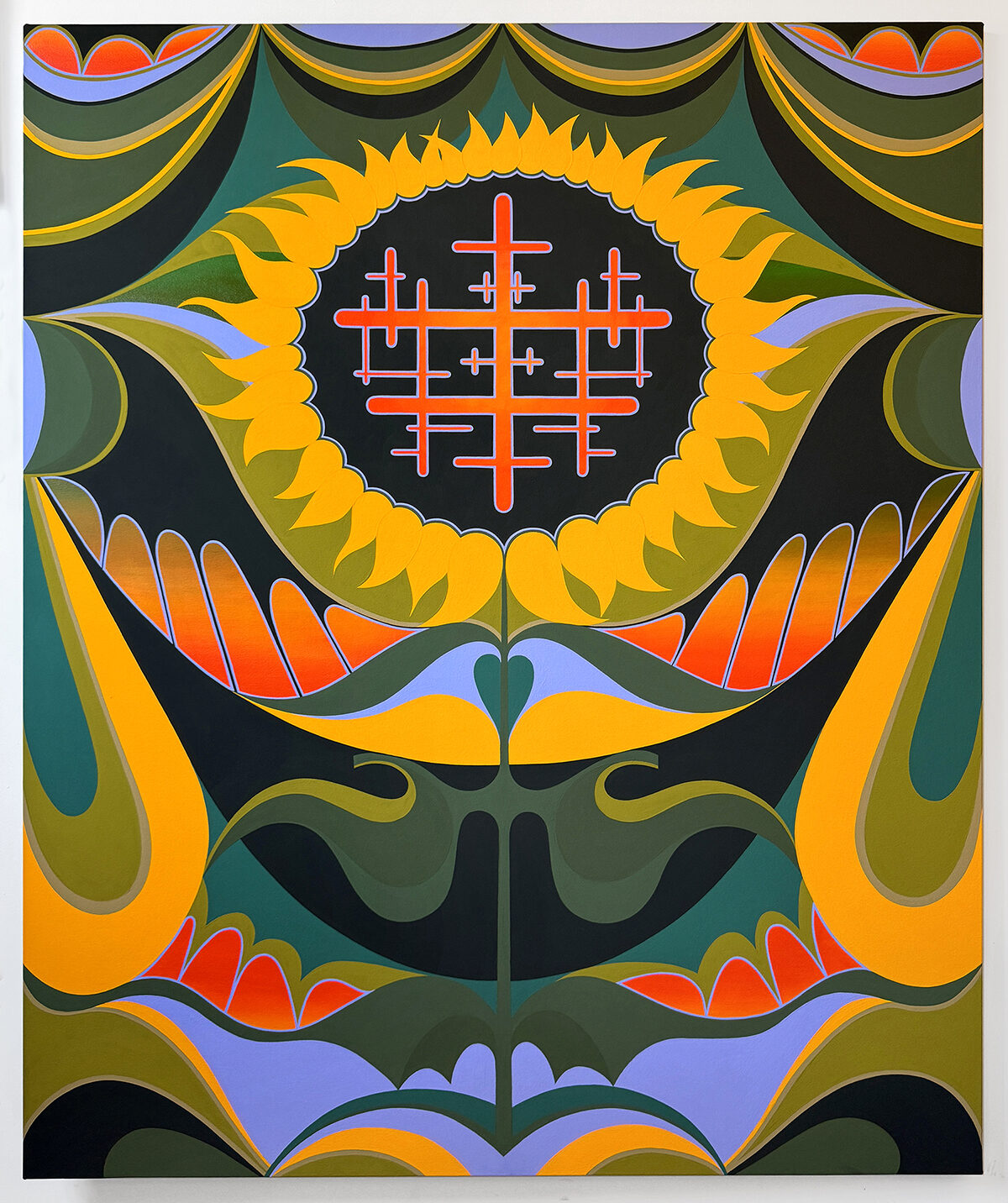
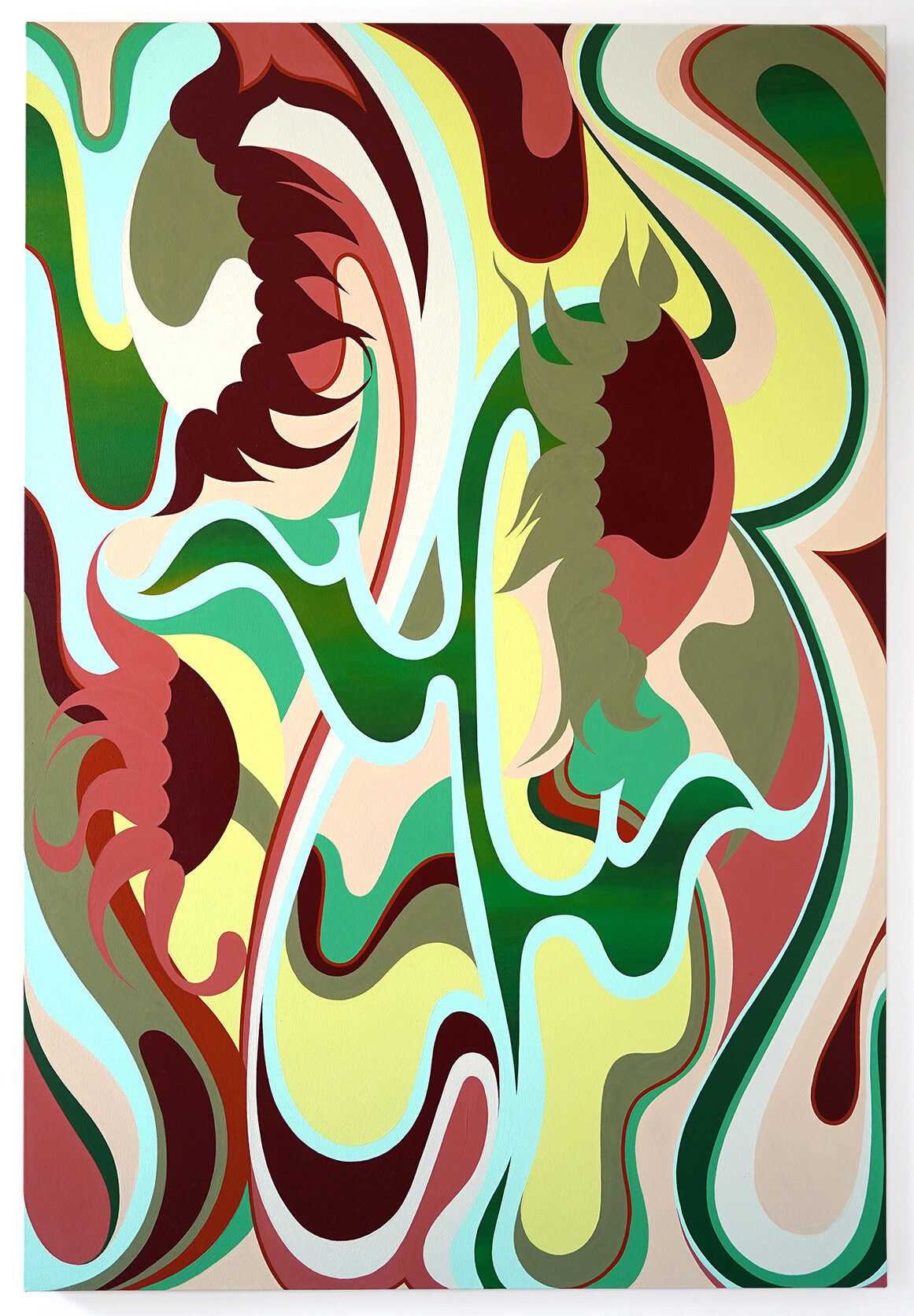
Cunat begins each painting by sketching geometric forms on tracing paper, then paints primarily with Flashe—a vinyl-based paint that dries quickly with a matte finish—and acrylic on canvas, building layers of nuanced, shifting color. Unlike oil or casein paint (the latter, Cunat says, “smells like a baby smoking a cigarette”), Flashe has “surface resiliency, and as you consecutively put coats onto the surface of the canvas,”—her paintings require four to eight coats—“you get this wonderful, slight undulation within each field of color.” Acrylic, too, allows Cunat to “play with gradation and how one hue can shift to make a flower look like it’s in a sunset or certain shapes look like they’re receding or coming forward.” As with many color-field or abstract paintings, viewers often project their own associations onto the forms. Cunat doesn’t mind these interpretations of her work, so long as they don’t state the obvious. “If I have to hear one more person say that my paintings are really colorful, I’m going to lose my mind,” she says. “Only because yes, I get it. That was the point.”