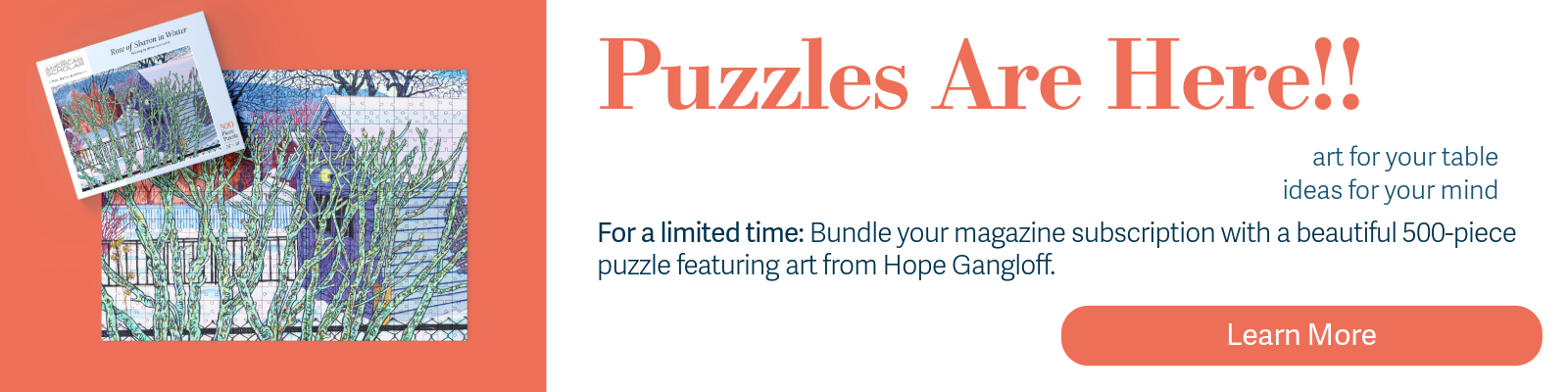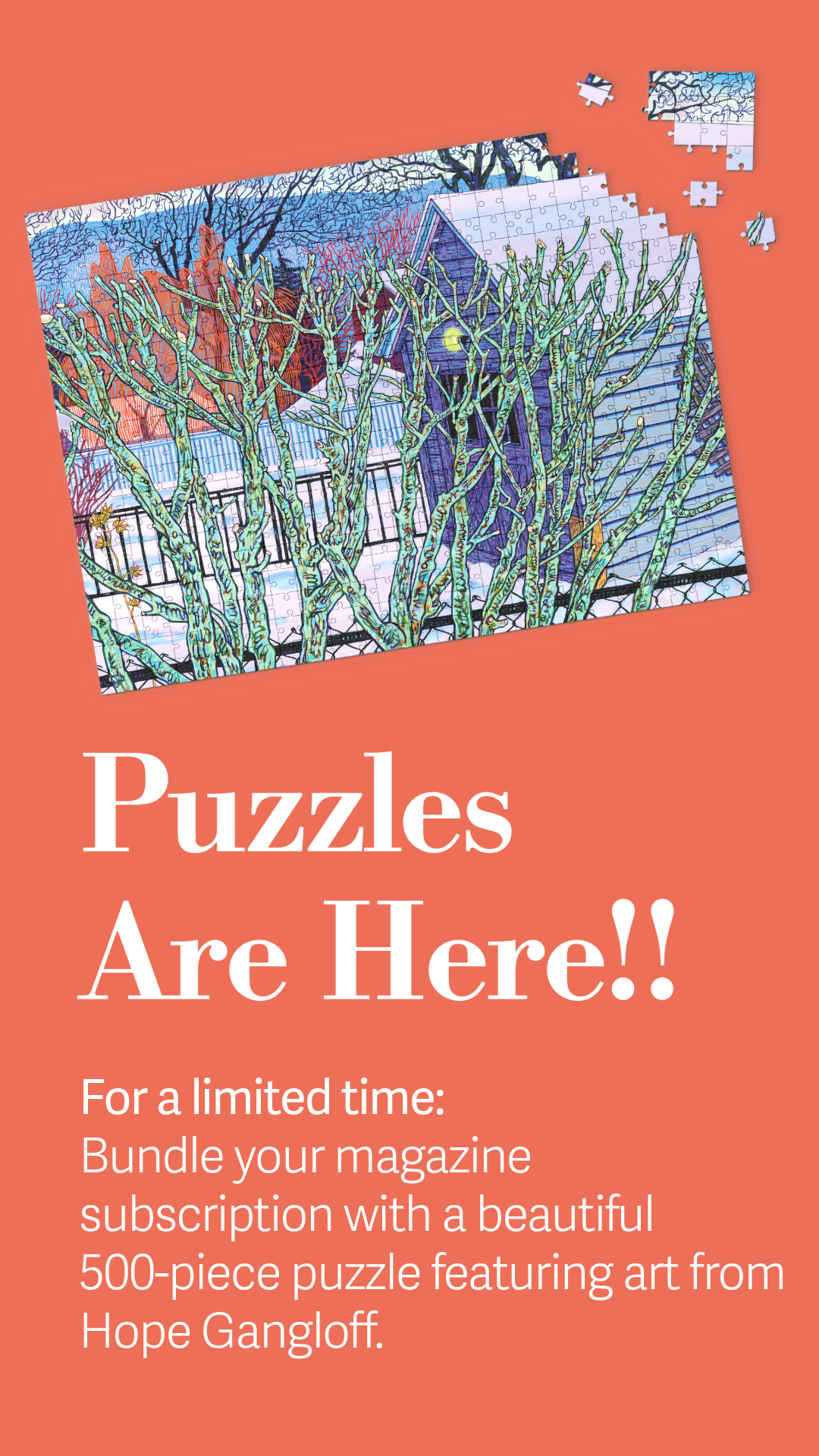

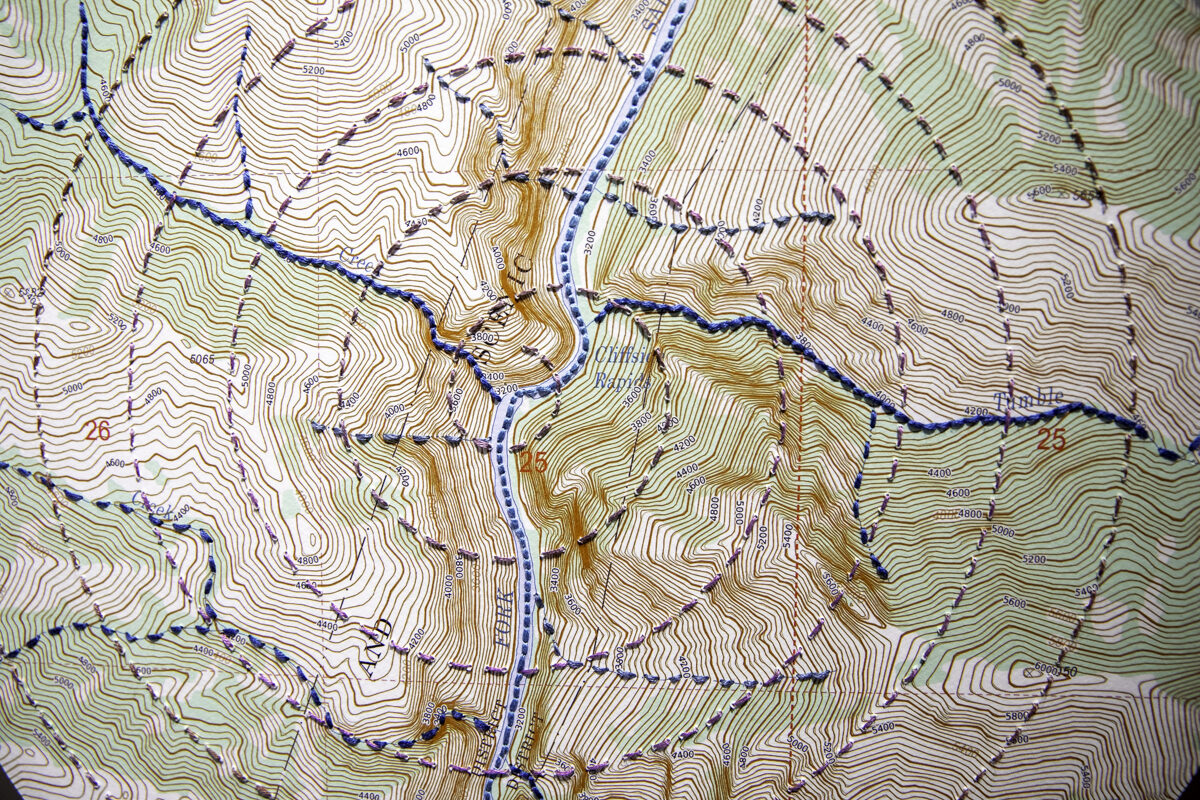
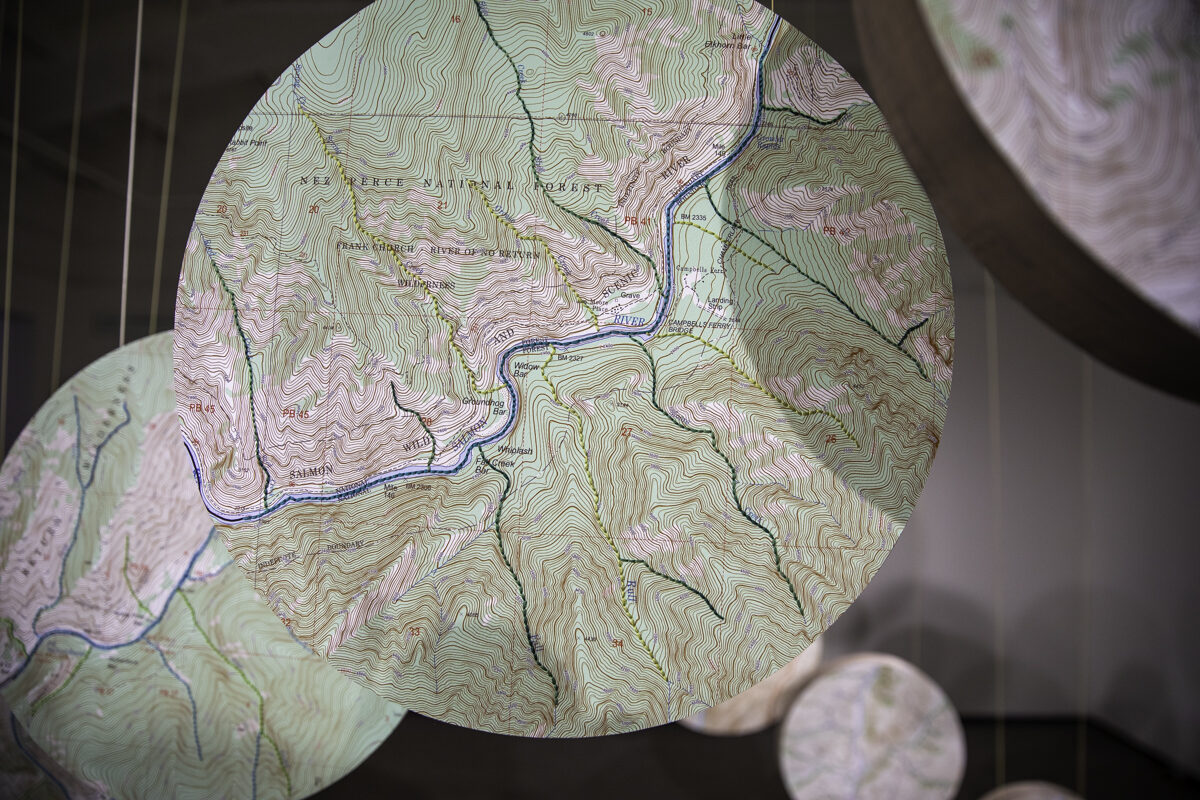
Ecuadorian-American artist Ceci Richardson-Salvador spends her summers leading rafting trips down Idaho’s Salmon River, and she always brings a camera. “I love to be outside,” she says. “As young as 22, I started rock climbing in Ecuador, and then I started mountaineering, and then I started rafting and kayaking.” After receiving an artist residency at Boise’s Common Well from the Alexa Rose Foundation in 2024, Richardson-Salvador decided to pay tribute to her experiences along the Salmon, which is aptly named for the sockeye and chinook salmon that each year migrate 425 miles upriver to spawn, and is framed by the remote Sawtooth Mountain Range, one of the most difficult to access in the contiguous United States. “The river has been my life since I moved to Idaho 23 years ago,” Richardson-Salvador says. Last year, she constructed a series of new works that blend her photographs of the river’s surface with topographical maps and hand-stitched details. The images are affixed to 27 large wooden drums, which together comprise a full-room installation at the Boise Art Museum, part of the exhibition Here We Have Idaho: Belonging.
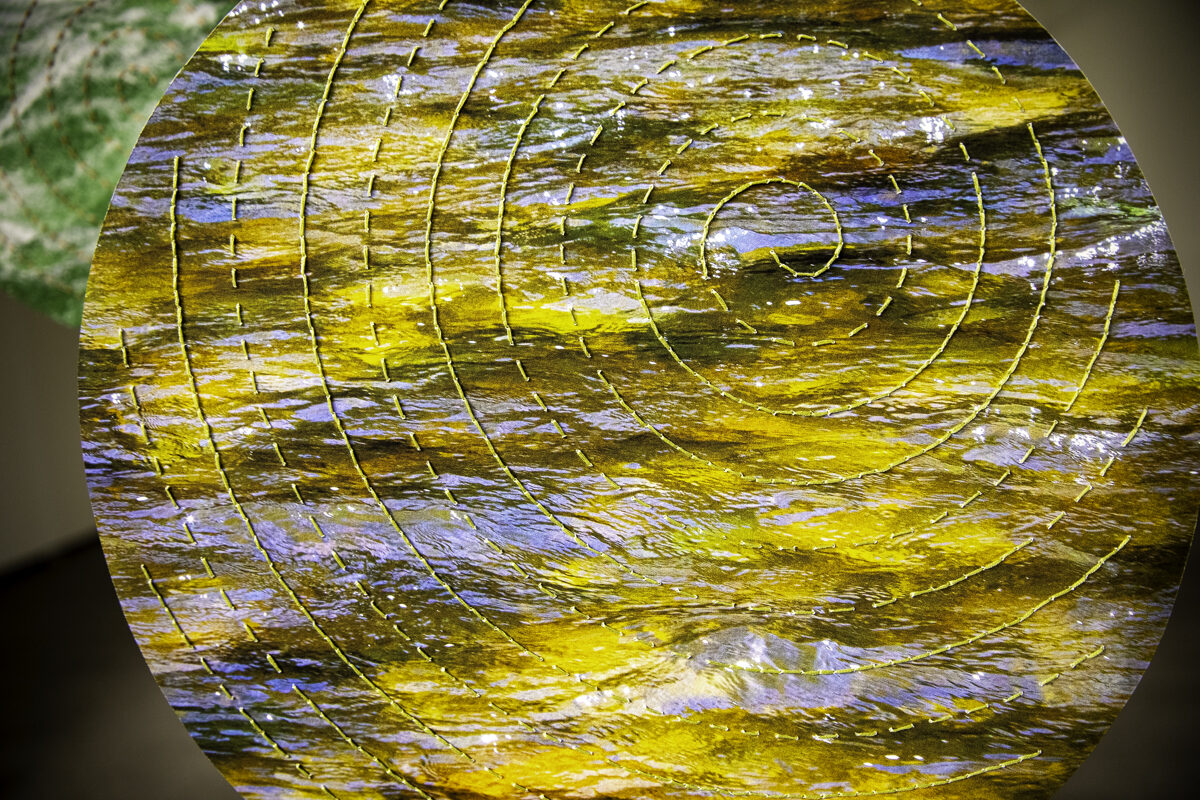 Homage to the Salmon River, 2025, topographic maps and photography on cold press paper, embroidery floss, wood drum frames and fishing line. (Photo courtesy of Ceci Richardson-Salvador.)
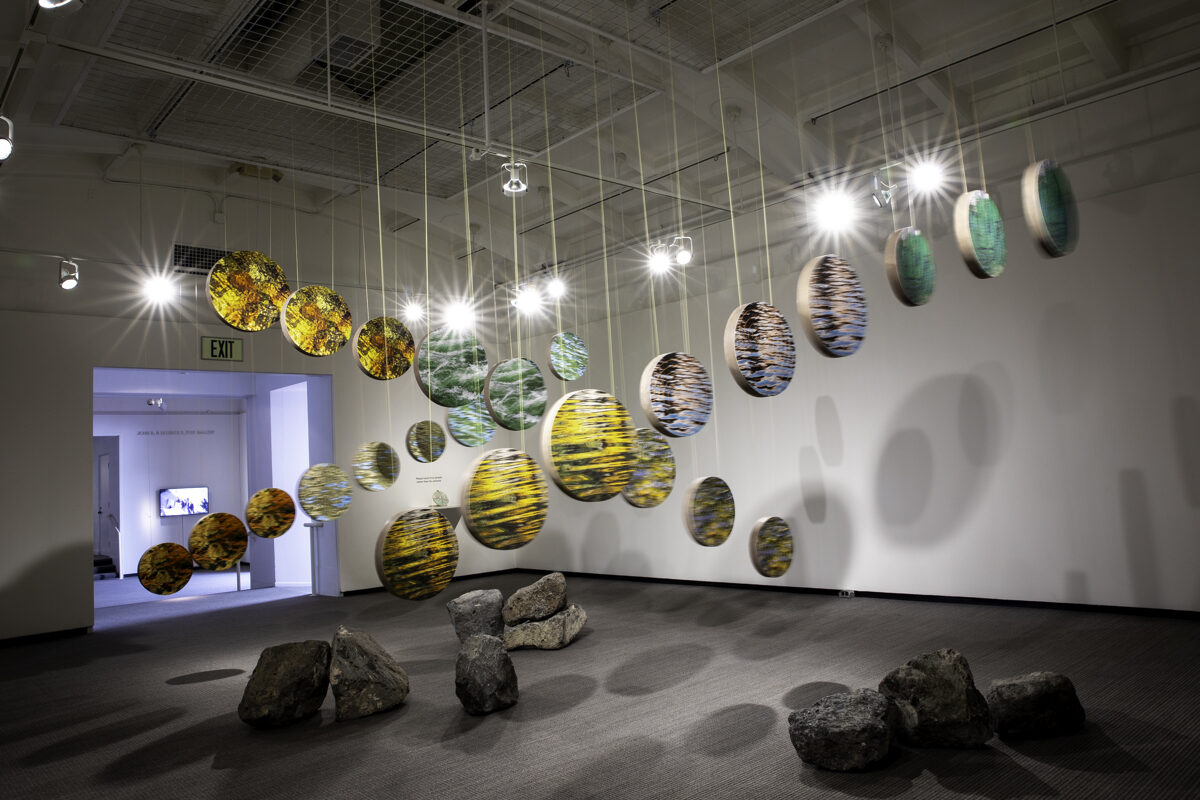

Richardson-Salvador wanted the installation to recreate the ambience of rafting down the Salmon. She prerecorded audio from her trips—running water, birdsong—that plays throughout the space and placed locally sourced basalt rocks on the floor, “all to give that sense of, ‘Oh, I’m entering a canyon on a river.’” In recent years, climate change has substantially affected the river: The salmon runs are less frequent; the water levels rise and fall precariously because of dwindling winter snowpack in the mountains; fire season starts sooner and lasts longer. Richardson-Salvador is troubled by the changes and views her photography and installation work as a memory-keeping exercise. “There’s a lot of people in Idaho who have not experienced this body of water,” she says. “One of my goals was to make it accessible to other people, to educate Idahoans that have never been in the Salmon River on how beautiful this river is and how important it is for the health of the state and the country.”