
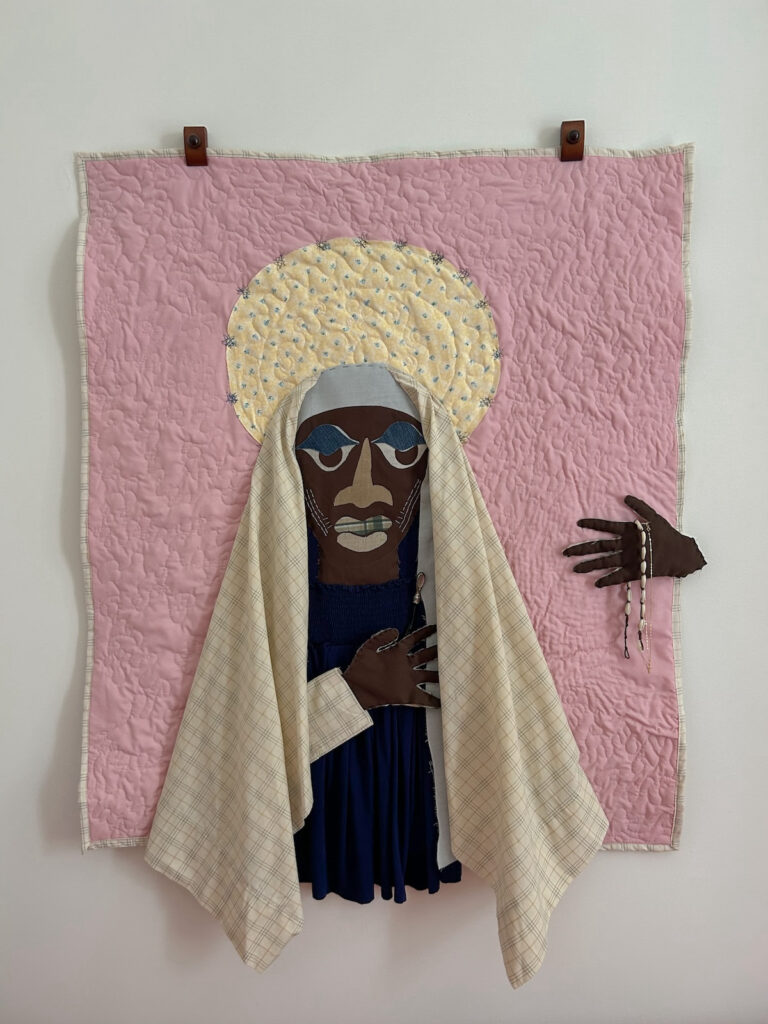
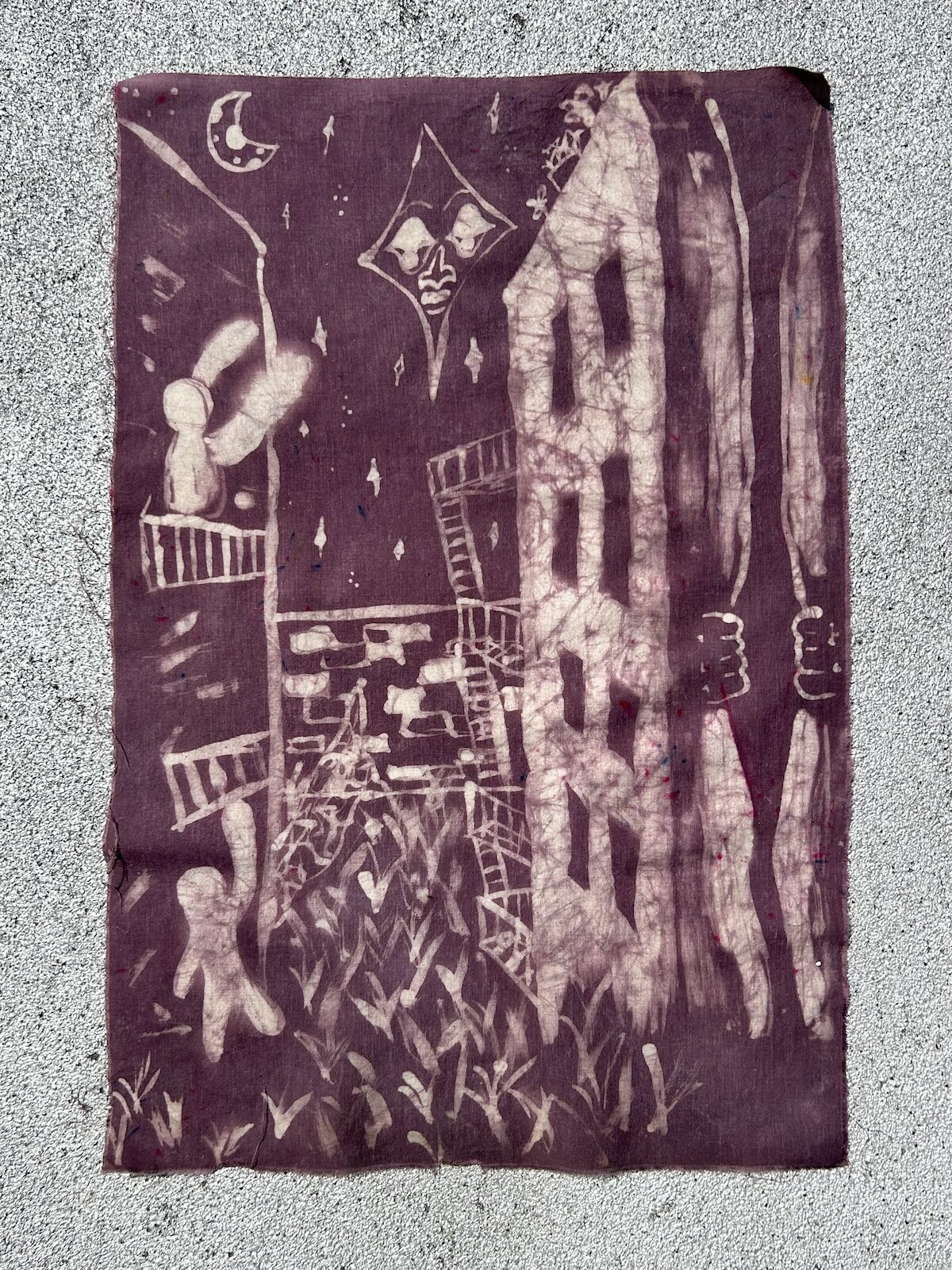
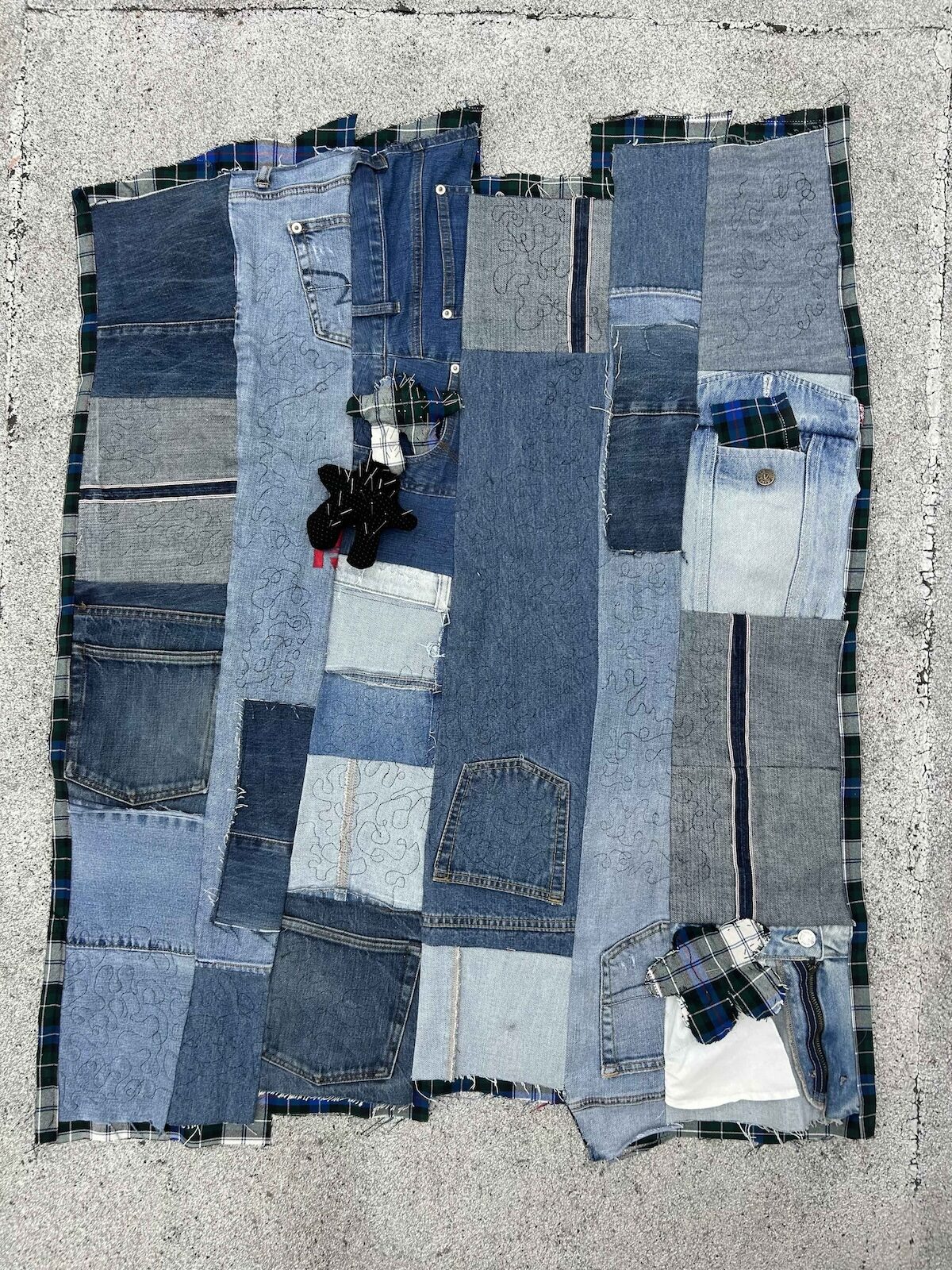
Growing up in Baltimore County, Maryland, Cici Osias—who is of African-American, Haitian, Congolese, and Nigerian ancestry—was surrounded by African art and traditions. Artwork from the diaspora hung on her relatives’ walls, and she wore Nigerian textiles, or aso ebi, to family functions. It wasn’t until she studied sociology and French (spoken in many West African countries) in college, though, that Osias began to wonder about the history and creation of Nigerian textiles. “I think it’s just really beautiful to understand art and home as being so intertwined in the same way that I understand cloth and family to be intertwined,” she says. Since the knowledge of how to make adire—a type of Nigerian resist-dyed cloth, usually made with cassava paste or hot wax—is passed down orally, Osias pieced together as much as she could to create her own. Inspired by her initial success, she created more textiles, weaving together traditions from her various heritages. This past year, she turned her attention to quilting because of its role on the Underground Railroad, where quilting codes signified safe houses for enslaved people seeking freedom. One of Osias’s resulting quilted textile pieces is currently part of a group exhibition, Nothing is Fixed, at the Old Stone House in Brooklyn, through October 13.
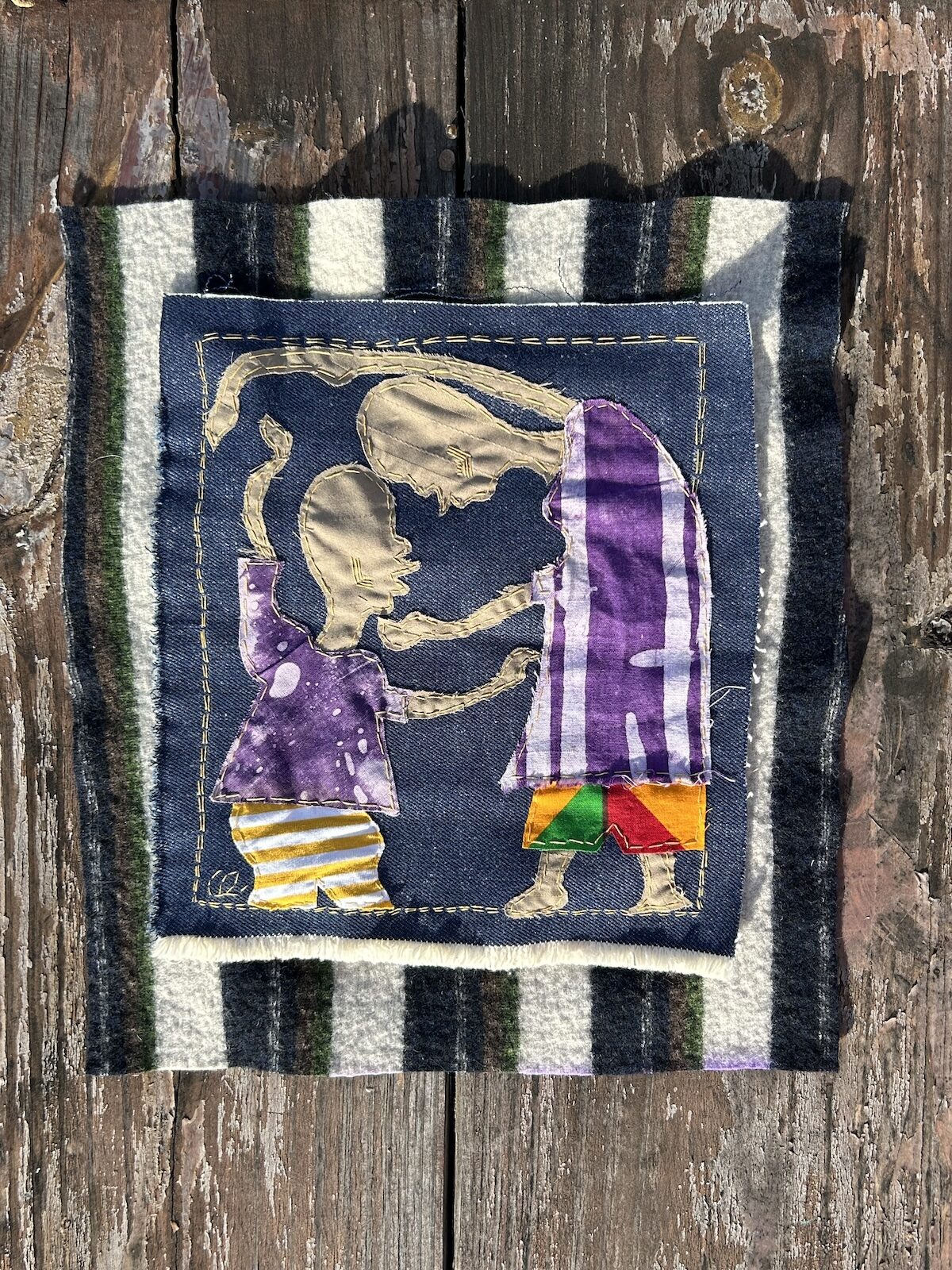 Et on danse, comme des garçons, 2024, assorted scrap fabric, wool, denim, thread, 14 x 13 inches. (Photo courtesy of the artist.)
Osias’s piece, Erzulie and her offerings, was inspired by an exhibition of Black quilters at the Renwick Gallery in Washington, D.C. Osias took a bundle of fabrics from her childhood—a quilt that her mother was going to donate, for example—and sewed them into a rendering of the Haitian spirit Erzulie. When Osias had completed the figural parts of the composition, she felt something was missing. In Haitian voodoo culture, many leave physical gifts to shrines of Erzulie in the form of food or flowers or jewelry, and Osias wanted to nod to that practice in her piece. She hand-sewed a golden necklace from her grandmother and a cowrie necklace from her aunt—both gifts she’d received in childhood—and then felt at last that the piece was finished, almost as if it was fated to be. A viewer later told Osias that gold and cowrie shells figure heavily in West African culture, as well—so Osias had once again linked her African, Caribbean, and African-American cultures together without even realizing it. “I think creation is so fundamental to the way we express ourselves in all of these different parts of the world and of the Black diaspora,” she says. “I think all of my work really speaks to the stories that we tell through fabric.”