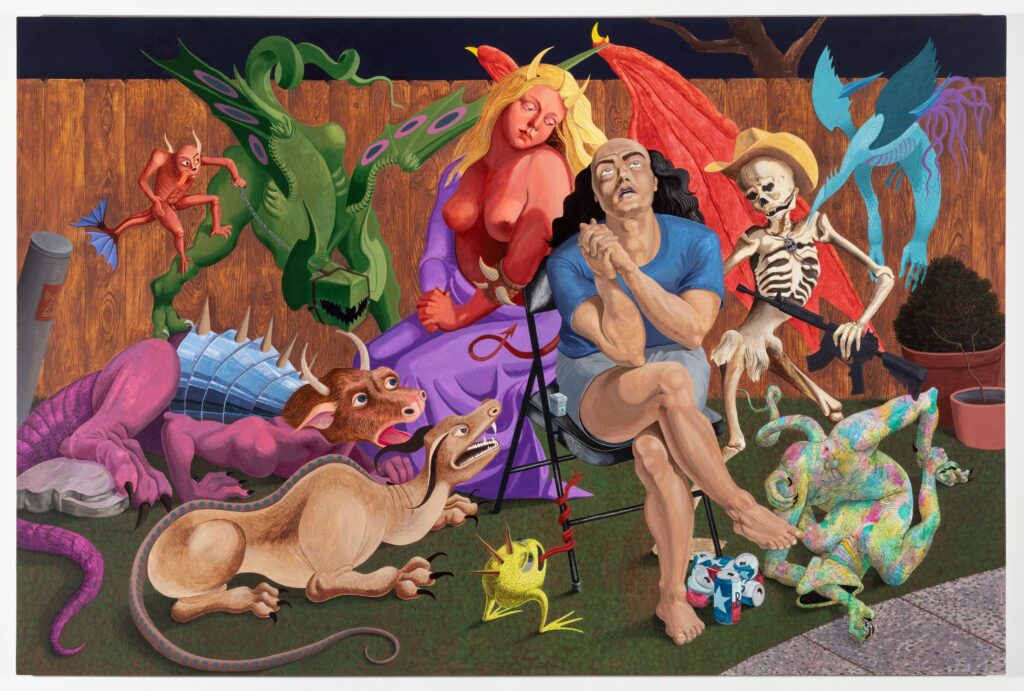
Francisco Moreno’s paintings are an art historian’s dream, full of allegories and references to well-known paintings. He grew up in Mexico City, watching his grandmother paint in her studio. She took Moreno to see Diego Rivera’s murals when he was young, which left him awestruck by “the ambition of the work, the combination of painting and architecture,” he says. Rivera’s career trajectory stood out to Moreno—how the former “left painting in Paris to go study Giotto in Italy, to return to Mexico to create paintings for people, who didn’t know how to read, to help them understand their history.” When Moreno was six years old, his family moved to the Dallas-Fort Worth area; he went on to study architecture at the University of Texas Arlington and received an MFA in painting from the Rhode Island School of Design. Upon traveling home to Mexico and later across Europe, Moreno began to notice art in a way he hadn’t before, devouring the works of Bosch, Bruegel, El Greco, Leonora Carrington, Remedios Varo, Goya, Ellsworth Kelly, Rembrandt, Michelangelo, and Rubens. Much like Rubens toting sketchbooks of figural studies to later recreate in large paintings, Moreno began to amass a visual lexicon he would repeatedly incorporate into his own paintings. “Cormac McCarthy said—and I love this quote but I might be butchering it—‘The secret to books is that they’re made of books,’” he says. “And through my whole experience, I’ve come to believe that the secret to paintings is they’re made of paintings.” Moreno’s artworks are now in a solo exhibition, Francisco Moreno: Historia Sintética, at Dallas Contemporary.
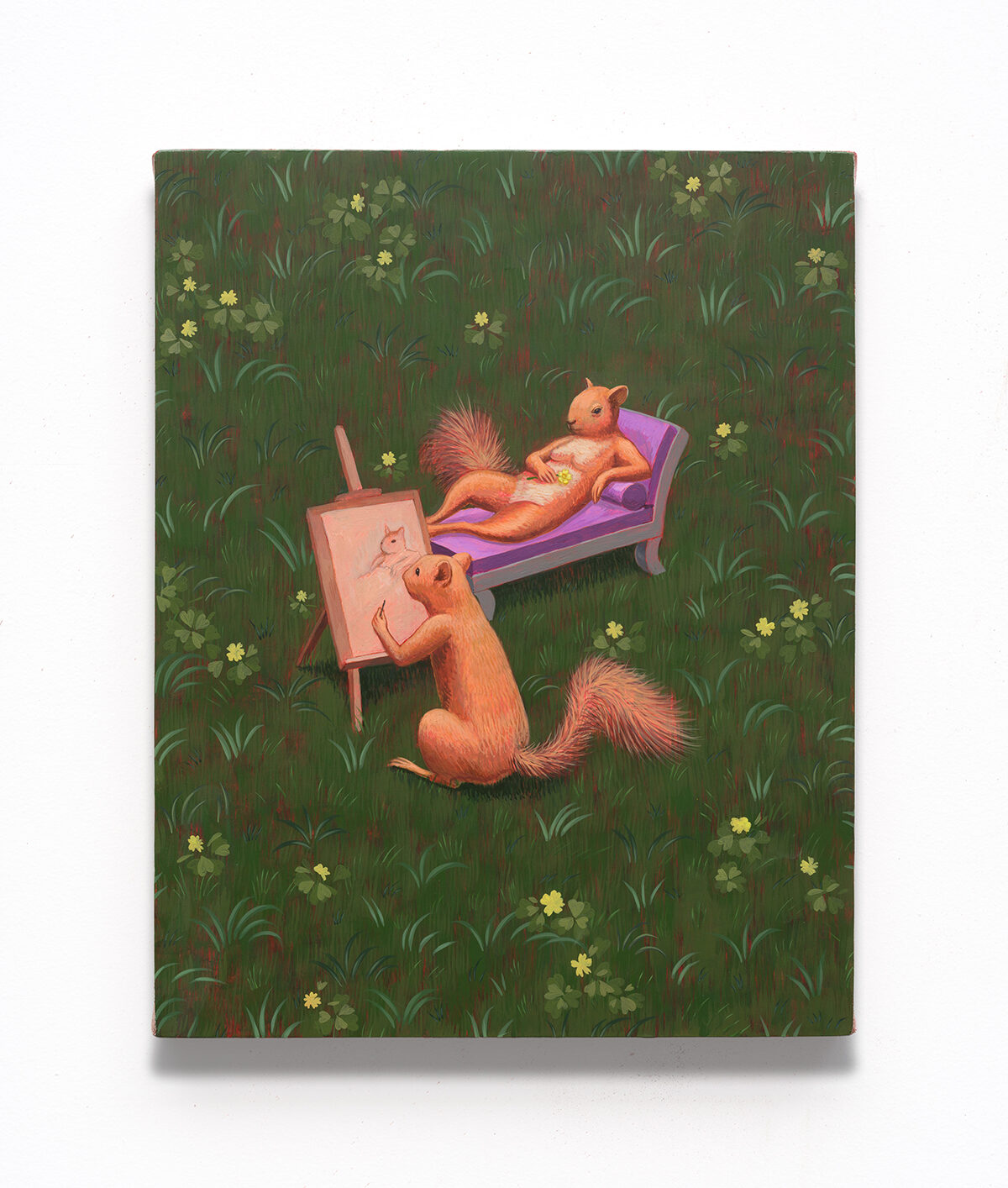 Life-Drawing Squirrel, 2025, acrylic on canvas, 14 x 11 inches. (Photography by Kevin Todora.)
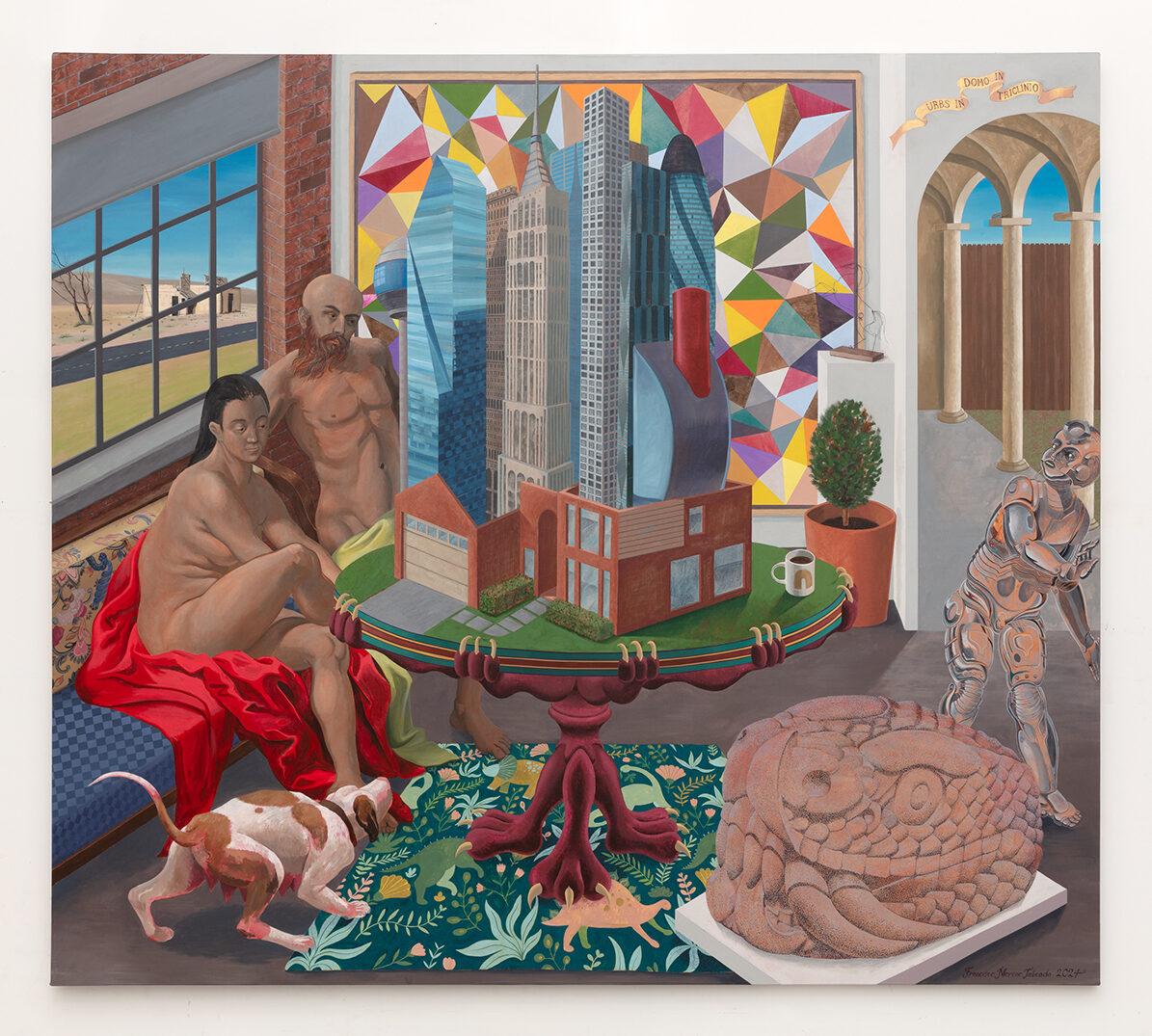
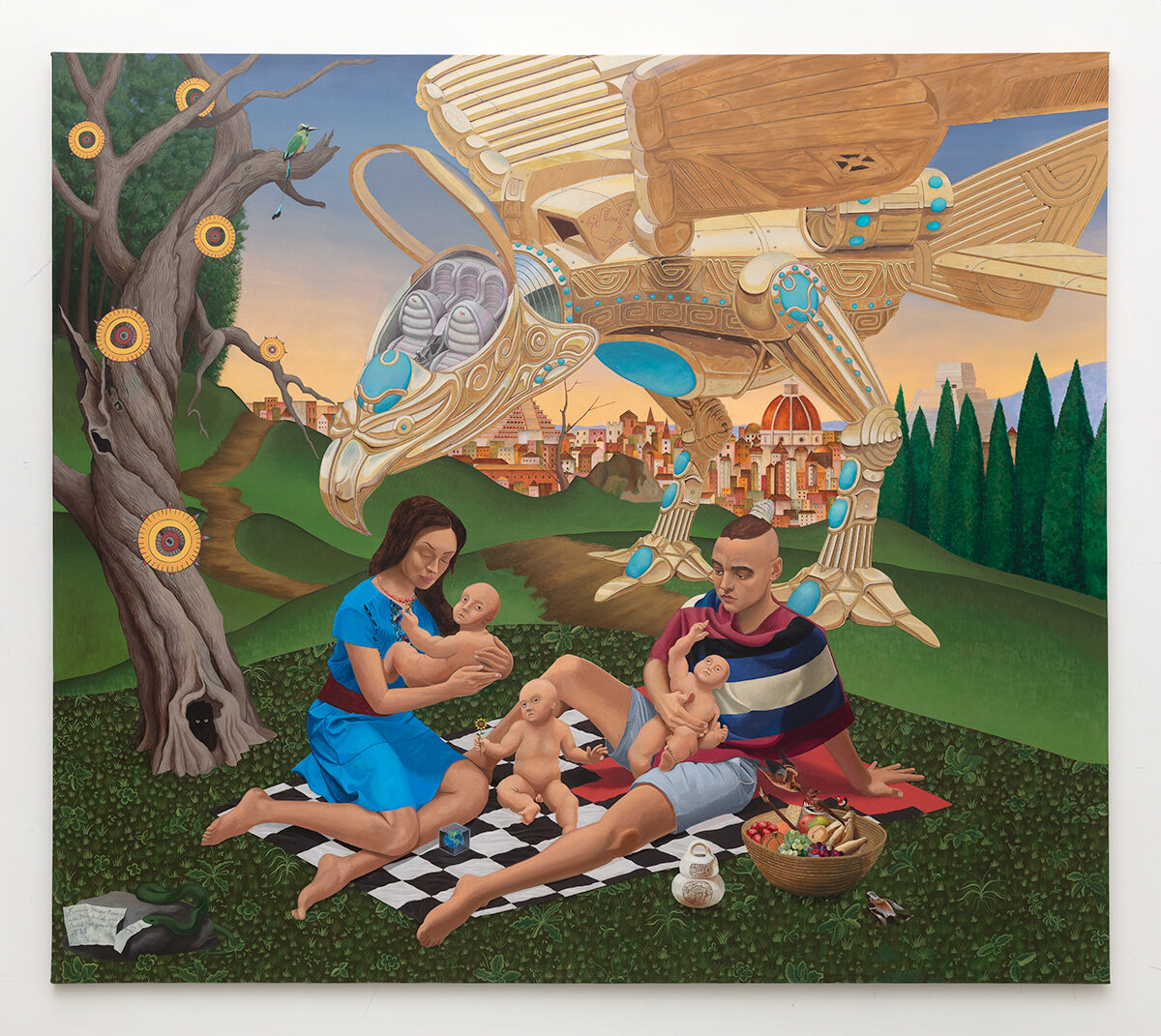
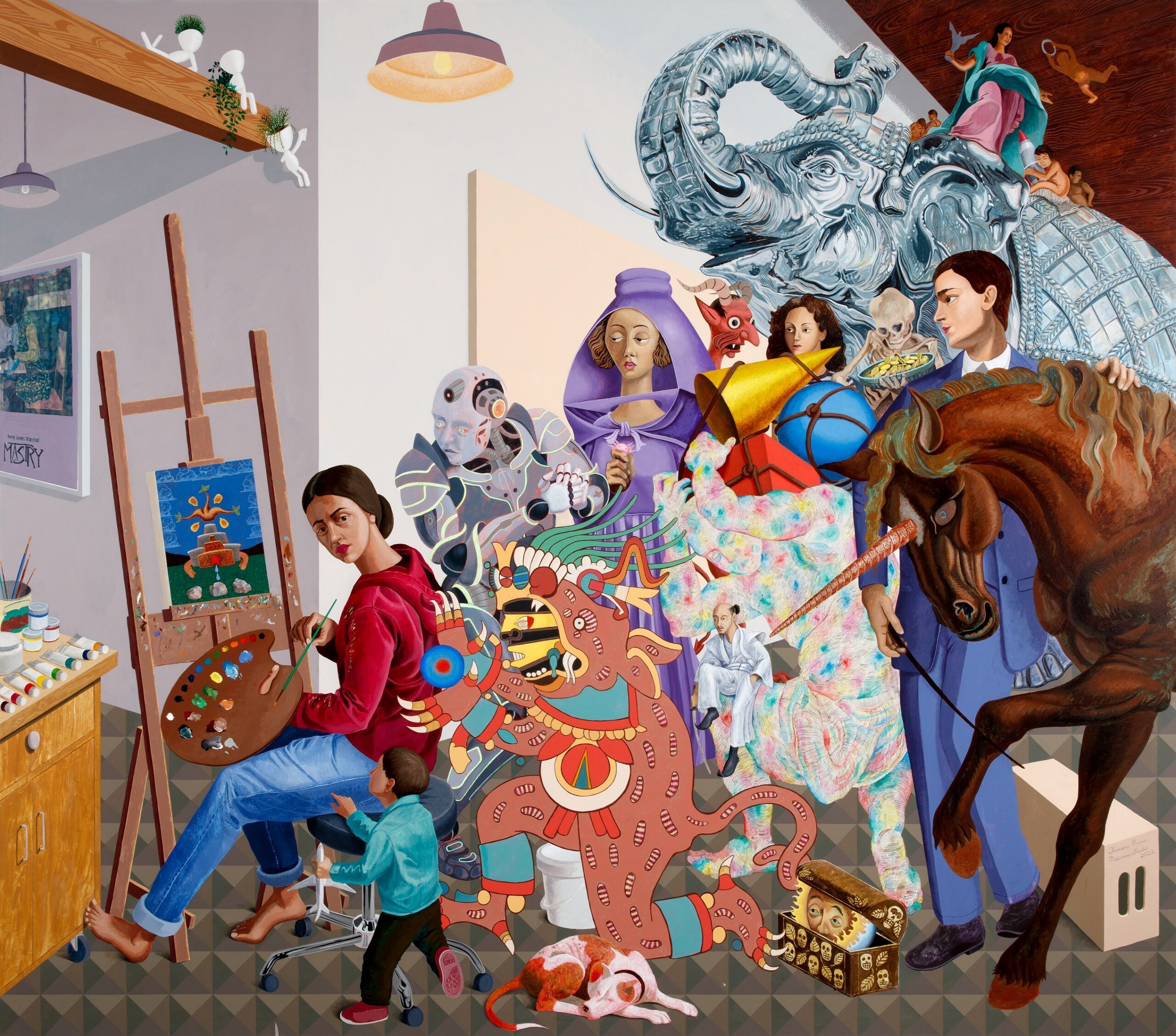
Moreno divides his work into two categories: caprichos—which include more classic still lifes and cheeky depictions of squirrels eating pizza—and history paintings, which often take him a year to complete and reflect a myriad of art-history source material. The exhibition at Dallas Contemporary combines both, showcasing Moreno’s talent for juxtaposing lighter, goofier subject matter with meditations on the past, present, and future of Latino culture. His speculative painting Family Vacation, for example, reimagines what would have happened if “a Pan-American civilization had conquered Florence,” he says. The subjects are “just on a family vacation; their private jet is designed with Colombian gold, they’re picnicking on a Peruvian War tunic, she’s wearing a dress she bought in Mexico. And then you see these Mayan and Aztec pyramids in the back that are taller than the Duomo, because when the Spanish would conquer, they would always try to build taller than the preexisting buildings.” Moreno doesn’t want to paint didactic “propaganda,” and admits his narratives “are a little nebulous.” But more important to him is his art’s broad appeal: The works unite five-year-old kids, who get especially excited about the squirrel paintings, with academics who enjoy poring over Moreno’s layers of visual allusions. It has been a dream come true for “people to venture into my brain,” he says. “I feel very privileged to have that.”