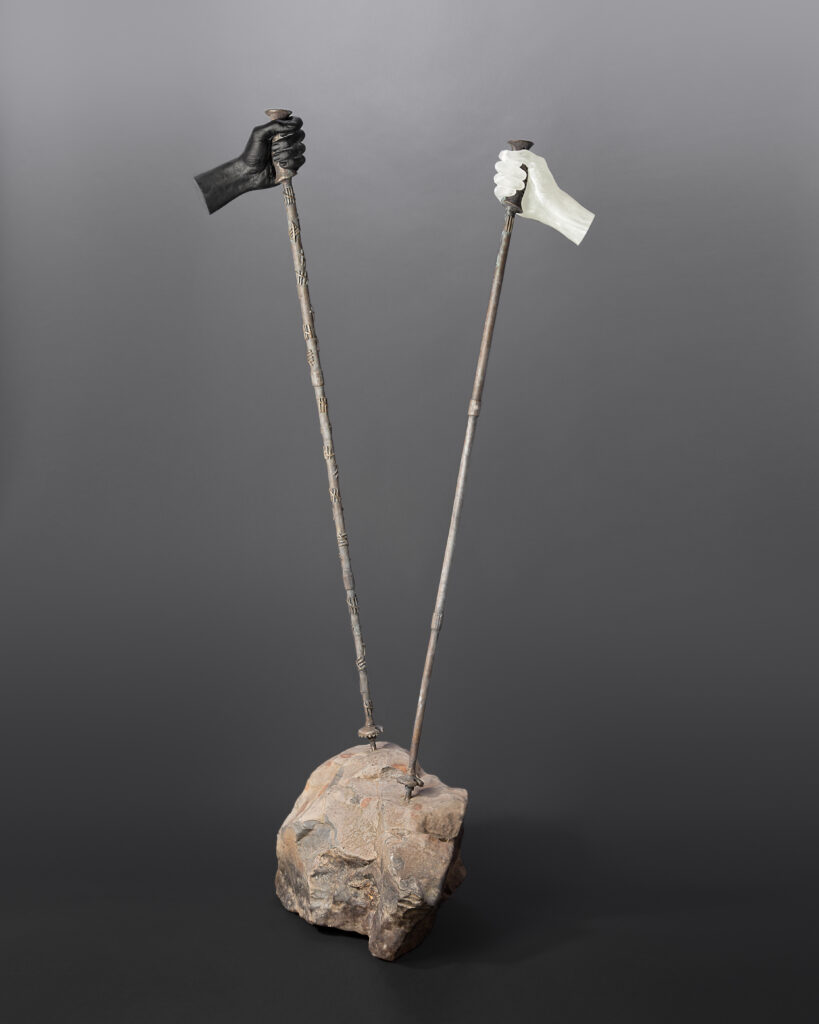
As a middle-schooler, Jason McDonald never dreamed that an introductory glass-blowing class for youth at Hilltop Artists in Tacoma, Washington, would lead him to a career as an award-winning artist. “It’s an exclusive craft; it’s remarkably expensive,” he says. “It’s about a dollar a minute to exist in the studio. There’s very little representation within the craft because of its super high buy-in and the fact that it takes a decade to start producing anything worth selling.” After dropping out of community college in his 20s with no plan of what to do next, he jumped at the chance to work with his friend at a glass factory in Seattle. Within several years, he had gone from sweeping the floors to becoming a glass blower to training new factory workers. The work “requires 100 percent of my attention,” he says, “because there are immediate consequences when you lose focus”—a piece could fall to the floor and shatter or, even worse, injure a coworker. McDonald eventually realized, though, that he would never advance off the factory floor without a degree, so he returned to college in his early 30s. From there, he received an MFA in glass blowing from the Tyler School of Art and Architecture, even attracting the attention of Solange Knowles, who tapped him to design a homeware collection. Now, McDonald’s first solo museum exhibition, An Ode to Diligence, is on display at the Tacoma Art Museum, featuring more than 20 pieces of his glass art.
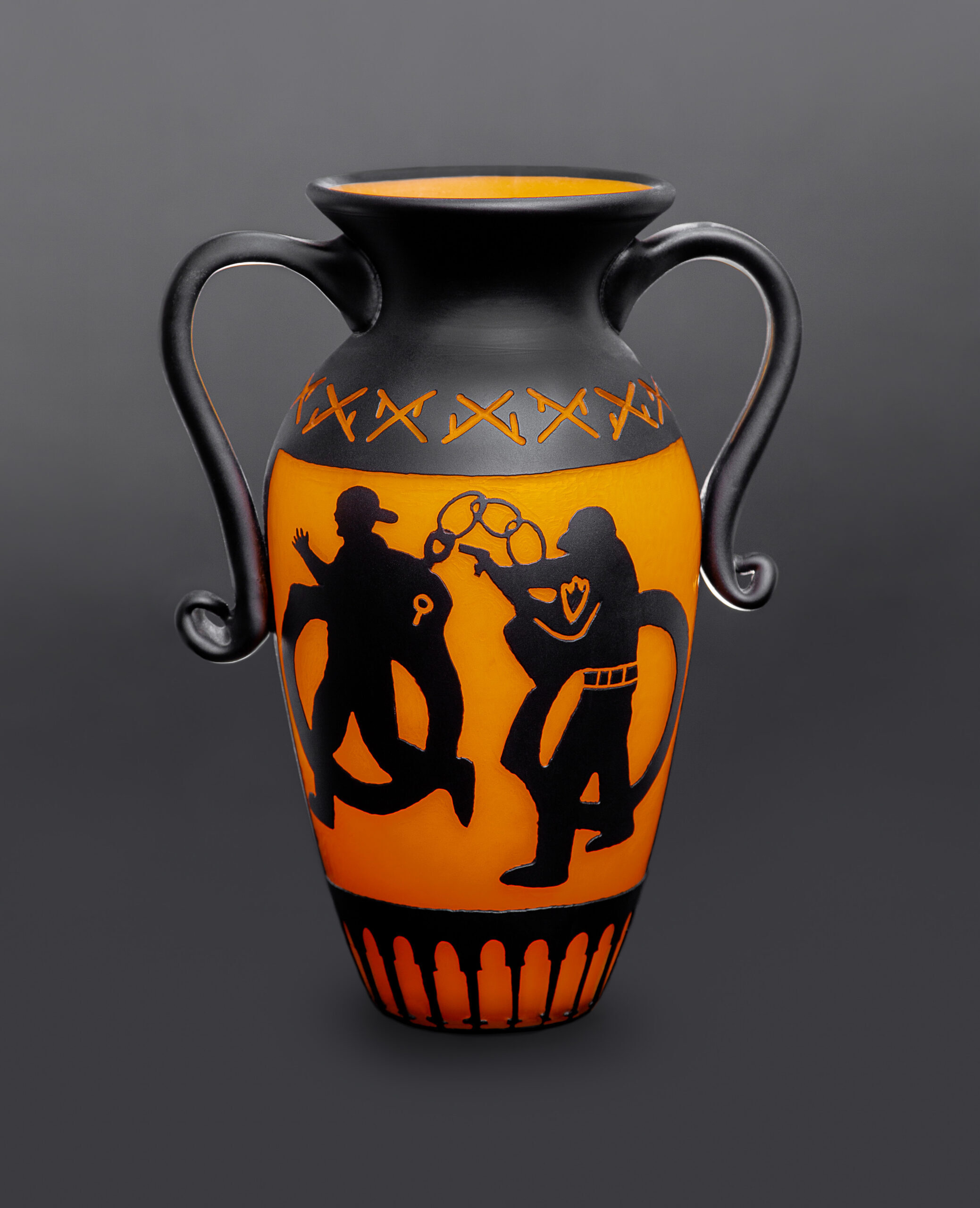 Black figure #2, 2018, blown glass. (Image courtesy of the artist; photo by Krista May.)
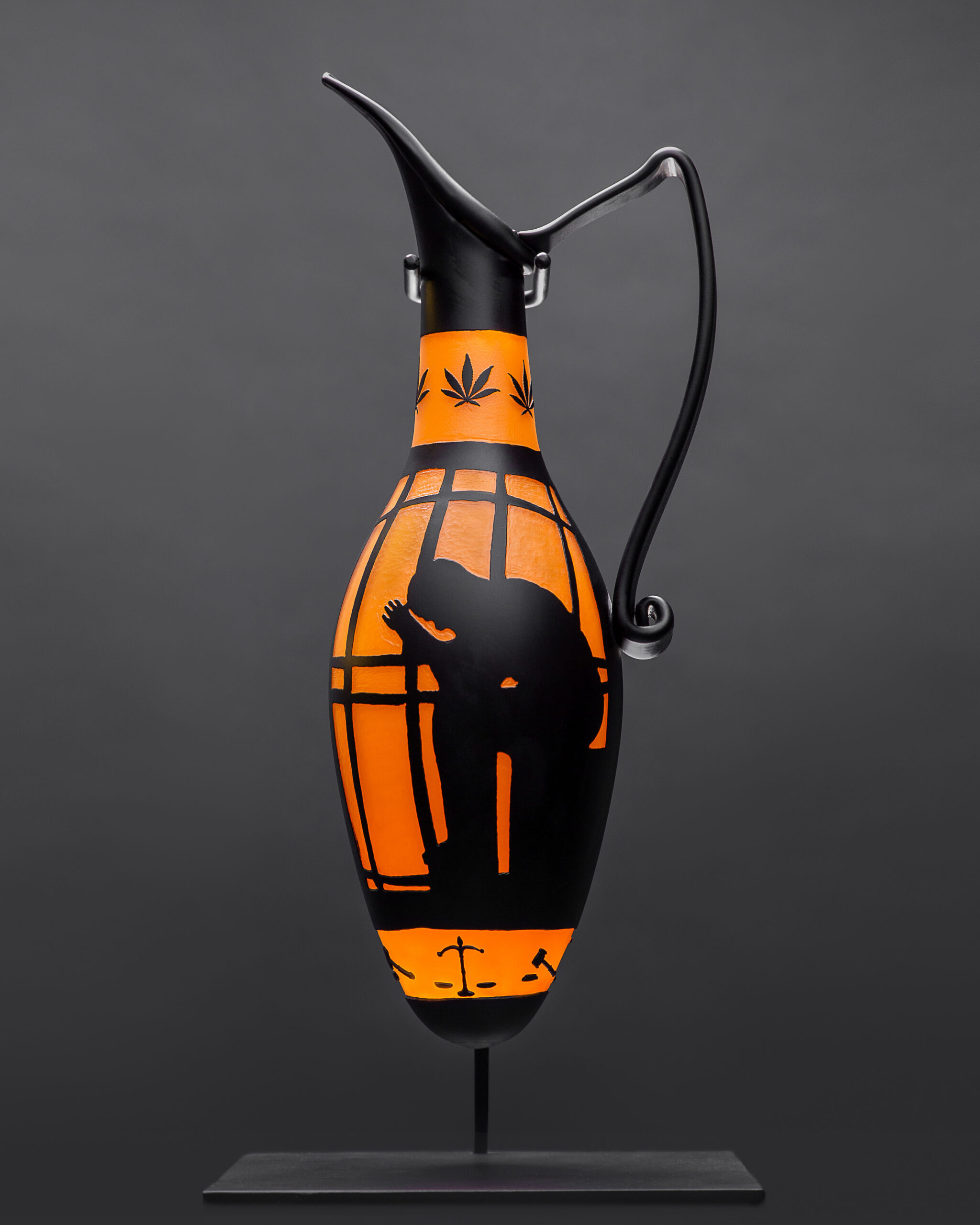
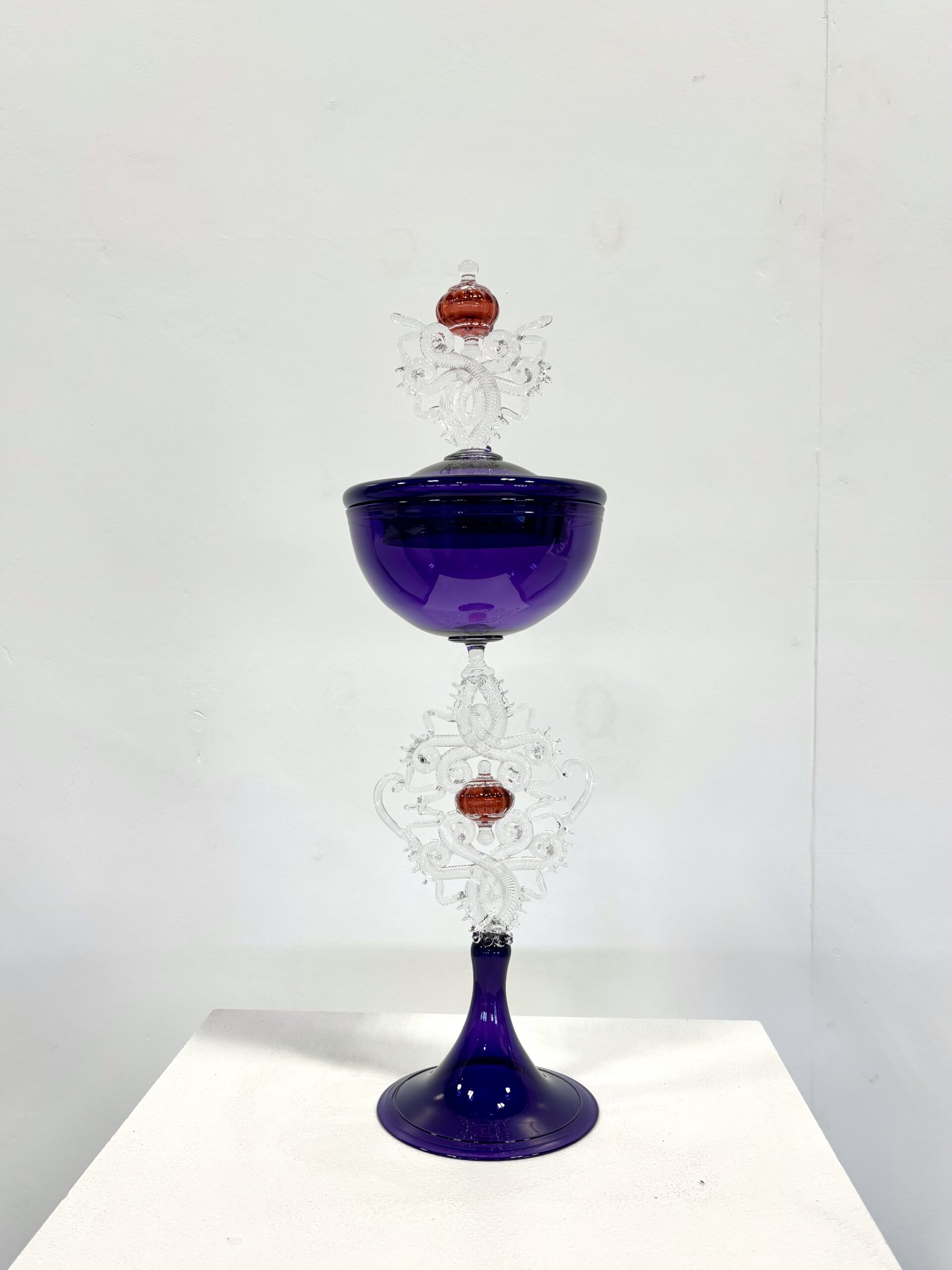
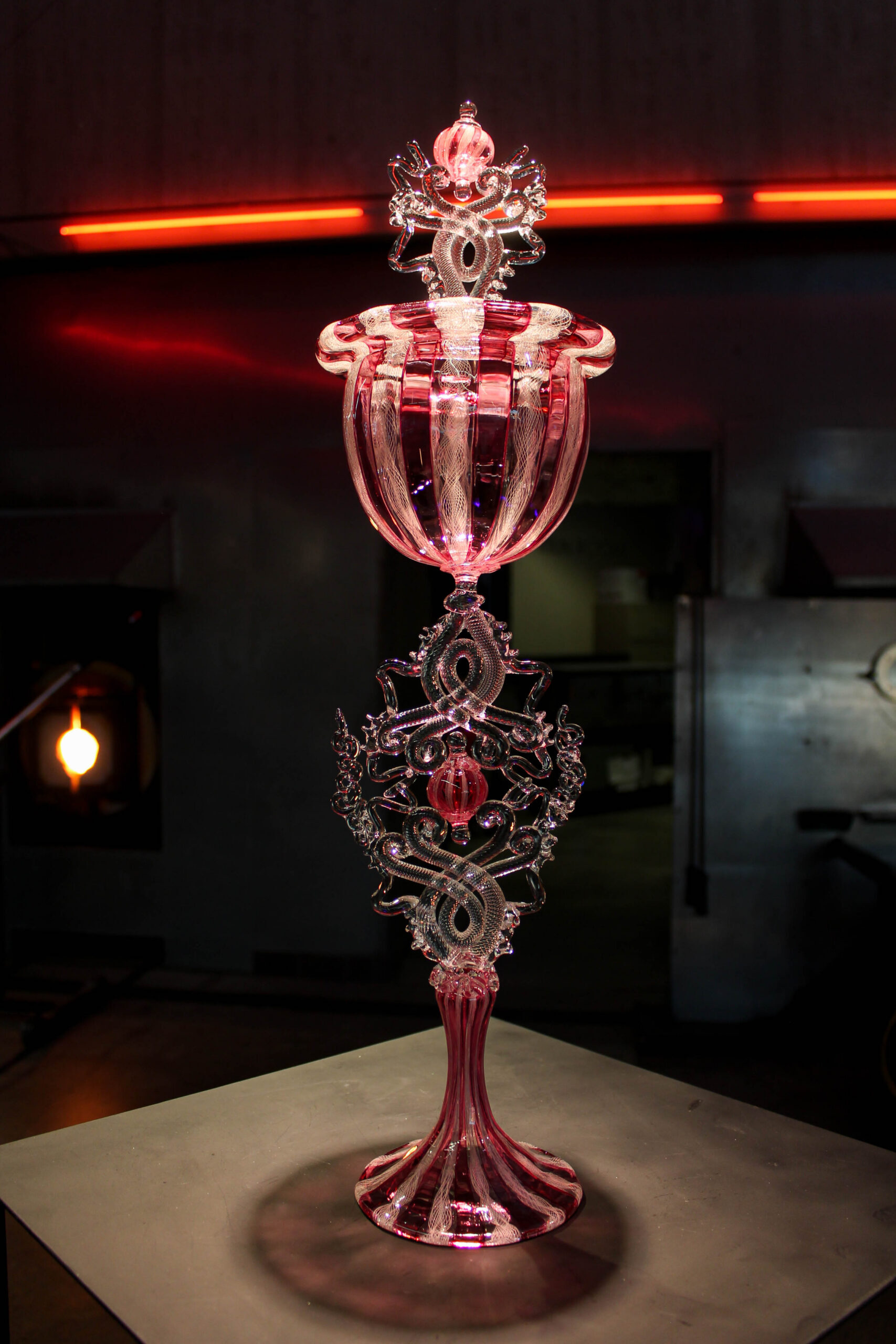
McDonald creates his pieces in the straightforward yet technically complex Murano tradition, named for the Venetian island that birthed it. His Medusa pieces, for example, are a modern take on the Guggenheim goblet, a 16th-century Venetian cup known for its intricate design that affords only a single chance to get it right. “There’s nowhere to hide in a goblet,” McDonald says. “When you’re working larger, thicker, slower, you can make mistakes and go backwards and refine things. But with a goblet, you get it, or you start over.” In his more narrative works, such as his Black Figure series, McDonald tackles the “ugly truths about my lived reality as a Black man in America,” he says. “I want the beauty of the objects to lure people into that conversation.” He also acknowledges that for every piece at the Tacoma exhibition, there’s a tenfold pile of broken pieces behind them; honing his craft has taken years of dedication—and stubbornness. His motivation? To inspire younger artists of color to take up glass blowing. Already, McDonald says, they are “coming to me and saying, ‘I didn’t think that this was for me, but I saw your work, and I think it could be.’”