
As a child in New York City, Jeanne F. Jalandoni would beg her mother to tell her a bedtime story before she fell asleep. Jalandoni’s mother, who immigrated to the United States from the Philippines in the 1970s, didn’t know any American stories, so “she would just start telling me about her life in the Philippines and all of the relatives and neighbors, and they kind of became characters in my imagination,” Jalandoni remembers. “And I would always try to imagine the scenery of the Philippines, like, where would your animals roam? Because she would say you could just open the door and your dogs would run out, and then at the end of the day, they’d find their way back, and things like that were just so fascinating to me.” Jalandoni has yet to visit the Philippines herself, but for the past seven years, her art has been inspired by her family’s stories—especially those about her grandfather’s farm, which he started with a couple of water buffalo “who became his best friends.” Some of her most recent works are currently on view at the Marjorie Barrick Museum of Art in Las Vegas as a part of a group exhibition, Living Here.
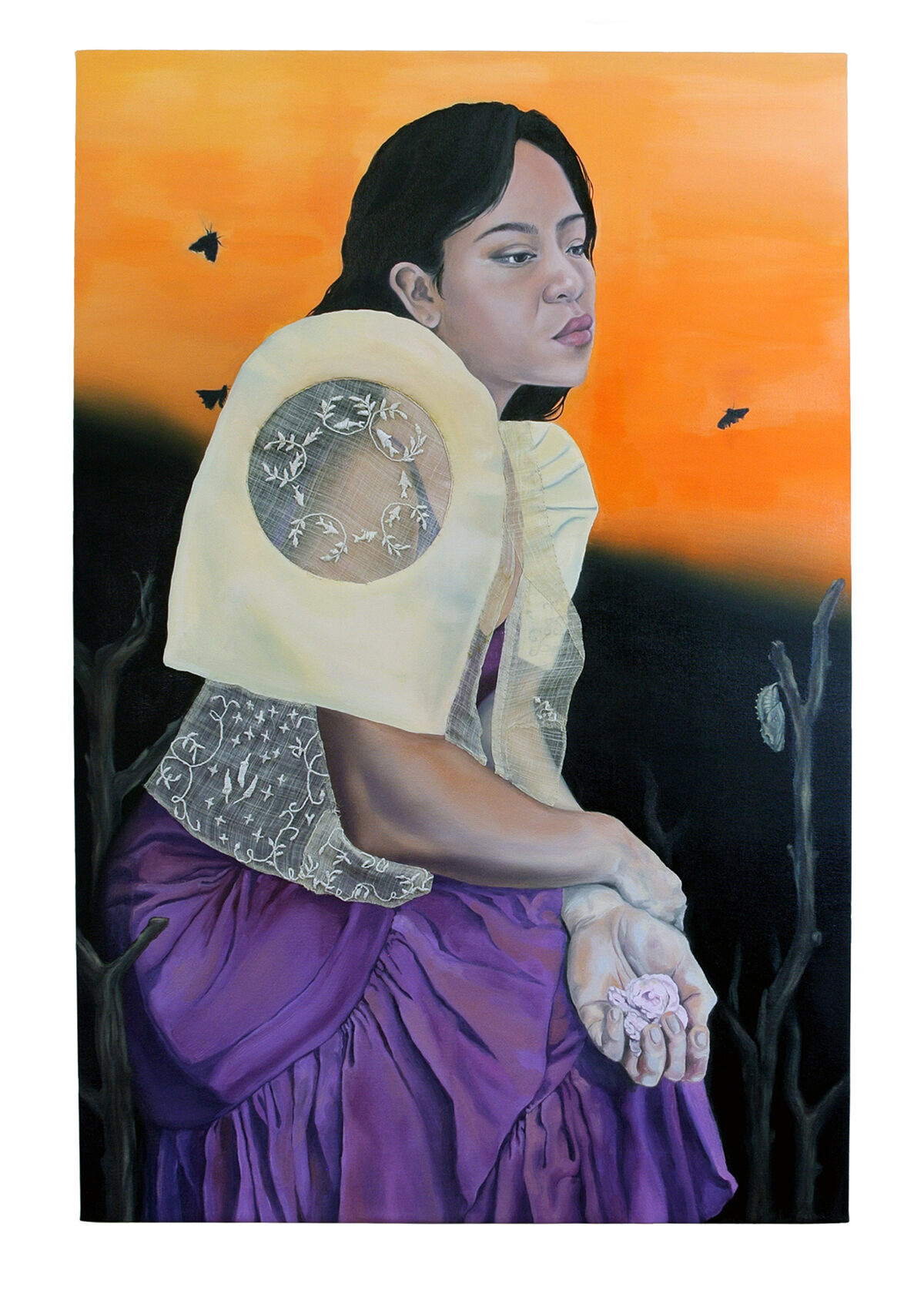 Moth Whispers, 2025, oil on canvas, hand embroidered pineapple leaf fiber, 40 x 36 inches. (Image courtesy of the artist.)
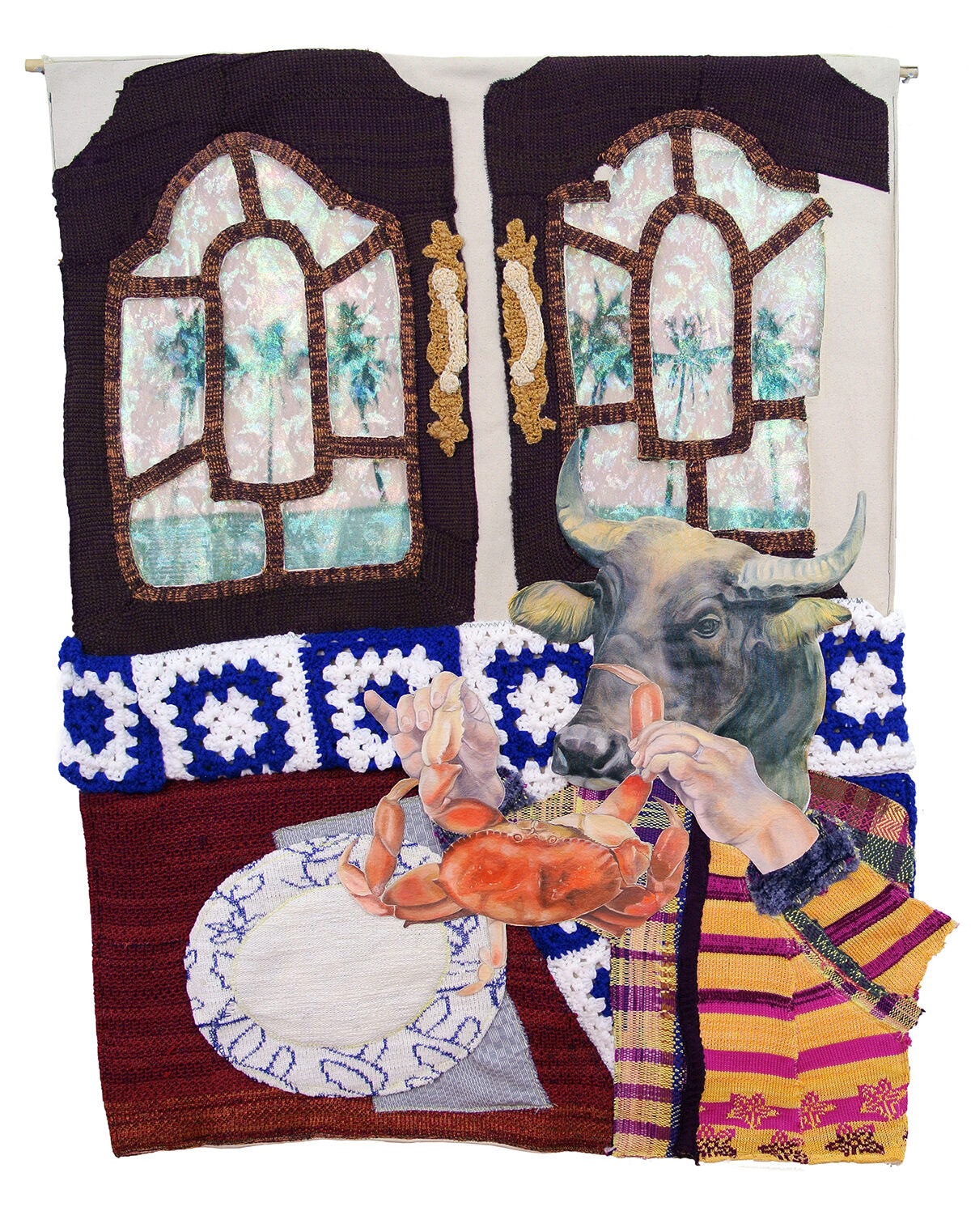
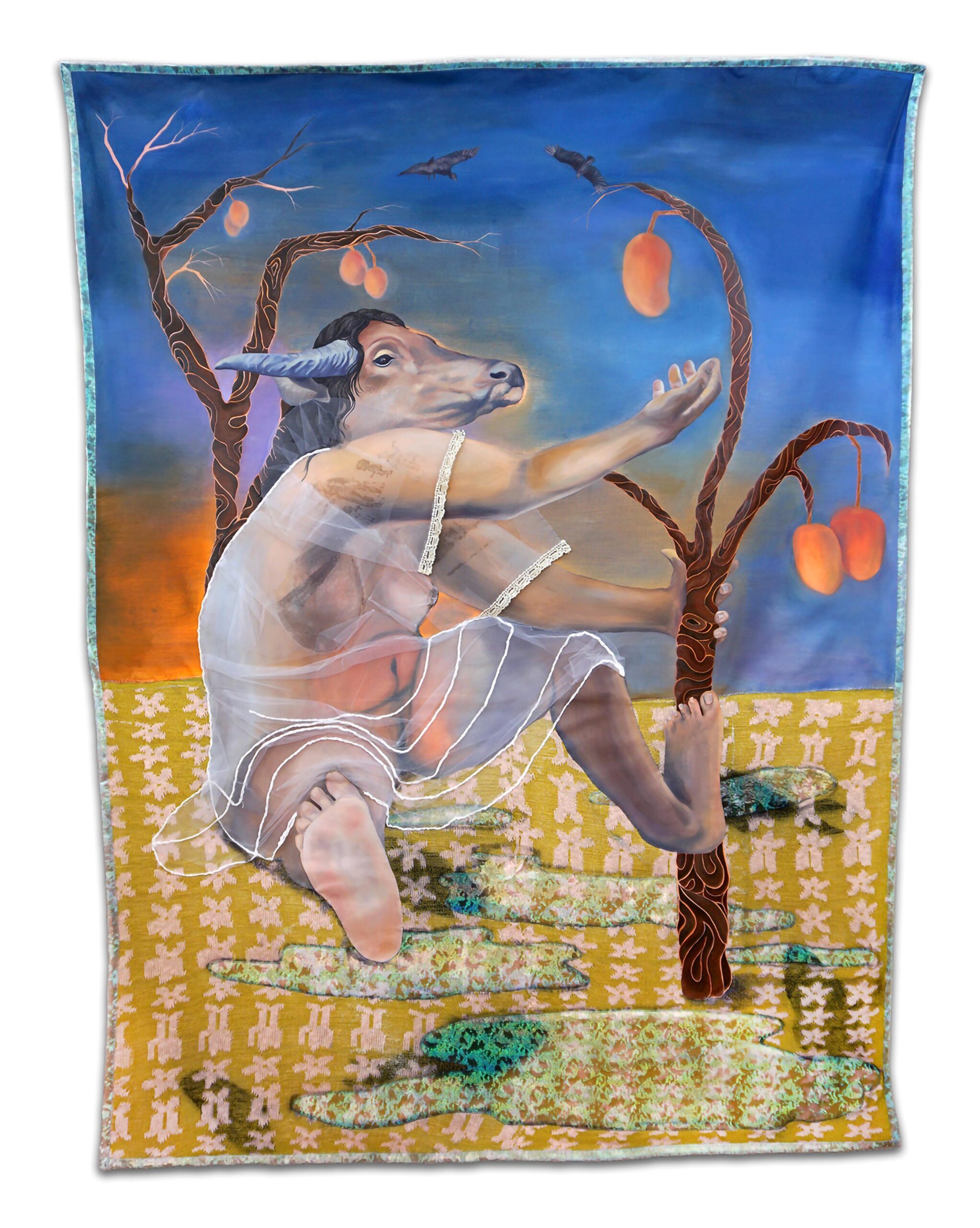
The works themselves are a blend of oil on canvas and textile design: particularly traditional Filipino embroidery, or hand-knit swatches that fill in the background of a composition. Many of these pieces feature water buffalo, some meant to be viewed as “an avatar for myself to think about more personal things going on in my life,” Jalandoni says. Others include coconut or star-apple trees found on her family’s farm. In her figural paintings, the clothing worn by the sitters is a nod to traditional Filipino culture, as well — big butterfly-sleeved dresses and voluminous skirts with hand-stitched piña cloth. The works are a reflection “on psychological and emotional aspects of being Filipino American, like the cultural inheritance or even a family inheritance,” Jalandoni says. “I’m trying to say: [Filipino] identity is not just this one thing. What does it mean when it’s combined with all these American influences or Spanish influences? It’s multiple things and it’s constantly changing.”