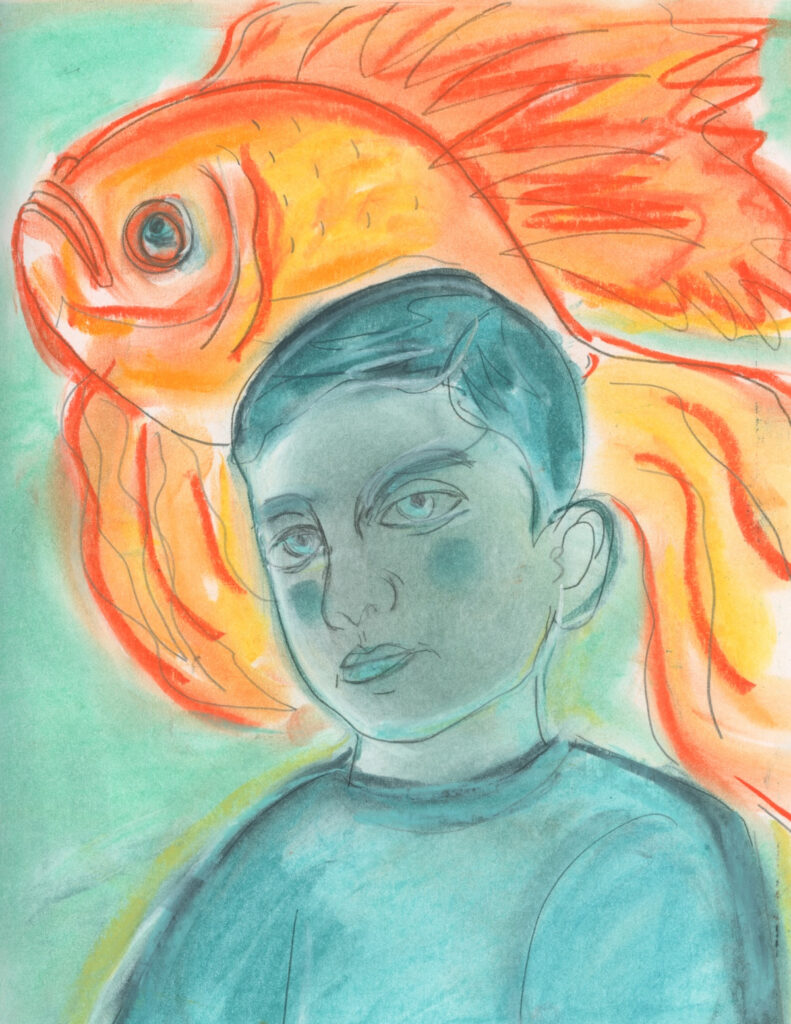
While on a research trip in Montevideo, Uruguay, in the spring of 2020, writer Jesse Lee Kercheval became stranded by the pandemic lockdown restrictions. One day, fed up with being stuck in an apartment with little to do, she ventured out to the grocery store and picked up a box of colored pencils and a pad of paper (part of the inspiration for an essay in our Winter 2024 issue). She began drawing the life outside her apartment—views from the window, whatever remained of street life below—and interior scenes, such as still lifes and self-portraits. Mesmerized by the colors and freedom the medium afforded her, Kercheval posed a challenge to herself: Draw one picture a day and upload it to social media. As the quality of her illustrations improved, she began using soft pastels. “They’re like little powdery sticks of pure color,” she says. Her drawings turned from the observational to the abstract, blending mythology with memoir, fairytale with her lived reality. These works became the basis of two graphic novels: 2024’s French Girl, about her childhood, and the forthcoming Household Gods, about her adult years. Next month, her pastel works will be on display in Drawn Lives, her first solo exhibition, at the Edgewood University Gallery in Madison, Wisconsin.
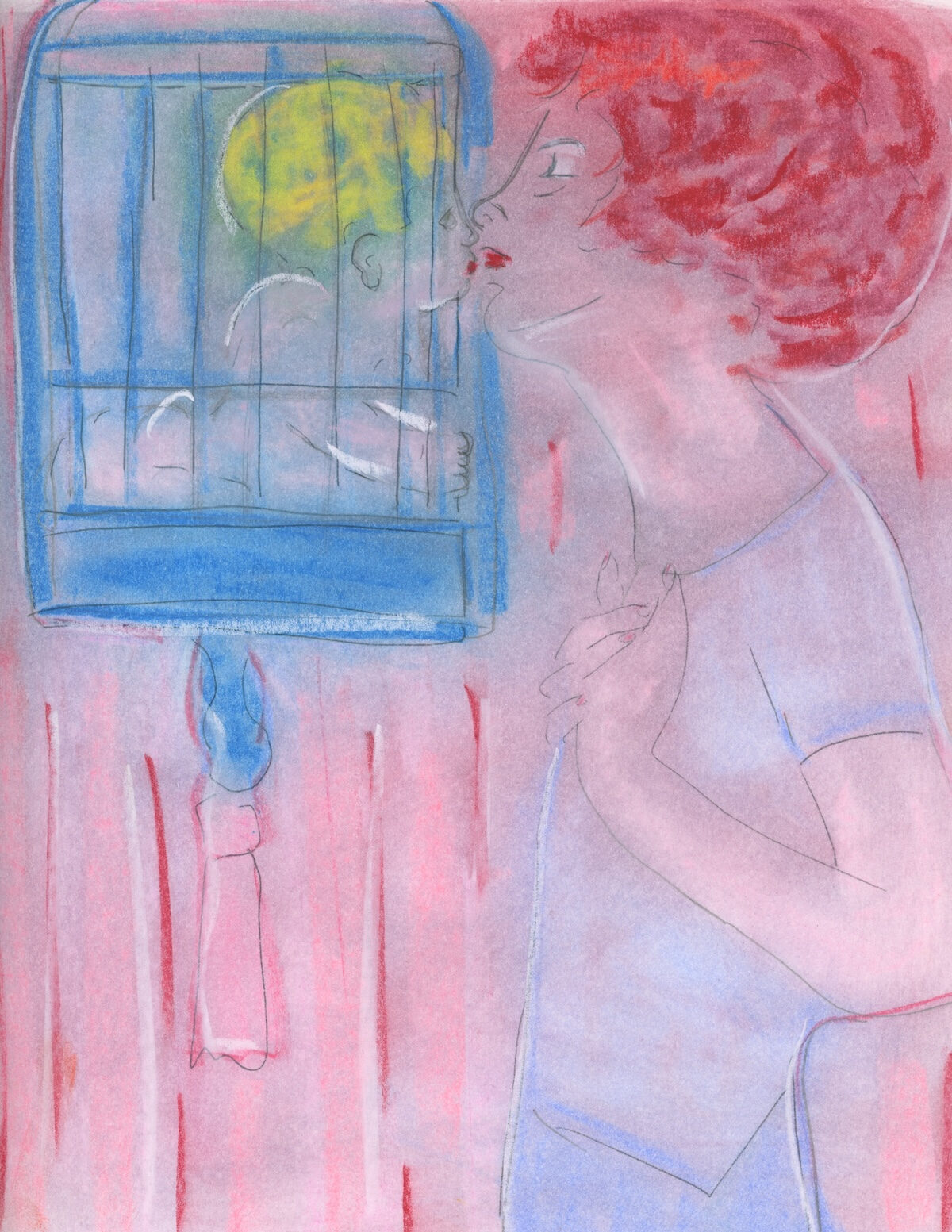 Me, the caged bird, 2025, soft pastel on paper, 9 x 12 inches. (Photo courtesy of the artist.)
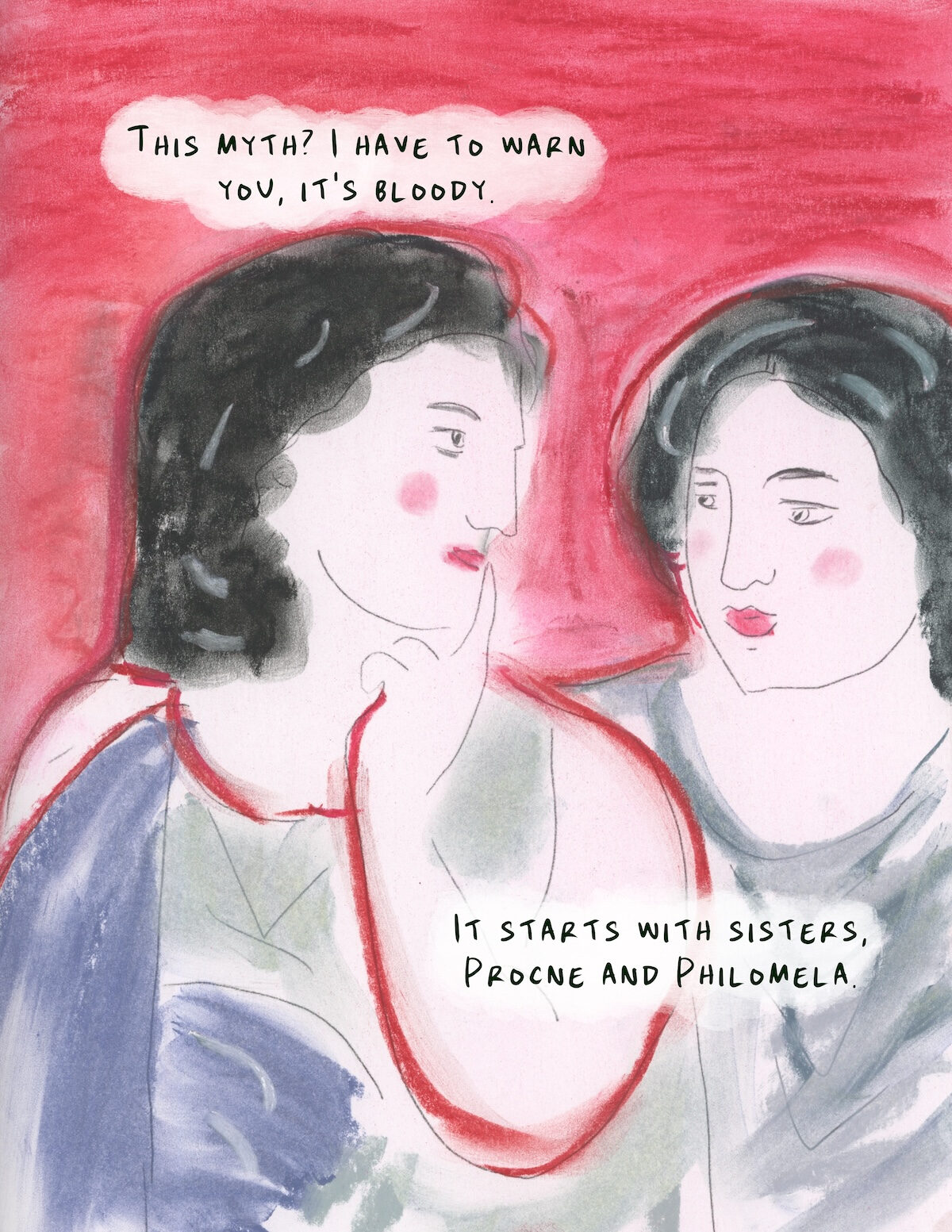
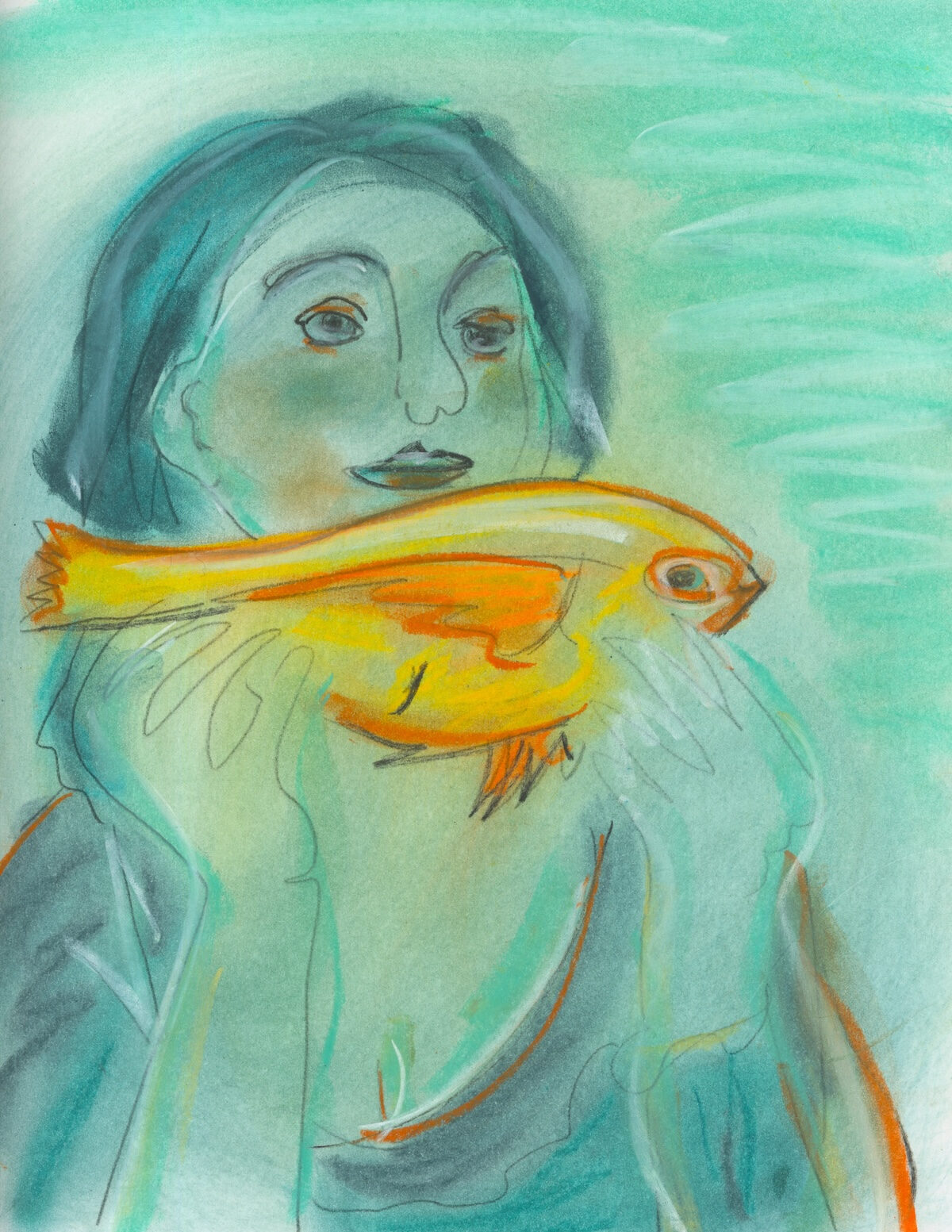
The exhibition will feature drawings from both of Kercheval’s graphic novels and new, larger works that she describes as abstracted self-portraits. She gravitates toward strong, bold colors—neon pinks, vibrant reds, aquamarine blues. She also finds herself returning to motifs from certain non–Greek or Roman mythologies and fairytales, such as Little Red Riding Hood and the Korean tale of “The Fox Sister.” “You’re just supposed to read [the Greco-Roman canon] and say, ‘Oh, this is wonderful. This is all of civilization, and we’re supposed to be so happy to have Apollo.’ I just didn’t feel that,” she explains. All of her pastel drawings, whether a part of the graphic novels or standalone artworks, are meant to convey an intangible sense of nostalgia, revisiting key life events with the benefit of hindsight. “Drawing pulls on those memories that you’ve never turned into words,” she says. “It’s not the funniest story you told about the family dachshund. It’s something that you remember, but you remember it in this very sensual way. You remember the colors, the smells, what it felt like. But you would never describe it in words.”