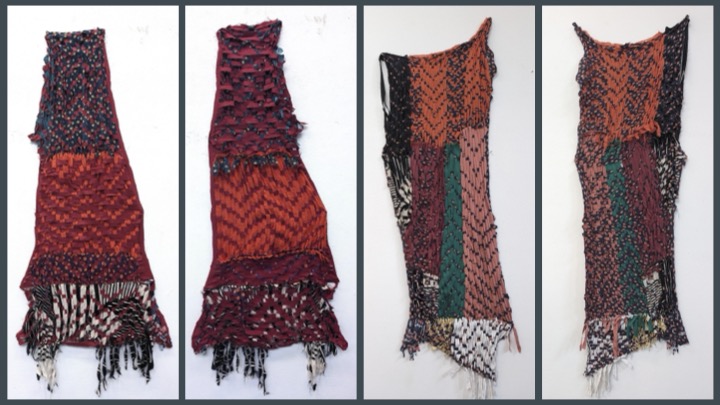
Multimedia artist K. Shanks feels most at home—and comfortable in their own skin—outside, surrounded by flora and fauna. Growing up, it took Shanks years to discover their queer, gender-nonconforming identity. Along the way, they realized that their relationship to things like clothing and family were fraught; places, such as school or their home, intended to feel safe were, in fact, not welcoming to them. In nature, however, “there was this shelter and protection and safety innately for my body,” Shanks says. “It’s funny because we think so often of needing shelter from nature, from the elements. That’s what clothing is; that’s what architecture is—shelter from that vastness that is the world.” This realization about nature led them to reflect on how animals and insects also shapeshift or contort themselves into their surroundings in order to live. The resulting works of multimedia “self-portraiture,” as Shanks describes it, were recently on view at COOP Gallery in Nashville.
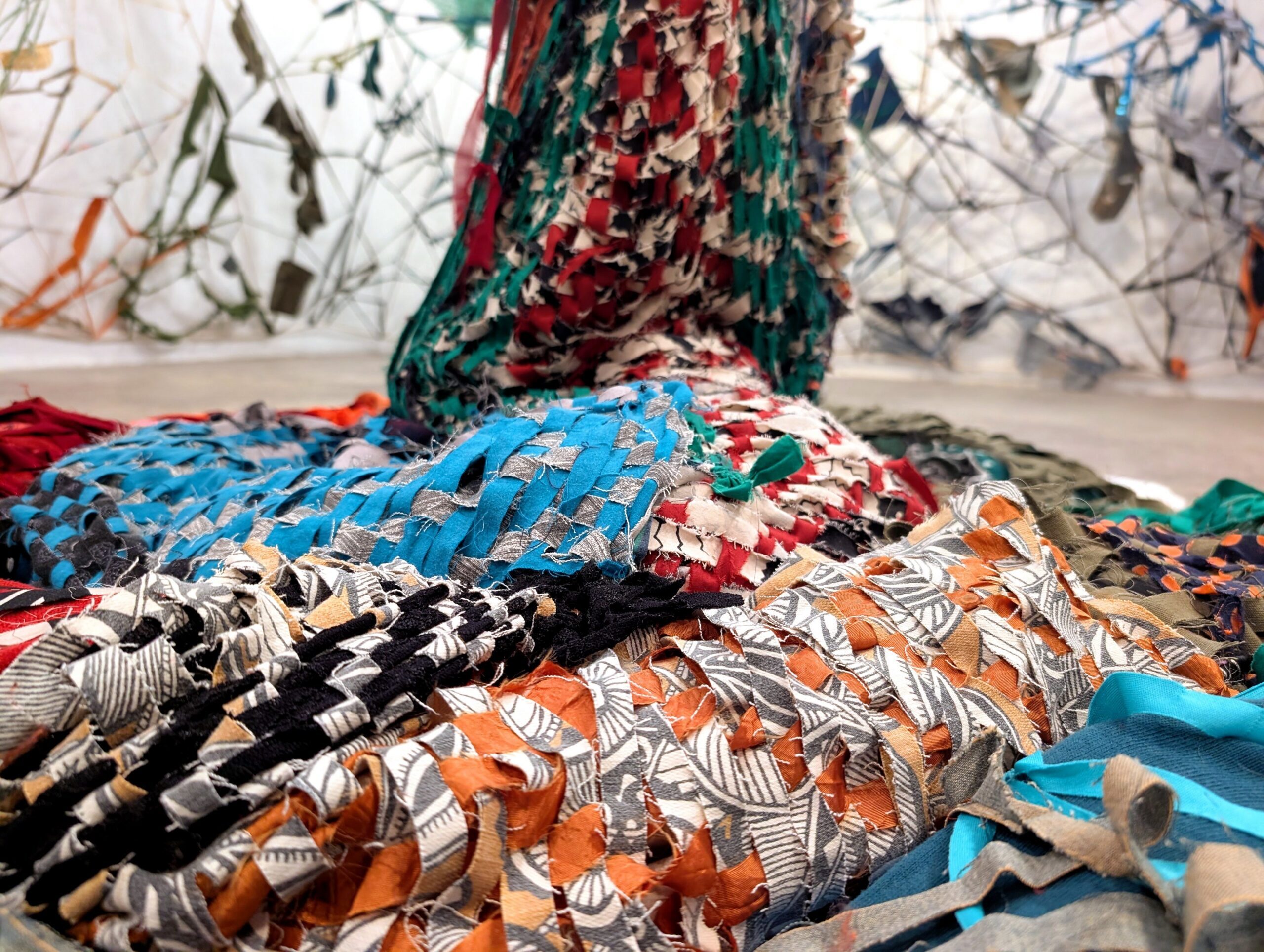 Exit Ouroboros—Enter Imago (detail), 2026. (Photo courtesy of the artist.)

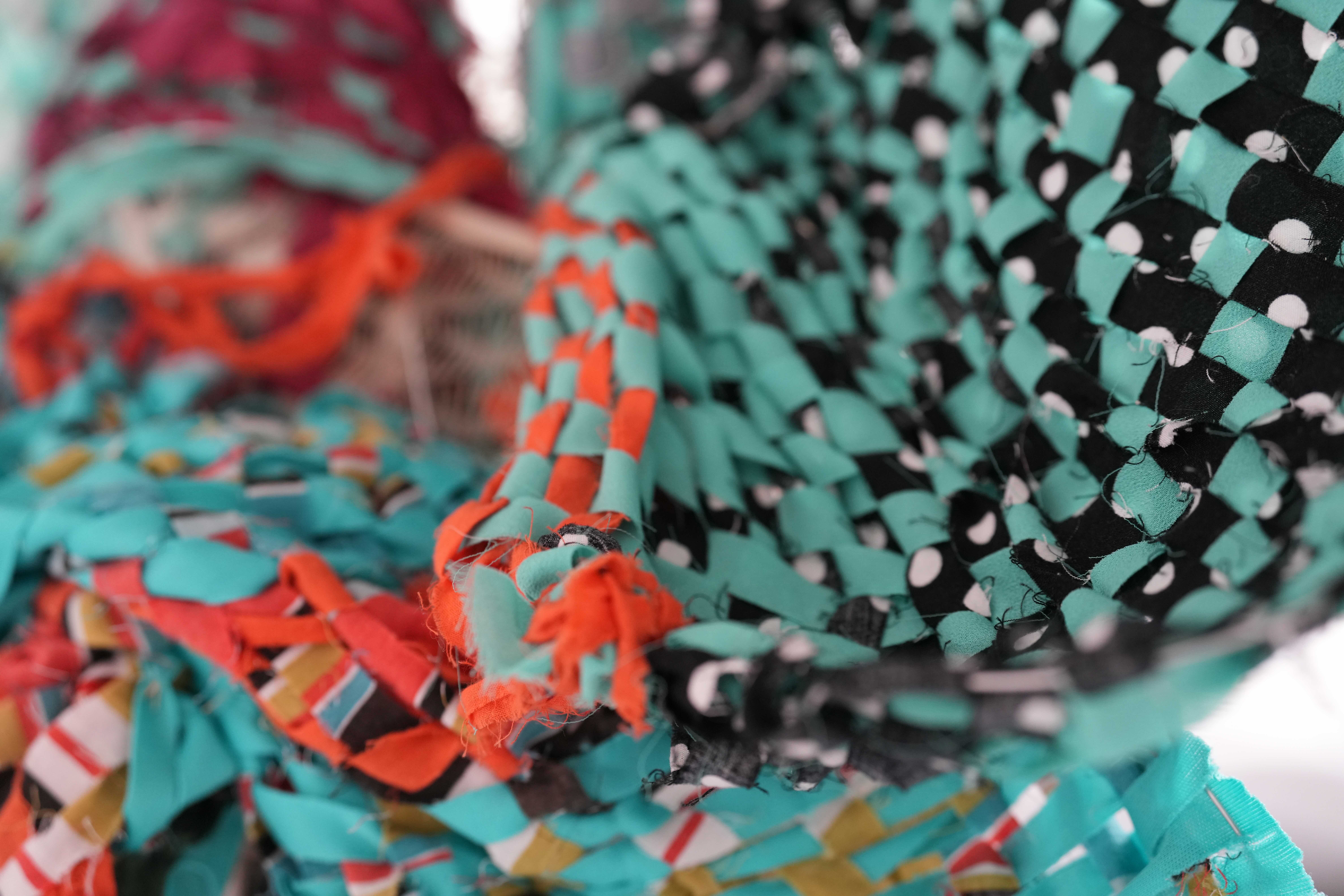
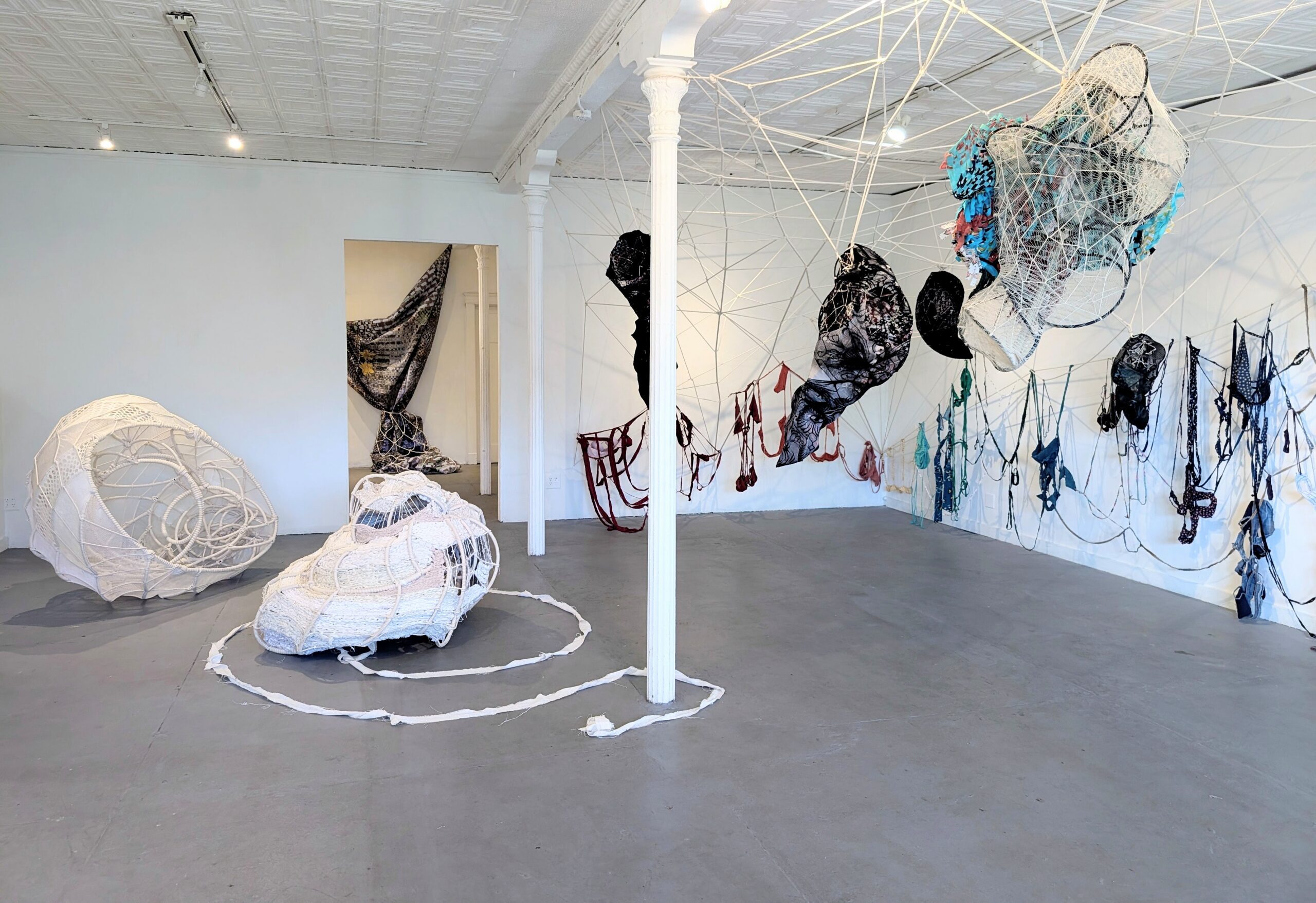
The project began when Shanks tore up their old dresses and skirts. Wearing these clothes used to feel like “an anachronistic drag show for nobody,” almost “trad-wife cosplay.” Shanks reconstructed those strips and squares of fabric into three-dimensional forms that take up an entire gallery room—an immersive installation of textile sculpture. Some of the works are meant to mimic snake skins, evoking the shedding and regrowth that occurs during a young snake’s ecdysis cycle. Other forms mimic spider webs, a nod to the “spider as weaver, as connector. I feel the resonance and the kinship” with these creatures, Shanks says, “because I, too, have done this [shapeshifting] to survive.” Constructing these pieces proved cathartic—a way of “honoring the learning and the growth, and the protection that that mask [of feminine clothing] served for me,” they say. “At that time, I was doing a lot of learning and growing within myself.”