Multimedia artist Karyn Olivier believes everyday materials “have multiple lives embedded in them, some out of necessity but some because of culture.” Olivier—who was born in Trinidad and Tobago and moved to New York as a child—grew up in an “immigrant family with an immigrant story. The idea of someone being an artist was not in the program,” she says. At her mother’s wish, Olivier studied psychology at Dartmouth, despite feeling drawn to art and art history. While working retail management jobs in her 20s and 30s, Olivier completed continuing education classes and eventually secured a spot at Cranbrook Academy of Art in Detroit, where she studied ceramics but found herself “restricted by the limitation of clay.” A professor encouraged her to take a break from the medium, and Olivier found new inspiration at the hardware store. Now, more than two decades later, her solo exhibition Bend, Break, Mend at the Museum of Contemporary Art Detroit showcases her ability to transform any common-good material into an incisive piece of art.
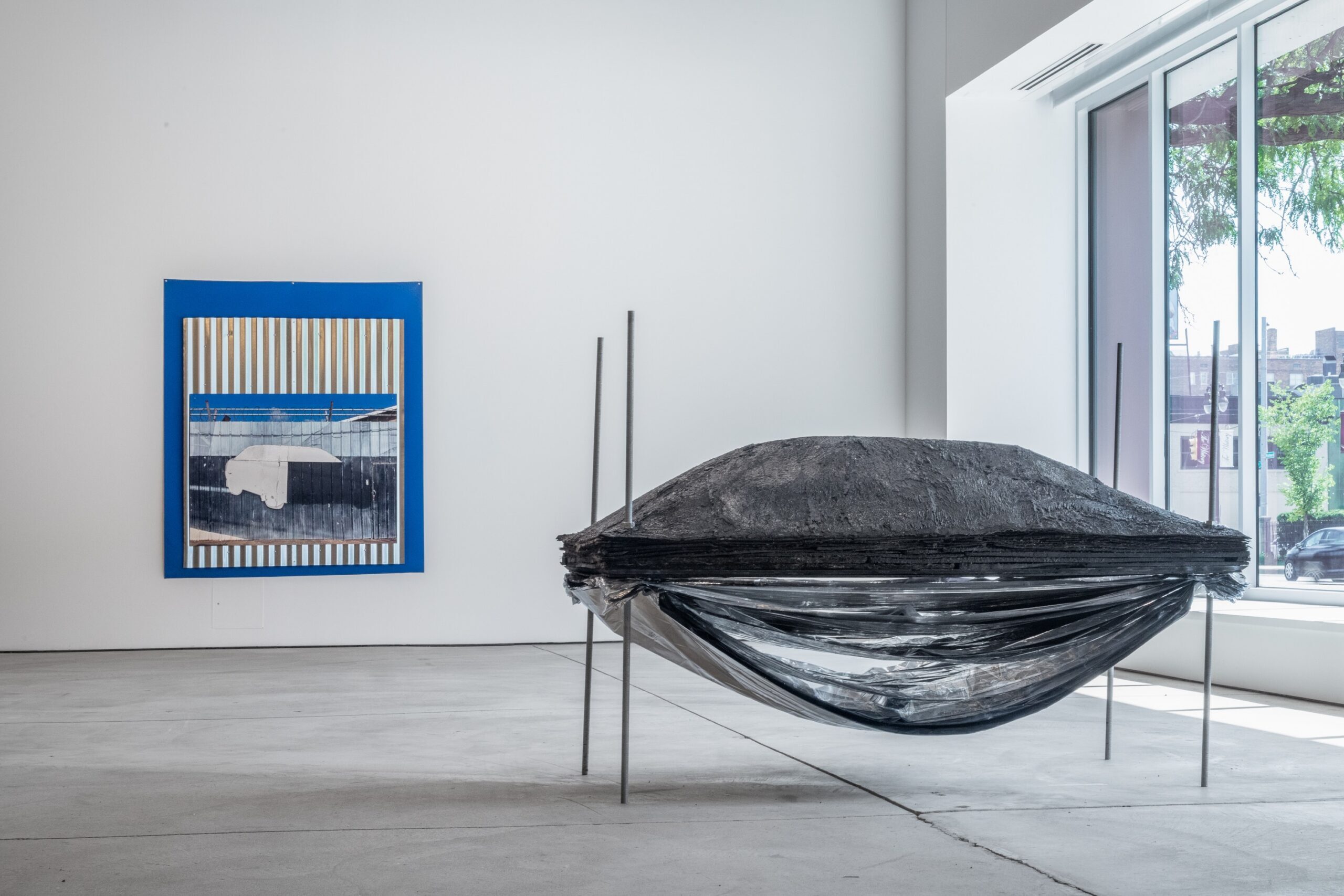 Installation view of Bend, Break, Mend at the Museum of Contemporary Art Detroit. (Photo credit: Timothy Johnson.)
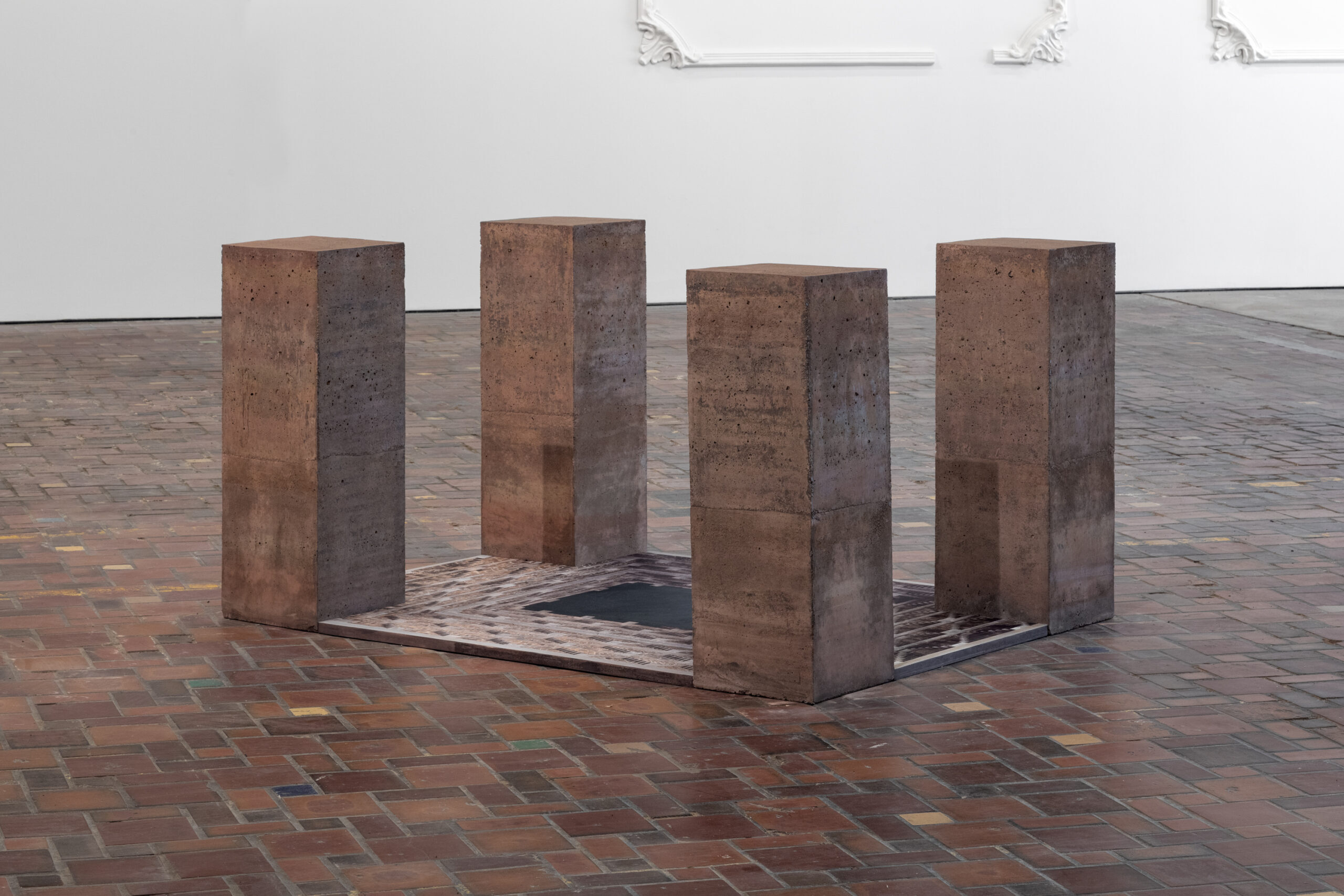
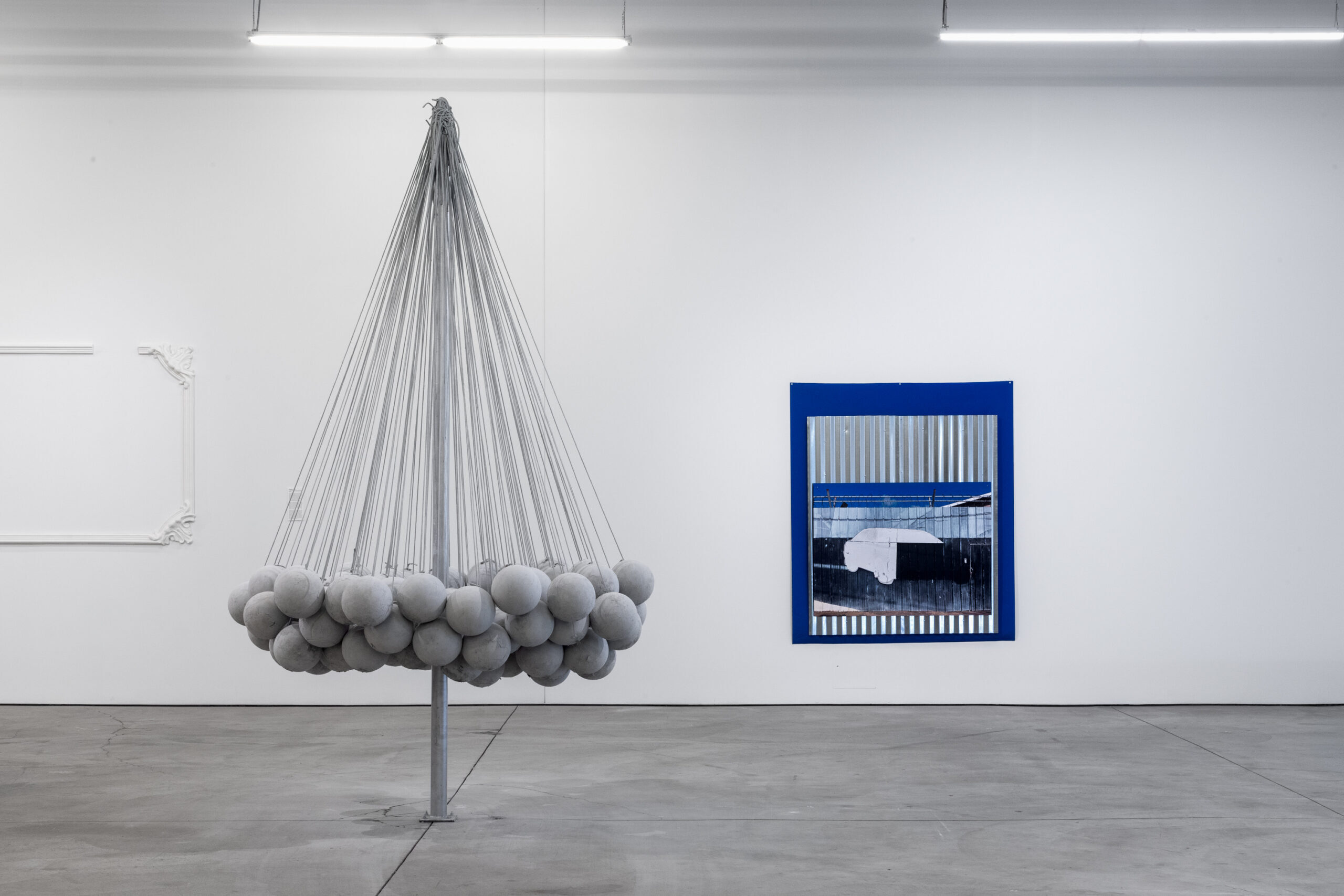
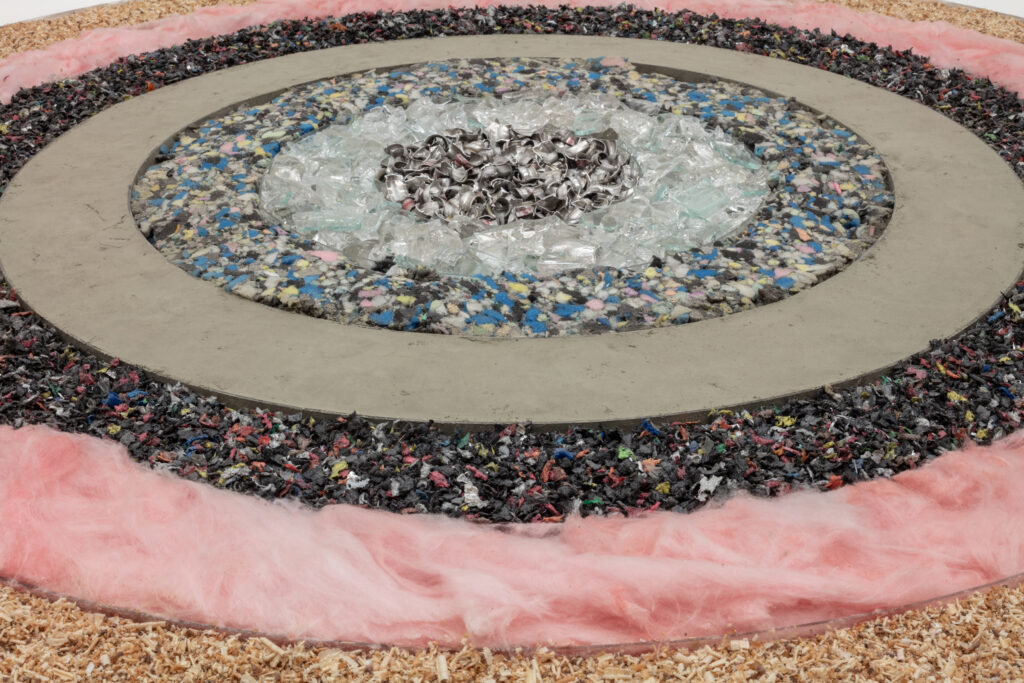
Olivier’s work addresses subjects from environmentally destructive housing practices to humanitarian crises around the world. In one piece, Powers of 10 (Home Kit)—a nod to the Charles and Ray Eames documentary of the same name—a ring of gypsum, the primary component of drywall, encircles a ring of pink fiberglass insulation, which itself encircles cement, and so on. The work is a commentary on modern building practices in cities such as Philadelphia, where Olivier now lives. “I’m reading about a beautiful historic building that’s being taken down to put up one of those ‘showing houses’ that go up in a second and are not going to withstand the test of time.” Another work, Shelter, is a simple enclosure formed by an emergency aluminum heating blanket. Olivier was struck by how the flimsy blankets, used by marathon runners to warm up after a race, are also commonly seen in refugee camps from Gaza to Sudan. “This material is so thin, so light, it’s like air. And it becomes someone’s shelter, comfort, and architecture,” she explains. “What I’m using is so basic, there’s not much to the work. But how they’re arranged maybe makes you realize the simplest, most familiar material or object can be the most profound.”