
Love the Blood
Exploring the complexity of a life with Carl Van Vechten, on the centennial of his most notorious work
I was an undergraduate student in Yale’s American Studies department—a department that claimed my heart and my mind—but even after four years, I was still trying to find my place on campus. That search went on during my subsequent years in New Haven as a PhD student in American Studies. I was looking for models, for fellow travelers, particularly like-minded women who had things to teach me. This is what I found in Kymberly Pinder. As graduate students, Kym and I “was girls together,” to use a phrase from Toni Morrison’s 1973 novel, Sula. We were Black girls together at Yale, to be specific.
Kym was at the beginning stages of what would be a formidable career as an art critic and a historian, one that has led her back to Yale as dean of the School of Art. Back then, her fascination with medieval art fascinated me. It was clear that she had the same passion for the bold colors on the works to which she introduced me as I felt for black type on the page. It was a passion that was bottomless.
We were the same age, but Kym seemed to have the kind of intellectual authority and creative boldness that I did not think I possessed. I thought she was courageous, mastering a body of work that had not even anticipated her very existence. I was excited by my chosen field of study—the Harlem Renaissance—but my own commitment felt a bit predictable compared with the scholarly adventure Kym had designed for herself.
I was also, at the time, suffering from deep ambivalence. Beneath my placid exterior roiled a true conundrum: I had fallen in love with a white man, and not just any white man but, very decidedly, the wrong white man. That man was Carl Van Vechten. As a champion of the Harlem Renaissance, Van Vechten helped further the careers of Zora Neale Hurston, Langston Hughes, and many others, and his photographs of the movement’s artists were brilliant, vital, and enduring. But it was the publication of his 1926 novel Nigger Heaven—which depicted the lives of Harlem residents—that incurred the wrath of W. E. B. Du Bois and others, for both its title and its lurid content. By the time I was a graduate student, I had loved Van Vechten for years, but I still didn’t really want anyone to know how far I had truly fallen.
I thought Kym might have gone through a similar kind of struggle, or had entertained a similar kind of ambivalence when it came to medieval art. I wanted to know how she had answered the internal and external voices that might have urged her in another scholarly direction. I wanted to know where her courage came from.
What was it about medieval art, I asked her, that so compelled her?
“I love the blood,” she said, without missing a beat.
And that was it. A woman laying claim to her own imagination without apology. A woman in charge of her own curiosity. Liberation. Awareness. It was, for me, a eureka moment.
In a 1984 interview, when asked about the process of his “coming out” (a term that he did not use himself), James Baldwin said, “You have to go the way your blood beats.”
To have a passion is to have an identity. And the forging of any identity is almost always a bloody business.
“I have had a lifelong obsession with blood, and I’m not the only one,” writes Lawrence Hill in the early pages of his 2013 collection of lectures, Blood: The Stuff of Life. “As both substance and symbol, blood reveals us, divides us, and unites us. We care about blood because it spills literally and figuratively into every significant corner of our lives.”
As a woman, as a religious person, as a survivor of a violent encounter with a knife, and as the mother of children who endured their fair share of skinned knees and bloody noses, I am also deeply and personally acquainted with blood, as both a reality and a symbol of something bigger than what is contained in the world we can see.
add up to something. After all, it had nearly cost him the life of someone he had loved long before I arrived. A lot of blood had been spilled so that I could thrive.
If the forging of identity is a messy, bloody business, so too is life itself, particularly its beginnings. We all come roaring out of somebody’s womb, making a terrible bloody mess in the process. My own emergence from the birth canal brought my mother’s body to the point of near-fatal distress. The ob-gyn in attendance posed to my father a choice worthy of King Solomon: Save the woman or save the child? “The woman,” my father, himself an ob-gyn, said, reportedly not missing a beat.
My father’s logic must have gone like this: I can make another one of those (meaning: me), but my wife is truly one of a kind.
I think my father would tell me this story—and he told it more than once—to remind me of how exceptional my mother was. He did it also, I think, to enforce in me a belief that my life should add up to something. After all, it had nearly cost him the life of someone he had loved long before I arrived. I grew up with the awareness that I should not waste my time here on Earth. A lot of blood had been spilled so that I could thrive.
My parents were both trained as medical professionals, and they didn’t believe in using cute euphemisms for bodily functions. In general, they were not ones to put much stock in the very human impulse to pretty up the messiness of life. They were not afraid of blood. They were also religious people, and they took their children to church every Sunday to drink the blood and eat the body of the emblem, or human being, we referred to as the living Christ—to consume all the words and symbols of our faith—and thereby confirm our devotion to the ideals that would go on to shape my dreams, fears, and life’s ambitions.
We drank the blood and ate the body in a small Nashville chapel that catered mostly to the students attending Fisk University and Meharry Medical College; my parents were graduates of both schools. All three institutions—chapel, university, and medical school—are within strolling distance of one another and of the Carl Van Vechten Art Gallery, which sits on the edge of the Fisk campus. The gallery was established in 1949, toward the end of Van Vechten’s long life, well after the celebrity and controversy that had made him a fixture in the world of culture had faded. Over the course of his career, Van Vechten had been a visionary in the arenas of literature, music, dance, and photography, both in the United States and abroad. But neither fame nor infamy is sustainable for most people. Van Vechten watched his star fade. Even though his ego suffered greatly in the process, he was never one to admit defeat. He doubled down on institution-building projects, such as the establishment of archives and galleries all over the country. It was a gesture of goodwill and a sincere and admirable expression of his commitment to artistic citizenship on the highest level. But such undertakings also ensured that his name would live on. He was as calculating as he was reckless, as altruistic as he was egotistical. In the end, he was a full human being, just like the rest of us. And yet, at institutions such as Yale’s Beinecke Rare Book and Manuscript Library, where Van Vechten’s extraordinary work is prominent, I have yet to hear his name spoken with anything other than embarrassment, except by me.
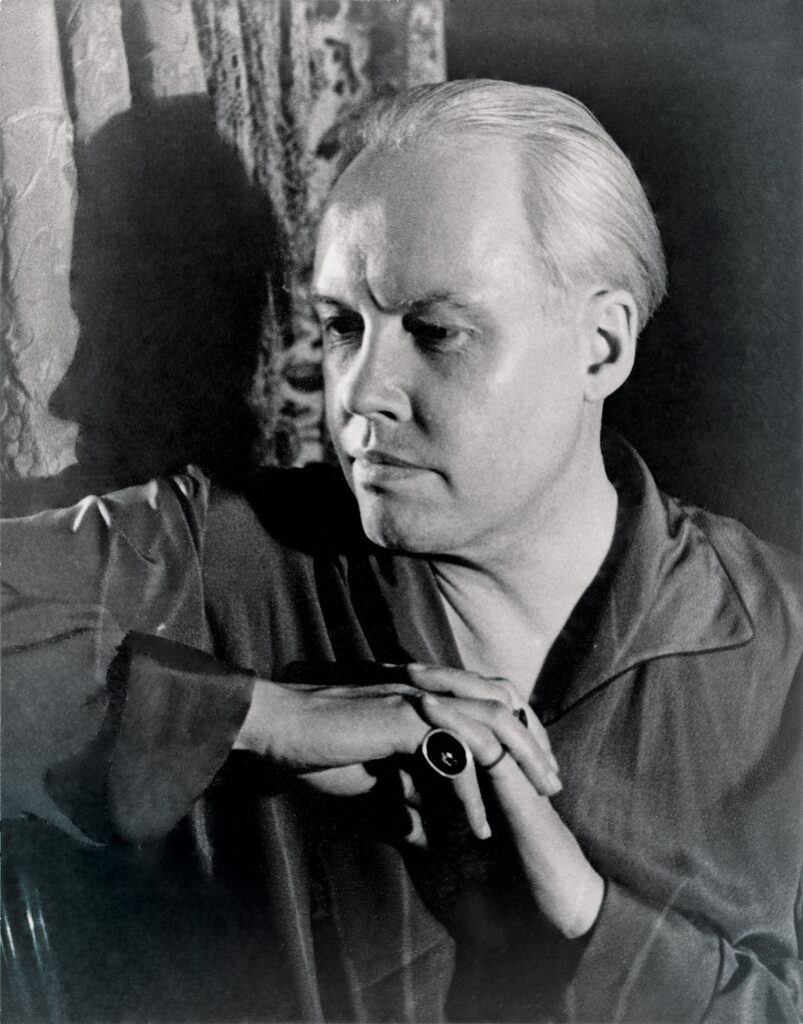
As a child growing up in Nashville in the 1970s and ’80s, I had no idea who Carl Van Vechten was. It is not impossible to imagine that my mother, a poet and student of Robert Hayden’s who graduated from Fisk in the late 1950s, literally crossed paths with him, a tall, odd-looking, white-haired white fellow with notoriously protruding front teeth. Why not? They both loved and respected the same things: Fisk University, art that stirred and disturbed, and Blackness.
Fisk carried in its very body the hopes and beliefs of its founders in the possibility of a “New Jerusalem,” to borrow a phrase from the same James Baldwin interview I referenced earlier, a sacred space steeped in the secular Protestant ethics of work, duty, and sacrifice as almost Romantic concepts. Langston Hughes and James Weldon Johnson played central roles, at various points, in the life of the campus. W. E. B. Du Bois received one of his two undergraduate degrees from Fisk (the other was from Harvard). My parents’ union looked to many like a Du Boisian ideal of service and fidelity to the race, and I grew up hearing his name repeated in my home the same way Catholic kids grow up hearing the names of certain saints.
The past reigned supreme in our house. It held faster to my parents’ imaginations than did the present or the future, which were both precarious and unknown, given that we lived in the belly of the beast: the slowly—and, in many cases, resentfully—desegregating American South. The strict and fatal line separating Black from white was eroding and intensifying at the same time. I was raised according to unwritten rules passed down through generations of ancestors who understood that in order to survive, Black people had to learn early to navigate white expectations.
If the present was in flux, the past was neither safe nor settled, and my parents told their stories over and over, each time refining or uncovering details that both enthralled and terrified me, their only daughter, who, as a result of her robust imagination, began to believe that her own destiny was wedged somewhere within the lines of their narratives. Regardless of their intentions, the lessons of my parents’ pasts composed the map of my future.
I grew up in the shadow of revolutions—more bloody business. First the Civil War, in whose ashes the dream of a university first gathered in the minds of the three men who started the Fisk School in 1865, two years after the Emancipation Proclamation. Later, several lunch-counter sit-ins and demonstrations, which turned Nashville on its back, were plotted out by classmates of my parents at Fisk. As a medical student, my father would tend to the burned flesh of students who had maintained perfect composure as they sat at lunch counters while enraged white people put out cigarettes on their skins. On Sundays, those same students would attend our church, where the priest and parishioners tended to their souls.
The never-ending project of radical racial renovation—a project steeped in robust disagreement—began with the New Negro Movement and has, to my mind, neither slowed nor ceased.
By the time I actually crossed the threshold of the Carl Van Vechten Art Gallery, I was a scholar, which is to say that I was an adult. Sort of. I remember the stiff and slightly uncomfortable suit I wore when I went to meet the curator and get a tour of the modest building. My second book featuring Van Vechten had recently come out, and I had been invited to testify, as a writer and a teacher, to the life of the man, to tell about the person whose name the gallery bore.
I had been in the Van Vechten game, at that point, for many years, so I was very familiar with the meaning behind the curious looks and lukewarm smiles that alighted on the faces of Black people—whether scholars, students, or readers—when they learned of the object of my fascination. Carl Van Vechten has long been the locus of trouble as much as pleasure in my life.
Years ago at Yale, I sat in a dining hall across from a dear friend who had seemed unusually irritated with me of late. When I asked him why, he confessed, “Out of all the people in the Harlem Renaissance for you to write about, why are you writing about that white man?”
I want to offer some context for this comment before I go any further. First, that friend is still dear to me; it was only a disagreement. In fact, we have revisited the exchange more than once over the years, always with new eyes and insights. Second, we were both college seniors at the time, making the long, final laps before we would be set free into the world. I was shoulders-deep into my senior essay, which concerned the dynamic between white patrons and Black artists of the Harlem Renaissance. Central to the story I was trying to tell was the 40-plus-year correspondence between Carl Van Vechten and Langston Hughes, which would become the topic of my first book.
Whenever I told people about this work, they always—to a person—assumed that the draw was Hughes. I understood why they made that assumption. With his pleasing appearance and sonorous literary style, Hughes has always been easy on the eyes and the ears. I am my mother’s child, however, and I am far more drawn to art that disturbs—especially art that provokes me at the very foundation of my beliefs.
I remember the peculiar cocktail of emotions that gathered in my chest when my college professor, while going over a list of options for paper topics, introduced us to the story of Carl Van Vechten and his relationship to the Harlem Renaissance. The title of his notorious 1926 novel jumped out and grabbed me by the throat. My parents never used the n-word, not even in the ironic way that Van Vechten claimed to use it, which is the way I had heard other Black people use it, in the correct company, in my tidy-seeming, proper-speaking Black Nashville world. As a girl, I had heard white people use that word only maliciously. But here was a white man from a long time ago who had used it in a title of a book! A book from the Harlem Renaissance, no less, the world from which I had already decided, at 20 years old, that I had myself somehow emerged. Who was this white man? And what did it all mean? The latter question is one that I am still trying to figure out.
But my friend had decided who that white man was and who that white man was not—both for him and for me, if I was to become the Race Woman my parents had raised me to be. In that moment, my friend certainly believed he had it all figured out. But as college students in the 1980s, we were steeped in identity wars whose contours and implications neither of us as yet fully appreciated. Only now, when we go back over who we were then, and what brought us to that moment in the dining hall, do we realize that we both thought we understood the world, ourselves, and each other in a way that we simply did not.
I respected my friend, so his words stayed with me. You should have seen us: two individuals whose faces bore the clear, unmistakable imprints of their multiple bloodlines and cultures of origin, trying desperately to negotiate the narrow boxes of identity that the world had created to simplify or deny—certainly not elucidate—the truly complex story of their lives. We were both trying valiantly to be Black with an uppercase B years before that capitalization became standard practice. And the kind of Blackness we were both trying to embody could not tolerate my growing love and admiration for Carl Van Vechten.
Have you ever tried to fall out of love? I tried, but I kept returning to Carl. Among other things, he helped me better understand both Fisk and Meharry—those living testimonies to Black excellence during the eras of segregation and beyond that shaped my parents’ experiences. He enabled me to view and approach the staggering explicit and implicit expectations enshrined in the halls of those institutions through the lens of his inimitable flair and irreverence. I owe him for this, and much more. I saw him as a gift in my life, and I did not want to give him up. What is a true gift? According to Lewis Hyde, it “is a thing we do not get by our own efforts. We cannot buy it; we cannot acquire it through an act of will. It is bestowed upon us.”
What Van Vechten gave me is the gift of being able to see my own life in a new way. I had been raised to see the history of Black people as a series of steady achievements; we were on a prolonged, and often interrupted, march toward greatness: the Du Boisian ideal. Into this noble procession Van Vechten smashed like a Mack truck, at least in my understanding of my own history. Into the sober drawing rooms where Black progress was debated in long, immaculate speeches, Van Vechten arrived in a top hat and sarong. He was quite the spectacle, and his own perspectives on race, art, and identity broadened my own.
To know someone is to feel qualified to anticipate their positions on things. I am confident that Van Vechten would be frustrated by our current cultural climate. We call it being correct or progressive, but at its worst, our present cultural “reckoning” invites a new call to conformity. The criminal activity of some of our modern monsters is stuff for which there should be unending punishment. But compliance for its own sake is a bad habit that only Van Vechten could help me shed. The correction had to come out of left field. I used to be exclusively focused on the goals my parents had laid out for me. I had to be hit over the head by a tall, strange-looking fellow in a topcoat and tails. I spent years walking the line, but I no longer play the segregation game in any of my lives, and certainly not my creative life. Carl Van Vechten made being disobedient look like so much more fun.
I think it’s fairly safe to say that the archives and galleries that Van Vechten either established or enriched constitute an exceptional and truly fine legacy. His photographs betray the range of his curiosity and the depth of his awareness of the talent that flourished around him. It is not possible to tell a complete story of African-American life without including Van Vechten’s photographs—evidence of his own foresight and rightness when it came to recognizing talent. He’s the white drop in the black paint—to put my own spin on the story of Lucius Brockway in Invisible Man—that makes Blackness shine brighter.
I believe it’s very safe to say that his infamous 1926 novel is not among his greatest achievements. By the end of his life, even Van Vechten himself may have agreed. Still, the novel was the bestseller of the Harlem Renaissance, outdistancing even Claude McKay’s equally scandalous (according to Du Bois) novel Home to Harlem (1928). In the pre-internet age, when there was much less to talk about, everyone was talking about Van Vechten’s novel. Van Vechten loved being famous. The naked pleasure he took in being known sprang up alongside the panic that grew in him as he saw his fame turn quickly to infamy. When his novel was being denounced from pillar to post, he had dreams that he was being chased by Black people. “At 4 Langston Hughes appears & later Jim Harris with a list of questions regarding Nigger Heaven, as apparently he is being pestered by people who say I have betrayed the race! All this upsets me as much as usual,” he wrote in his daybook in September 1926. He slept badly that night and sought comfort from his wife at the time, Fania Marinoff: “Before dawn crept into Marinoff’s bed.” His distress generated vivid, violent dreams. “I go to bed about one & dream I am a Negro being chased in riots,” he recorded in one entry. Even good reviews and breathtaking sales could not cure his anxiety. “I dream I am a Negro & being pursued,” he wrote four days after the first set of bad dreams.
It’s fair to say that Van Vechten got what was coming to him. He ignored friends who told him he was making a mistake by using that title, that people would simply not understand. He argued with intimates, though he registered the pain he caused them in his notes to himself. When Van Vechten tried the title out on Countee Cullen, the author of Color and The Black Christ turned “white with hurt,” as Van Vechten wrote in his daybook.
Van Vechten was exceptionally stubborn, and he rejected the advice of his own father, who took him to task for his hubris. “If you are trying to help the race, as I am assured you are,” the elder Van Vechten wrote his son, “I think every word you write should be a respectful one toward the black.” But Van Vechten wouldn’t listen, so he wound up like Narcissus, obsessed with his own reflection.
He was perhaps most mortified by the reaction of Du Bois, who in his review for the Crisis called the novel “a blow in the face.” Du Bois expressed the view of many Black readers: Van Vechten had been invited into our home only to call us out of our name.
The intimate, domestic analogy—the home—must have pained Van Vechten, who spent most of the 1920s in and out of the parlors and dining rooms of various Black friends and acquaintances. The apartment on West 55th Street that Van Vechten shared with Marinoff was known as “the midtown office of the NAACP.” Parties were so important to Van Vechten that in his final novel, published in 1930 and fittingly titled Parties, he paid homage to their centrality in his life. But in 1920s America, social occasions provided more than just opportunities to drink gin out of someone else’s shoe. They gave Black and white people a rare chance to congregate as equals, even in New York, where color bars prevented such interactions. I don’t think the negative critiques of his novel would have penetrated—if Van Vechten would ever have appreciated the degree of injury his book caused—if he hadn’t been shut out of some of his favorite interior spaces as a result, such as the Smalls Paradise nightclub, which allowed him back in only after Zora Neale Hurston and Walter White helped smooth things over. And ultimately even Du Bois forgave him. He sat for Van Vechten’s camera. And in 1928, just two years after he urged his Crisis readers to throw Van Vechten’s novel down the sewer, he was inviting the author of that book to witness the wedding of his only daughter, Yolande. Ultimately, what had looked like a war between Du Bois and Van Vechten amounted only to a temporary disagreement.
Van Vechten learned his lesson. He never published another fictional word about Black people. And he triumphed in the end. Eternally stubborn, he continued to go the way his own blood beat, and he served the uplift of Blackness for the rest of his natural life and beyond, with his archives, photographs, scrapbooks, and diaries—and all the life lessons he left behind for someone like me to come along and learn from, and enjoy.
Recently, I have been happily engaged in an imagined, internal argument with Claire Dederer’s Monsters: A Fan’s Dilemma, a 2023 nonfiction work that teeters between memoir and narrative. Early in the book, Dederer confesses that she “wished someone would invent an online calculator—the user would enter the name of an artist, whereupon the calculator would assess the heinousness of the crime versus the greatness of the art and spit out a verdict: you could or could not consume the work of this artist.”
The catalyst for Monsters is Dederer’s uncomfortable, unsettled imagined relationship with Roman Polanski; he’s the “monster” whose criminal behavior—the rape of a 13-year-old girl, to be exact—is something Dederer cannot reconcile with the clear genius of his creative vision. “I wasn’t supposed to love this work, or this man,” she writes in her opening paragraphs. “He was the object of boycotts and lawsuits and outrage.”
Polanski and Van Vechten are miles apart in many respects, and Van Vechten was not a criminal, although he did spend time in jail as a young man when he failed to pay alimony to his first wife, Anna Snyder. He was also an unapologetically gay man at a moment in history when homosexuality itself constituted a crime. For many years of his life, Van Vechten struggled with alcohol, and sometimes when he got drunk, he became violent with his beloved Fania Marinoff, his wife of 50 years, whom he referred to as “the most permanent influence” in his life. His diaries reveal the shame his bad behavior caused him. When he got drunk, he could be nasty, as he was during one evening with Hughes, Hurston, and others. “I get very drunk & abusive & finally pass out,” he recorded in a 1926 daybook entry. Sometimes when he became abusive with Marinoff, she would retreat to the house of a close friend for the night. Two months before Nigger Heaven was published, they got into a fight and Marinoff left, saying she was leaving him for good. He couldn’t sleep and paced the floor well into the night. “She says she is through forever,” he wrote in his daybook the next morning. “If she is, what is there in life for me?” They soon reconciled, and he was never violent with his wife again, although they continued to quarrel, often in public.
Choosing an offensive word for the title of your book is not illegal, but critics today continue to treat Van Vechten as a noxious element in the glorious, ongoing pageant of Black progress, a rude stain on an otherwise glittering moment of Black pride that they would prefer to remove. In a 2014 review of the latest Van Vechten biography, Lawrence Jackson calls Van Vechten a fickle, insincere schemer and likens him to a vampire. Most of the time, however, Van Vechten is just ignored.
I wonder how Van Vechten would fare in Dederer’s hands. And I am glad that the calculator that Dederer envisions does not exist. There is no formula for deciding whose art survives and whose does not—nor should there be. Van Vechten would certainly have been eliminated in the early rounds of the ongoing game of cancel culture. In many ways, he has suffered the same fate as others whose past misdeeds have come back to haunt them. But there must be distinctions made between outright pathological behavior and acts that, however harmful, are evidence only of arrogance, shortsightedness, or poor judgment.
When it comes to Van Vechten, I don’t pretend objectivity. To the contrary, I use the language of love on purpose. I love all the gifts that Van Vechten left behind for me to learn from, his triumphs as well as his failures, chronicled in black type on white paper, in the inimitable scrawl of his handwriting, and in the various bold and exotic colors he used for his signature in correspondence, and in his photographs. It’s all there: his mistakes, inconsistencies, fears, and fantasies. Having spent most of my adult life inside his, I have had the distinct privilege of watching how he changed and grew over time. He was a human being who lived a human life, which is always a messy business.
In Paths Toward a Clearing: Radical Empiricism and Ethnographic Inquiry, a book that has shaped my perspective on life, anthropologist Michael Jackson writes, “The problem with our intellectual endeavor to transcend the vicissitudes of lived experience is that it inclines us to believe there is a deep split within Being itself between a ‘higher’ conceptual realm where certitude may be found and an ‘inferior’ realm of the sensory, bodily, material, and practical life which is intrinsically unstable and uncertain.” For certain people, life is an enterprise of the mind alone, not of the body, the emotions—feelings. What’s wrong with feelings? Dederer tells on herself when she confesses that she once “rejected the word ‘feelings,’ with its weakness and its vagueness and its, its womanliness.”
But it is wrong to suppose that, in Jackson’s words, “knowing is a kind of outside beholding rather than a matter of participation in the ongoing drama of the world.”
I contend, along with Jackson, Van Vechten, and many others, that the glory of human life lies in the mess that we create or that is created for us—“the ongoing drama of the world.” Instead of ignoring, sidestepping, or simplifying the mess, taming the wildness, or muting the color, let us embrace the vicissitudes and find joy and meaning in the messiness.
In other words, let us all love the blood.