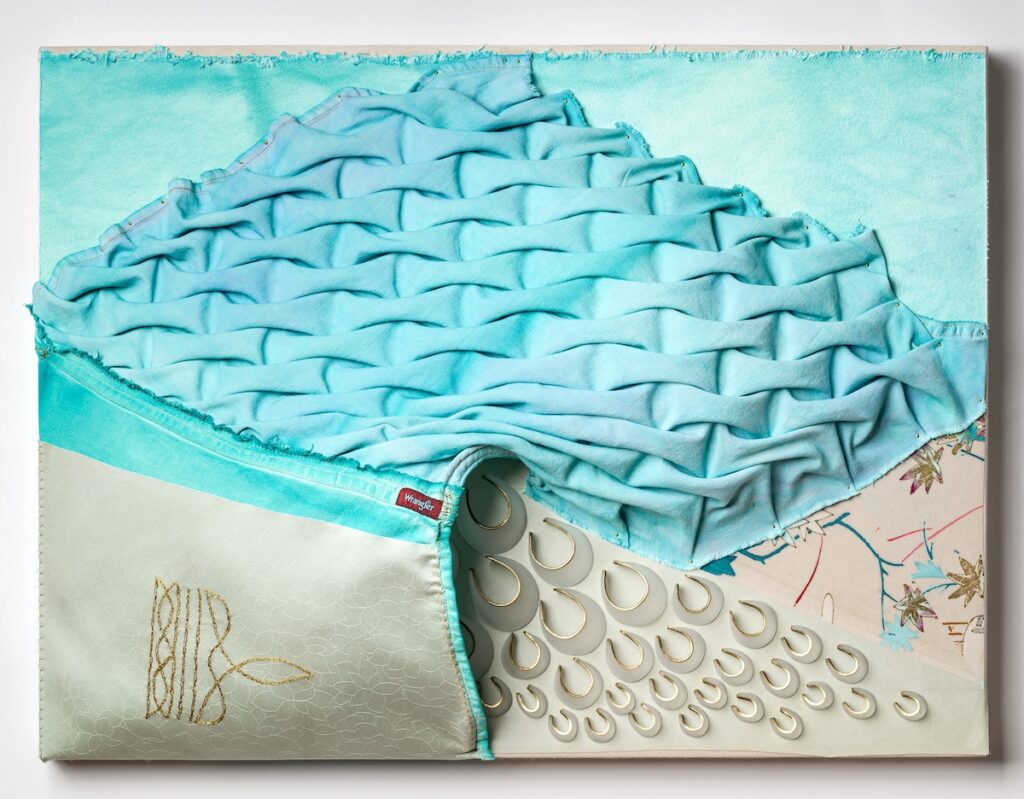
When she was in her 20s, Natale Adgnot traded the wide open spaces of her Texas hometown for the bright lights of Paris, where she worked as an intern in the Chanel atelier and then as a studio assistant for Felipe Oliveira Baptista Haute Couture. “I kind of cut my teeth as a sculptor while I was working on those accessories for the runway shows,” she says. Years later, she lived in Tokyo and absorbed the culture’s respect for makers and handmade objects. When she turned to full-time visual art about a decade ago, she eschewed her childhood as the daughter of horse trainers in favor of source material inspired by her metropolitan travels. “I tried hard to transcend my Texas-ness for a long time,” Adgnot says, “and now I’m like, ‘Alright, get over it, and get over yourself, you need to appreciate where you’re from, and let it have its place in your visual vocabulary.’ I don’t want to be judged by my peers here in New York for being a hillbilly, and I don’t want to be judged by my family in Texas for being too highfalutin.” She recently merged these varied experiences into a textile-sculpture series called saddle couturage, on display at New York’s Established Gallery.
 Fringe Overalls, 2025, Vintage kimono, denim, horsehair, tulle, cotton tape on panel, 27 x 14.5 x 6 inches. (Photo courtesy of Paul Takeuchi.)
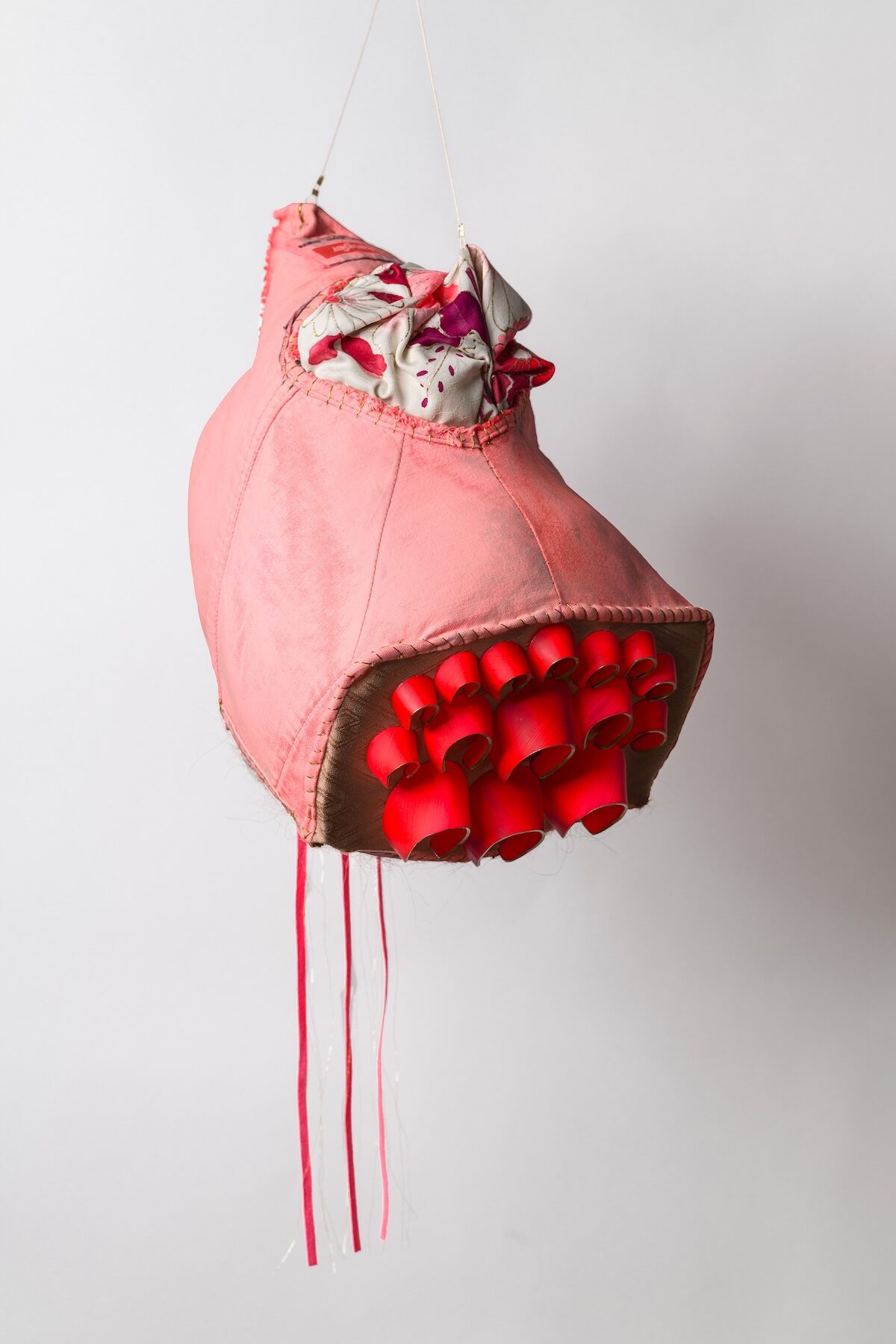

Adgnot starts by collecting and cutting clothing from vintage sellers, then organizing the scraps into piles of yellow, pink, and blue—the denim in particular serving as “a visible, recognizable pieces of my southern Texas upbringing in these artworks.” She sews the textiles, based on color and shape, into sculptures, creating deconstructed sleeves or arms, pockets, and pants crotches. She favors gold thread in a nod to kintsugi, the Japanese technique of repairing broken ceramic with gold lacquer. She embraces “the beauty of imperfection, which kind of goes against the grain of the couture,” she says. The works tend to evoke body horror and are designed to include stuffed hair or straw suggesting too-tight garments on a human body. “I’ve been in a big body, I’ve been in a thin body, and I’ve been in everything in between,” she says. “In some of these artworks, you can see that sense of popping out of your clothing, and feeling constrained by your clothes, and feeling uncomfortable in your body.” Adgnot’s pieces are autobiographical, but she hopes they provoke contemplation in viewers whether they can relate to the subject matter or not.