
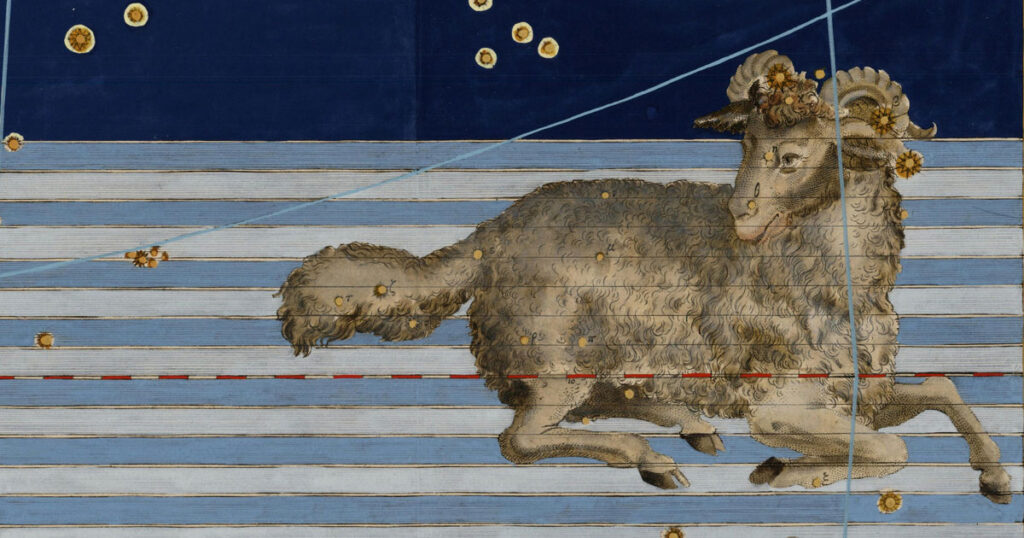
In the Next Line, Please column that went up on St. Patrick’s Day, I proposed two options: Either write “a photograph in words,” omitting as many adjectives and adverbs as possible, or write a poem triggered by the assignment’s due date, April 1. For the latter, the prompt was to compose, in 14 lines or less, a good jest in verse, an explanation or refutation of T. S. Eliot’s famous characterization of April as “the cruelest month,” or simply a salute to the advent of spring.
Rachael Watson’s “Cableway Cars” succeeds precisely because the absence of modifiers goes hand in hand with a reliance on metaphor:
Maybe they’re cherries on a laundry line
that children try to reach.
Or worker ants, easily replaced by siblings.
They must be cocoons.
Tourist’s gasp against glass,
When the doors open, wild butterflies
The depiction of cable cars as “cherries on a laundry line / that children try to reach” is so good that it could work as a two-line poem in the manner of Ezra Pound’s “In a Station of the Metro”: “The apparition of these faces in the crowd: / Petals on a wet, black bough.”
Michael C. Rush’s description of Rachael’s poem hits the mark: “A nice metamorphic progression that culminates in the passengers spilling out as ‘wild butterflies.’” In his own poem, “It Is Easier, Despite Everything, to Sing in Spring,” Michael uses an epigraph from Eliot’s “Four Quartets”:
As we grow older / The world becomes stranger, the pattern more complicated …
Yes, hope is cruel, as is expectation.
Desire, sadder than sensation.
We see the road ahead and naturally
imagine the journey, not the tripping and falling,
the getting lost and having to backtrack, revert,
reorient, find new inducement, start out again.
Though we are still as we were, still awaiting renewal,
warmth does return to the world, blossoms do bloom.But possibility is Spring’s thing (however constrained,
however tenuous)! A taxing adolescence yet exceeds
fixed and fated doom. Though Spring may feel false
at times, nonetheless it weaves the summer pattern
that then, brutally, begins to unravel:
no, no, crueler than April is December.
The poem fruitfully quarrels with Eliot, performing the work of an essay. My only problem is with the title—in particular the phrase “despite everything.” When I suggested that an abbreviated title would work better, Michael wondered whether the phrase “earns its place by establishing from the outset that this is a hard-won affirmation rather than a simple one, a voice that has considered the case against spring before making the case for it.” While I applaud Michael’s spirited defense, I disagree if only because the title need not preempt the work of the poem.
Here is Amanda J. Bradley’s “Backyard Oddity”:
Water blackens pavement of patio.
Droplets cling to sprigs of grass.
Leaves droop toward mud and
puddle. Clouds begin their retreat.
A sparrow perches on a fence post,
head twitching at angles that become
peculiar with focus.
And here is Michael C. Rush’s excellent comment on it: “The adjective restriction forces you toward strong verbs and precise nouns, which is a different kind of seeing entirely.” The opening phrase is, he adds, “a good example of that: ‘blackens’ doing the work an adjective can’t.”
For sheer succinctness, and a shrewd use of skinny lines, it would be difficult to surpass Courtney Thrash’s musical snapshot of “English Ivy”:
melodies of leaves
spill
in symphony,
decrescendo
down vines
singing
lilting
toward the sun
Diana Ferraro’s “Word” delighted me with its mysteriousness, geometrical shapes (rectangles, squares), colors (blue, white), and clever use of “the blank” in the concluding sentence:
The screen opens in blue, empty with promise,
plays with time, teasing urge and patience,
then turns into white, the texts of a dwarf dwelling
above, seven rectangles to choose from
and a multitude of squares, a market of options
to improve what is meant, to suggest a start.
The blank remains steady, waiting, until the spark
lights, burns, heats one of the heart’s chords and
the blank begins to speak, soon to be lost in a blur.
Millicent Caliban’s untitled poem mixes astrology (the ram is the symbol of Aries, the first astrological sign, governing most of April), allusions to “The Waste Land” (“memory and desire,” “fragments … shored against my ruin”) and Chaucer’s Canterbury Tales (“this pilgrimage”), and the “fool” that marks the first of the month:
Once again the sun is in the Ram and I awaken
on my birthday, delighting to be sprinkled with spring rain,
serenaded from the trees with melodies that pierce my heart,
weaving memory and desire with a longing for renewal.
What fragments have I shored against my ruin?
Will my hoard suffice as I continue on this pilgrimage?
In April, we begin as fools till, tempest-tossed, we wash up
on the strand, yearning to be rescued from despair,
still panting in search of some elusive wisdom.
Palevanilla’s “Spring” reaches a wonderful conclusion:
Here and there, remnants of yesterday’s rain
catch the morning light. A pale blue orb
hangs precariously from a barely
budding black branch. From here the blossoms
look no different than winter berries.
But closer, one can see the bloody fists
unclenching, reaching for bright sky.
The alliteration in lines three and four is splendid.
While I don’t understand the logic of Emily Vogel’s “The First Day of Spring,” the narrative flows easily; the abruptness of the ending is a pleasure, as is the double entendre at the end of the penultimate line:
Mackensie noticed
that a nail had been embedded in my tire,
and suggested that I go see
a mechanic.
I needed a new tire.
But the nail’s puncture was so delicate—
just the slightest prick—
that it almost felt like love.
For next time, let’s try our hand at the cento, a poem consisting of lines culled from other poems. We’ve done this once before, back on April 7, 2015, when Next Line, Please was nearing its first birthday.
The cento rests on the assumption that the collage is a valid method of composition, and even an eloquent one, as T. S. Eliot shows in “The Waste Land.” Remember Eliot’s motto: “Immature poets imitate; mature poets steal.”
In that 2015 post, Paul Michelsen, a past master of the cento, assembled this stanza from poems by Frank Stanford, Arthur Rimbaud, and Rosemary Tonks:
The wheels of a darkness without pain
Ten nights, without missing the stupid eye of the lighthouses
Ten blind nights free of idiot guiding flares
And in the silence, drips and cackles—taciturn, luxurious.
Berwyn Moore put this stanza together, using Wallace Stevens, A. R. Ammons, Marianne Moore, and H. D. as her sources:
What lover, what dreamer, would choose
farming: good Lord, worming tobacco, digging
to metaphysical newmown hay.
Hell must break before I am lost.
Jane Keats stole from Milton (Paradise Lost), Shakespeare (The Tempest), Coleridge (The Rime of the Ancient Mariner), and Keats (Endymion) in this salute to the great masters:
With thee conversing, I forget all time,
The cloud-capped towers, the gorgeous palaces,
From the land of mist and snow,
Pouring unto us from the heaven’s brink.
As a graduate student at Cambridge, I was knocked out by this couplet in John Ashbery’s cento “To a Waterfowl”—a juxtaposition of lines from Edmund Spenser(“Prothalamium”) and Wallace Stevens (“Sunday Morning”):
Calm was the day, and through the trembling air,
Coffee and oranges in a sunny chair
Keep in mind that, as Polonius put it, “brevity is the soul of wit,” and keep to 15 lines, divided into three five-line stanzas. Deadline: May 1st.