
Once More in Triple Time
In Salzburg, the tourist hordes come for Mozart, but imagine an alternate city, one where a very different composer is venerated
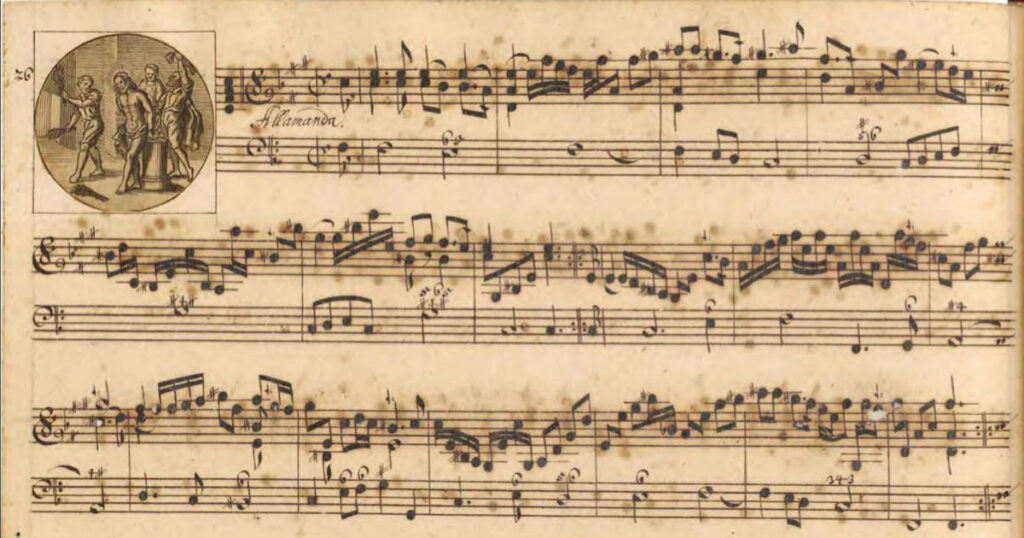
In fact, I had been to Salzburg once before, decades earlier, as a high school student. We had taken the train from Munich, where maybe 15 of us were staying in a little hotel near the Hauptbahnhof, supervised by one of our school’s two German teachers, Frau Bell. The trip was an exercise in cultural immersion, the value of which, like that of learning another language, was apparently self-evident enough that I can’t remember questioning it until I was throwing up the convenience-store pizza I had ordered in German. Frau Bell assumed I’d been drinking.
No doubt she offered insight and instruction along the way, but my enduring memory of her is the disappointment that crossed her face when, waiting for the train that would take us to Dachau, a few of us posed irreverently with candy cigarettes. It was winter then, and I remember standing in front of the elaborate fountain outside the Salzburg Cathedral, mugging for more photos in the bitter cold. We skipped the funicular, which may have been closed for the season, and walked the steep, winding path to the hilltop fortress. The day was cloudy, and the otherwise dramatic views were obscured in every direction. The Alps were invisible, and still somehow they loomed. A sharp wind lashed the hillside, penetrating our parkas.
This time around, it was August, and the streets were jammed with tourists and concertgoers attending the Salzburg Festival. Everywhere I turned, Mozart was streaming from some hidden speaker. I didn’t understand all those years ago why we had come to Salzburg, but climbing the footpath to the fortress a second time, I saw what Frau Bell must have wanted us to see: a beautiful city wedged between hills, a river running between them, rolling plains in one direction, mountains in the other. Atop the walls of the fortress, plein-air painters worked at their easels. The Austrian novelist and playwright Thomas Bernhard, noted for his polemical criticisms of his country, called Salzburg a cretinous, provincial dump, but the way the painters lovingly rendered the domes and crags and cupolas made it clear that his opinion is not universally held.
I was staying in a 500-year-old building, but my room had been renovated to look like a corporate hotel along a highway. Only the casements, opening onto the baroque façade of the opposite building, retained an air of the hotel’s past. All day below my window, children played in a kind of fountain that carried brightly colored plastic balls from one end of the sloping block to the other. Near the spot where the balls collected, a middle-aged man played Mozart on the goblets of a glass harp. Every now and then, a few notes from the Piano Concerto No. 21 would drift into my room.
The city’s wealth had originally grown from the salt mined in the region—hence the name (Salz meaning “salt”)—and with the earnings from their white gold, the prince-archbishops of the city-state built lavishly and defensively in an architecture of absolute power. Across the river from my hotel, for instance, stood the cathedral-cum-palace, now a living museum, preserved (like so much of the city) with spectacle in mind. A 17th-century visitor might recognize much of the cityscape, but the experience would still be surreal. Imagine returning home one night to find that your house had become a gift shop. And yet without those souvenirs, without the simulation of memory, the old fortresses would have long since crumbled into ruin. The hotel was comfy enough, but could you really say it had been saved?

Wikimedia Commons
This is how old music arrives in our young century. Maybe you’re making breakfast, and a piece drifts into the kitchen like a ghost. Or you’re on the subway, your ear buds are in, and it is delivered to you via algorithm in slow triple time. Or maybe, as it happened with me, you’re running on a snowy day along a stretch of road in Longmont, Colorado—a business park to your left, a vacant field to your right, a creek path just beyond—when you hear it: four descending notes scratched out against the silence.
Heinrich Biber’s Passagalia [or Passacaglia] in G minor, recorded by the violinist Andrew Manze, did not, as the etymology of the word passacaglia suggests, make me want to dance in the street. It made me want to rend my clothes and weep. I kept running down Pike Road instead, fluff falling all around me.
It’s a familiar feeling, I suspect, with or without the weeping. A song or a piece of instrumental music comes on, plays through for the first time, and no sooner has it finished than you queue it up again. And again. And again. And again. It was like that for me with the Passagalia. I couldn’t get enough. The music just felt right; for some reason, it resonated. At the time—this was 2010, maybe 2011—I was living, so to speak, in a minor key, sulky and gloomy and feeling a bit too much like a solo performance. The piece has its lively passages, but the takeaway mood for me, the one that fed my obsession, felt a little like grief. I wanted, perhaps perversely, to wallow in it.
I knew nothing about Biber or his world. I did not yet know that he was born in Bohemia in 1644, or that he later settled in Salzburg, where he rose to the rank of Kapellmeister, or that he was one of the most important composers for the violin in the history of Western music. Nevertheless, I was immediately aware that the music I was hearing wasn’t written for me, that I was eavesdropping on a conversation between composer and listener that had first taken place some 350 years earlier—one that was intended for only a privileged few, perhaps the noblemen who visited the Salzburg palace, seeking audience with the prince-archbishop. The Passagalia was not, as I would learn, music for the masses. In the 21st century, however, we tap and swipe our bundles of circuitry, as I did that day in Longmont, and it’s as if we all have the keys to the palace.
“You see,” the musicologist Eric Bianchi had told me, a couple months before my second trip to Salzburg, “music comes into the 17th century one way and it comes out another. It becomes what we think of as art, a form of expression. Prior to that, it was thought of as a kind of math.”
It was early May in New York City, and we were meeting in a borrowed office at Fordham’s Lincoln Center campus. Lined with shelves of journals and books, the windowless room contained a few tattered chairs and a keyboard, which would later come in handy. The desk between us was covered in disordered piles, and Eric had placed his feet on its edges, such that he looked out at me over his shins.
“For the longest time,” he said, “people believed that music described the structure of the universe. You may know the story about Kepler, that he discovered the third law of planetary motion while reading a book about music. He was trying to work out the harmony of the spheres. That doesn’t mean, incidentally, that music itself was all that important in Biber’s time. What music was in the 17th century, or the work it could do, was different from what Kepler and Boyle and Newton were doing. The musicians would come in, they would play, and only after they had left would the important conversations start.
“It was a time of real scarcity, dominated by the Church and the Holy Roman Empire, and so when Biber entered the employ of the prince-archbishop of Salzburg, it wasn’t as an artist. As a court musician, he was in the same rank as builders and wall painters.”
It would be wrong, Eric suggested, to read the 17th century as some sort of interdisciplinary intellectual salon. Figures like Descartes and Galileo may have been altering our understanding of the universe, but their work wasn’t exactly common knowledge. Biber’s music and his worldview were likely quite unaffected by heliocentrism or analytic geometry. Despite his brilliance, the composer’s understanding of the stars, and much else, was probably not that different from that of the builders and wall painters.
“The other important thing to know,” Eric went on, “is that since about 1800, although it’s dying away now, the most prestigious forms of music have had no words. And that’s because these forms have been seen as portals into boundless realms of subjectivity and emotion. But in the 17th century and before, the most important music was vocal because words fixed the music’s meaning. It wasn’t just this wash of pleasure. The idea that people might listen to hours of music with no words, music that works by abstract structural cues—that doesn’t make much sense to a 17th-century mind.
“Now Biber did well and was eventually ennobled, but people weren’t looking to him to generate meaning in the way that people look to Justin Bieber, whose pronouncements on all sorts of things are widely reported because he said them. No musician got anything like that kind of treatment in the 17th century. Nobody cared what a musician thought, because why would you?”
A gallery selling stylized versions of famous photographs—Marilyn Monroe in The Seven Year Itch, those workers eating lunch on a steel girder—occupied the ground level. A specialist in Chinese medicine had an office one flight up, and above him was a hair salon. Private residences, as I found out when one of the doors opened, took up the top floors. A blond woman in her early 50s asked whether she could help me. I was looking, I told her, for the house where Heinrich Biber died. Aber, nein, the woman said. And then, switching to English: “There is a plaque around the corner. Up the street, then left.” I smiled and thanked her. She looked at me, laughing, maybe a little bewildered, and said I was welcome.
I walked the street where Mozart was born, past the house long since turned into a museum. I remembered visiting it all those years ago, taking pictures of his tiny violin, his first clavichord—pictures in which the most stunning element to me now is the elaborate parquet floor. It didn’t register back then that the Mozarts lived in only part of the house, an apartment on the third floor, but I remembered thinking that it was an odd attraction, the place where somebody was born. And yet here I was, 25 years later, looking for the place where someone else had died. The tourist shops teemed with Mozart memorabilia, but other than a sign advertising, in Gothic font, the Biber Apotheke (Biber Pharmacy), I found no trace of the composer, and so I returned the way I’d come, past the other man’s birthplace, where a line trailed out the door.
I was a block or two away, taking photos of an ornamental frieze, when I saw it, at the corner of a clothing store in the middle of what appeared to be a going-out-of-business sale. The composer and violin virtuoso Heinrich Ignaz Franz von Biber 1644–1704 lived and died in this house. Outside, a Bavarian brass band in lederhosen was playing polkas. Inside, to my surprise, all five floors, and even its cellar, contained racks of women’s clothing. The position of the staircase was likely unchanged, but its tile and railings appeared to be 19th-century additions. Otherwise the physical floorplan would have been unrecognizable to Biber. Each level was open, with dressing rooms in the back and an elevator in the center. Somewhere among the formal gowns and blouses, the casual shoes and athletic wear, Biber had died more than 300 years earlier. The room where he expired no longer exists, and yet I had likely walked through it. The blond woman had undersold the house’s proximity: It was practically across the street from her. From one side of the shop’s top floor, near a circular rack of cocktail dresses, I could see into what must have been her apartment. Why she hadn’t said so was beyond me.
A few weeks after I spoke with Eric, I met the violinist Rebecca Harris in a Philadelphia café with large street-facing windows. It was early on a Saturday morning, and up a short flight of stairs, overlooking the service counter, a couple of students were studying. We took a spot along the opposite wall.
Her family hadn’t been particularly musical, Rebecca told me in her faint British accent, and in fact, neither of her parents cared much for classical music. Her father had worked as an architect and, much later in his life, had taught himself to play the guitar. As a child, she had access to a free violin program at her school, and when she began to play, she knew immediately that music would be her life. She was eight years old. She couldn’t say why or how, but it felt physically good to make sounds with the instrument.
“From early on,” she said, “I obsessed over this distance between my brain and the sound, because what happens in your head is not what happens outside of it, in your fingers. The other hand holds the bow, but it does not in itself produce the sound any more than the string it chafes against. All of this works through a series of intermediaries to create resonance in the instrument, but beyond understanding technically what you’re doing, you also have to consider where you think the sound is coming from. We talk a lot about playing the instrument rather than the string.”
She reached into her New Yorker tote and pulled out her scores, pushing her coffee to the side. She opened the one for Biber’s Mystery Sonatas (also known as the Rosary Sonatas), the set of 16 works for solo violin and continuo that culminates with the Passagalia. She flipped through the pages for a moment, looking for something. Her hands, though not especially large, were muscular. With Weezer playing in the background, she pointed to a place on the page and explained why the idiosyncratic tunings Biber asks for result in a range of unexpected timbres, textures, and harmonies.
“This is what you play,” she said, indicating one line of notes, and, indicating another, “this is what you hear. You put your finger down, and it’s not the sound you remember. All but one of the sonatas,” she said, showing me first one page, then another, all of it inscrutable to me, “have you tune the top string down, which takes tension off, which means you cannot play as loudly, which means it makes the sound more mellow. But there’s symbolism in the tunings too. In ‘Resurrection’ [the Sonata XI in G major], you have to restring the instrument—you cross the middle two strings below the bridge of the violin and also above the neck, so that reality gets turned upside-down, which is also like a secret only we performers know. You don’t know the strings are crossed just by listening.
“Or let’s look at ‘The Carrying of the Cross,’ ” she said, flipping the pages to the Sonata IX in A minor. “Biber has you tune the bass string up four notes, and the next string is also up a pitch. This puts the violin under so much strain that when you play, it feels brittle. It’s like a mistuned piano, like something designed not to work. It’s almost frightening because the instrument is not built to sustain that much tension. As a musician, you just want to get through it.
“Then there’s the bass parts—look here.” Rebecca pointed. “It’s just a single note for several pages. The accompanist has to make decisions about how to voice this. They have to improvise off a single note. They also have to choose the instrument, since it’s not specified. In later music, like Mahler and Schumann, there’s tons of guidance on how to play every note, but the earlier the music, the less information there is on the page. Biber—he’s hardly alone in this—makes a huge offering to musicians. He makes you participate, makes you question your role. And that spirit of having to decide, of having to invent and not just read what’s on the page, well, it’s a relationship to literature. And that’s important at a time like our own when it’s easy to replicate, and to a high level. With Biber, you have to interact.”
“Say It Ain’t So,” I noticed, was now playing on the sound system. It seemed to me almost intentional, I said, pointing at the ceiling. The songs streaming in public spaces don’t require us to interact.
“Plenty of 17th-century music was just background,” she countered. “It doesn’t get performed anymore because it was trash. It was never designed to be paid attention to. And to some extent this is true of the entire repertoire of what we think of as classical music. So much of it was decoration. The whole idea of what it means to listen, and to pay attention, has changed.
“As for this,” she said, gesturing toward the ceiling, “I’m uncomfortable with music that doesn’t even occur to me. I wouldn’t have even noticed it unless you had pointed it out.
“But it’s an interesting question,” she mused, “what it really means for us to listen in the 21st century. Your experience with Biber was very physical, but that’s not something we tend to discuss. What if we did? What would we say?”
From the building where Biber died, I walked to St. Peter’s Cemetery, where he was buried. The place had been a monastery for more than 1,300 years, but on the day of my visit, there were no monks to be seen. Pink flowers lined the narrow stone paths running between the graves and tall trees. I moved among the markers, pausing at the gruesome image of a skeleton riddled with snakes, surrounded by Gothic script. The only employee I could find sat sentry at the entrance to the catacombs, carved into the sheer rock face. Could he point me in the direction of Biber’s grave? He nervously rubbed his beard and apologized. The monks didn’t like the cemetery workers to say where people were buried, he said. Surely he could make an exception, I insisted, as the man in question had been dead for three centuries. Whatever descendants of Biber’s had survived probably didn’t even know of their lineage. Was there really no one I could ask? The man just shook his head.
I took in the small graveyard once more, wondering what was up with these tight-lipped Austrians. I didn’t understand why they were so unforthcoming, especially about things that couldn’t possibly matter. Around the perimeter—and maybe this was the answer—were gated family crypts for the city’s well-heeled. It was as if, in death, the elites wanted to maintain their separation from ordinary people. As if the cemetery, like the country club and private school, operated through exclusion. More than privacy or propriety, the man may have been guarding cachet.
I had come to Austria in search of Heinrich Biber. I had come to honor the visceral effect of his music on me across cultures and centuries. And I had been rebuffed, once and now twice. It was appropriate, I thought, that the objectless—but also bone-deep and boundless—grief I had felt in the Passagalia should find its endpoint here, in a cemetery where I couldn’t locate the marker for the person I meant to commemorate.
I had once been a very sad person, but I wasn’t that person anymore. Biber had given me a vocabulary for, a soundtrack to, that sadness. His music was true. I had come to Austria because I wanted to know how a piece becomes indexed to a chapter in one’s life. And I wanted to know how much, in making that connection, the piece’s context really mattered.
As I stood there in St. Peter’s, deciding where to look next, a couple passed by me, arm in arm, the older man in a fedora, the younger with a satchel. They were speaking a language I had never heard. Nearby another man emerged from a doorway, a red handkerchief peeking out of the breast pocket of his black blazer. He quickly looked to his right before moving decisively to his left. For some reason, I started to follow him, and it was only then that I noticed the memorial plaques lining the walls, where, after just a few moments, I found inscribed in Latin a commemoration of the anniversary of Biber’s death. I picked up a stone and placed it atop the marker, glancing over my shoulder, half expecting the bearded young man to appear, shaking his head in the doorway.
“On a technical level,” and here Eric had stood and turned to the keyboard, where he noodled out some chord progressions, “this music tends to establish a home tonality. First you go away from it”—the chords in his left hand ascended—“and then you return to it”—they descended once more. “You generate tension as you go away, resolution as you come back.
“You see, baroque music is actually very standardized,” he said, improvising a jaunty dance on the keyboard. “Music only becomes more complex with Arcangelo Corelli, who created harmonies within harmonies, systems within systems”—and now Eric’s progressions became more surprising and dissonant. “Biber wasn’t working in a language quite as orderly, but it still had its conventions. It’s just that the baroque encouraged these odd and paradoxical and florid forms of virtuosity. That’s not to take away from what’s weird and quirky about Biber, but to say that his weirdness and quirkiness were cultivated.
“Then again,” Eric continued, “as someone who works on context, I don’t think the meaning is in the music or how it was created. I think it’s in how we listen, and in that we’re completely free to form judgments. I’m not saying music is universal. I’m just saying that we make meanings of stuff. The past is not just a place with less technology and outdated ideas, but a whole way of making meaning that is penetrable only to the smallest degree. The mental universe of a guy like Biber was so different from that of anyone in our time that we might never be able to capture what music meant to him. Not only could you never recapture the music exactly as it was performed, you could never get inside the minds that heard it. And you wouldn’t really want to. Because while 17th-century Salzburg was a world with certain tolerances for sensuality and creativity, it was also violent and bigoted and miserable.
“Maybe you’ve heard of the golden record, the sounds of Earth put on the Voyager probe? The idea was: Ah, yes, aliens will find it, they’ll figure out how to play it, and when they listen, they’ll think, What a civilized people, capable of the greatest beauty; we won’t demolish their planet after all. But the thing no one considers is that an alien could listen and think, Christ, these people are maniacs. Who would ever think that sound, that what you do with sound, is divided up into these discrete bands, and that you can only work with this division of 11 sounds? That this sound [Eric played a note] and this sound [the same note, an octave higher], even though they’re different, we’re going to base the system around them, saying that they’re the same. If we make it strange to ourselves and think about the cultural baggage that endows it with worth or meaning, it’s pretty weird. Why should anyone read Shakespeare? Why should anyone go to the symphony? Well, no one should. But if you do, and if you frame some things that someone is likely to get out of confronting something different, or maybe different on the surface, the experience could be world altering.
“The life of a work”—and here Eric slowed as he bent toward precision—“is a strange and beautiful thing in its contingency. And if you stop thinking that you owe it to Biber to get it right, that you owe it to posterity, you may find that you can learn a surprising amount. About him, yes, but about yourself, too.”
It would have been easier by far, passing through Salzburg’s pedestrian quarter, to be a Mozart fan. At every turn, the place would have endorsed my pleasures, validated my taste. It would have said, in effect, that I was right to like the things I did. I tried to content myself, typing these notes in my modernized late-medieval room, with the thought that cultivating one’s tastes, however much that process breaks into or reflects social registers, is ultimately a lonely endeavor. But then, in the next breath, I asked myself what was wrong with all of these conformists. My initial experience with Biber had been very physical, Rebecca pointed out, particular to my body. We ostensibly engaged with the same music, but how she felt it and how I felt it were different enough that we might as well have been referring to different pieces.
“You can also turn this inside out,” Eric had said near the end of our meeting. “With a pop song, you can’t ignore the claims the singer is making, what they appeal to in society. It’s so in your face that there’s no way around it. Biber’s lesser legibility, by comparison, might offer a refuge—or an excuse.
“A few years ago, when I had returned from living in Italy and had become fairly fluent in Italian, I went to see some Verdi at the Met. I was just sitting there, not reading any subtitles, and for the first time in my life, I realized I understood everything. And though Verdi may write very beautiful music, the plot was just the stupidest imaginable.
“On the other hand, I remember reading E. L. Doctorow’s Ragtime, and there’s this scene where one of the characters is playing Scott Joplin. Now that’s music I’ve known since I was a kid, and I could sit down right now and copy the scores out from memory. I read Doctorow’s descriptions, and I remember thinking, Oh, here’s a guy who doesn’t know anything about music. And it didn’t matter. I didn’t need him to explain that there are shifting groups of three and two with semi-dissonant tone clusters in the right hand against some Sousa-style bass in the left. I didn’t need him to make the music real to me.”
Given what Eric had said and having received something like permission, why did I still fantasize, in Salzburg, of an alternate city? One in which Biber’s house was not occupied by a failing retailer? In which not one but two museums were dedicated to his memory, a school of music as well? Maybe even an airport. I wanted the place to make the man real. I wanted it to explain him to me, which might, in turn, explain me to myself, if not others.
Instead, when the hotel clerk, a young woman outfitted in period dress, asked me while I was checking out what I had been doing in Salzburg, whether I was there to see a show, and I mentioned the old Kapellmeister who had come to the city from Bohemia all those centuries ago, who had composed music so intensely visceral that I had felt it in my blood and in my bones, she could only squint and ask, Who?