
One afternoon in early September, at the outdoor city pool in La Pola with my brother, I asked whether he would like to be 10 again. We were watching some kids about that age play in the pool. “No,” he said, “been there, done that.” And I agree. No need to go through that phase all over. Or any. Not the teen years or the college years, not getting settled in my 30s and having children, not the stretch of time between then and now, slowing down, contemplating my surroundings in a newly appreciative way: the birds, the trees, the river and the tides, the paths up and down. How wonderful to contemplate the vast array of the past too—from a safe distance. The view from here is good; I would not squeeze myself into any of those ages again. What about my mother, though—farther along and with more to gaze back on, but with a grasp of the past not quite so firm. What would she say?
My mother typically has at least three books going. At the table during that month of September, when she was visiting me in La Pola, she was reading Dr. Fulford’s Touch of Life. By her bed she had another, The Forest Unseen. Old Filth was one she’d recently finished. Why so many? She is interested in everything, including, recently, in childhood. But not as an ideal time or an exciting time or a crucial developmental time but as a new time—a new experience for her. Having long ago forgotten what childhood was like for her, she was rediscovering its delights, first-hand. And so she is reading children’s literature, too. She was reading aloud to me one of her discoveries: Kate DiCamillo.
My mother says that old age is wonderful. She sometimes means “It’s a wonder!” and sometimes simply that wonderful things abound. She also speaks of the difficulties and indignities. Here in Spain, though adjusting to a different household, a new schedule, new sights on the street, and the strange sounds of Spanish around her, she has been glowing rather more than frowning. That might be due, in part, to the delectable goodies she has enjoyed from the bakeries, but it’s also a result of her own exuberant enthusiasm. “Old age really is a second childhood,” she has announced more than once. Eager, excited by what is new, captivated by sights and sounds—all of that, true of children, is also true of my mother. It’s never too late to learn, she says, citing her own evolving insights about how to be in the world.
I have watched the eight-year-old granddaughter of one friend at close hand, and more recently the year-old son of another. The girl is practically blasé about her discoveries and the little boy intrigued. But my mother—she’s delighted. Delighted with the world’s functioning and with her own as she hurries to keep up. “I’m taking my shower now,” I said, and my mother gave me a perplexed look that soon passed. Reenacting her mental process for me, she said, “Shower? Without running first? Oh—race tomorrow, no running today. Shower now.”
One afternoon, from down in the park near the tracks where we had taken my dog Toby on a walk, she spotted on the ridge above us the cell phone tower that stands near my house, and she pointed it out. It seemed very far away and yet remarkably present, sticking up into the clouds. We commented on a thing’s being big yet small, distant yet not.
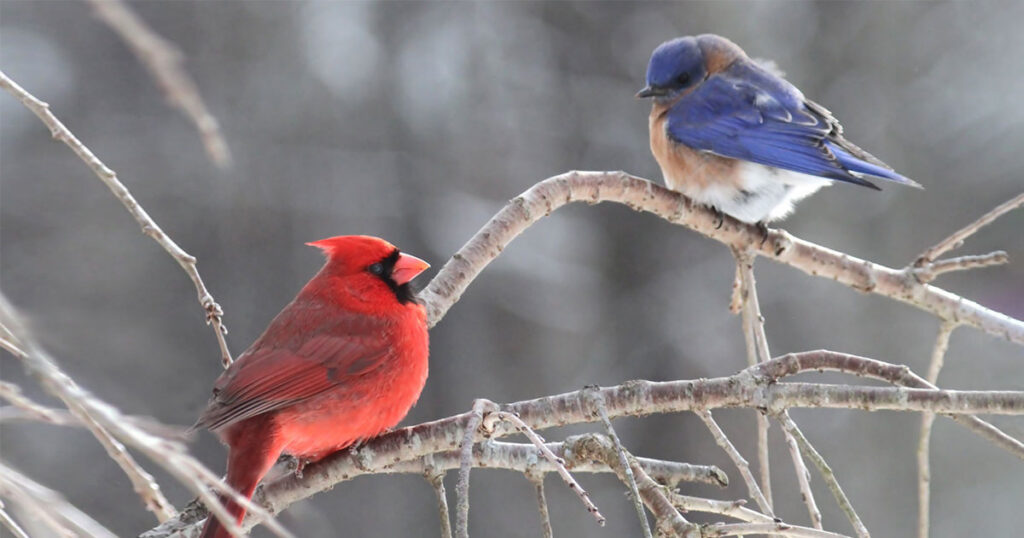
“What do you think a bird would think, seeing a landmark so far off?” I asked. Would it think how far it had to fly to get home, or would it sail on without a qualm? Neither of us hazarded a guess. I thought of Christina Rossetti’s poem “A Birthday,” quoted in DiCamillo’s novel. In the poem, the speaker seems as thrilled as a child might be by the approach of a birthday. Her heart is gladder than a singing bird, an apple tree, or a rainbow shell. That is my mother’s heart. A singing bird. Happy at many perfect things, at some strange, and even at a few disappointing ones. But happy to view them all, happy to sail above, teetering on the turns, to flutter down, squawking and fussing, until, with a hop, she takes to the air again. No old bird could do better.