
Talking politics with a Spanish friend, I was astonished when he said, “All politicians are the same.”
“Oh, come on!” I said.
He insisted. Politicians have no real authority, but dance like puppets to the strings the rich and powerful pull. It’s they who decide who will win an election, and then they decide what that person will do.
“Okay,” I conceded. “There’s definitely some of that.” Politicians have their hands tied by lobbyists, campaign donors, and party leaders, as well as media narratives, and must also worry about losing public favor. No head of government truly operates in a vacuum. Big donors expect returns, and powerful interest groups can shape—sometimes even write—legislation. But does that mean all politicians are exactly the same? I don’t think so.
Different administrations make different choices, I said to my friend. President Trump, for example, emphasized corporate tax cuts, deregulation, and a hardline stance on immigration; President Biden pursued climate action, healthcare, and labor-friendly policies. These aren’t superficial differences. They show up in people’s wages, access to services, and protections.
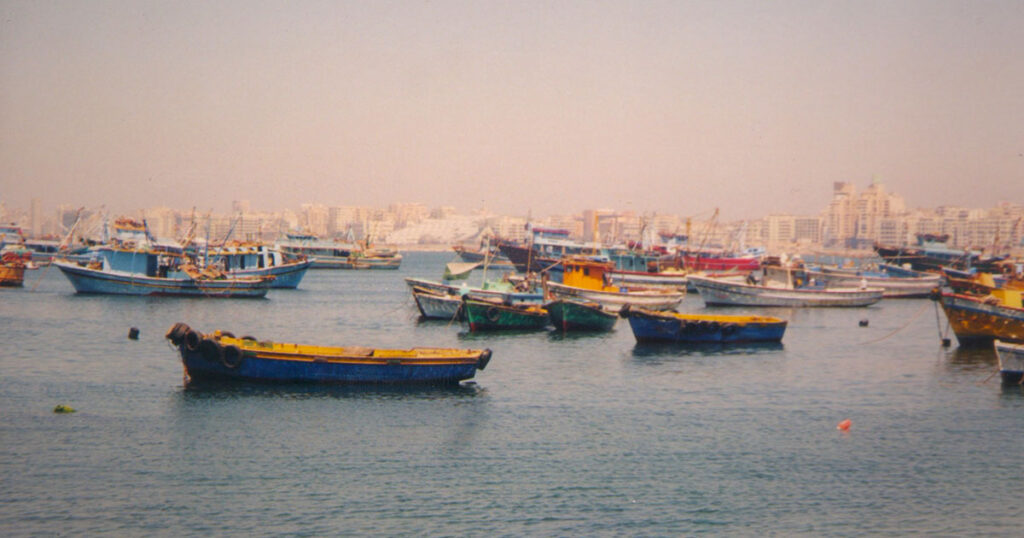
My friend shrugged. “Río revuelto, ganancia de pescadores,” he said—in turbulent waters, the fisherman profits. Chaos and conflict, he insisted, serve those who already hold the nets: the wealthy elite.
I paused. Maybe he was right—political upheaval often masks quiet gains at the top. But if one fisher uses dragnets and another enforces catch-and-release, then …
“It’s all about payoffs,” he interrupted. “Listen to the pennies clink.”
I tried again. What if one politician is backed by the dragnet lobby, and the other by a company making fishing poles?
But my friend wasn’t interested in that analogy, or in hearing me say that even in muddy waters, not all boats drift the same way. But I said it anyway: Some steer toward the public good.
I didn’t think he was hearing me, so I didn’t go on. Power does often thrive in disorder, I would have said, but voters—when informed and engaged—can still shape the river’s course. Take the war in Gaza. Mass rallies across Spain, policy steps taken over time, an eventual arms embargo—each followed from a public stance that differed sharply from that of other European countries.
“Yes, fine, all very good,” he’d have answered, but look at how things have turned out for the Palestinians. All the attention, all the effort, all the money—and what for? If not to their cause, where did the resources go?
True—even after a ceasefire, violence continues near the so-called “Yellow Line,” and civilians are still killed or displaced. Most families struggle to meet basic needs.
It did seem like more effort than benefit. It did seem like hauling a bucket of water to find you’ve got a cup’s worth when you arrive.
So okay—my friend is not wrong. Profits aren’t accidental. I’ll concede they are the plan—the motivation for elections, speeches, and policies. Yes, the same nets seem to come up full every time the river is stirred up. According to public reporting, major arms producers in Israel pulled in vast sums even as the war continued; globally, defense companies took in an enormous haul tied to conflicts like Gaza. It was a solemn fact to sit with, and it rang a distant bell. A rascal like Rhett Butler from my childhood reading pointed out that a fortune can be made building a society or destroying one.
But is that the whole story? Alongside the big boats out for profit, are smaller ones, carrying individuals scraping by. How much of the catch is left for them is not a constant, unlike the perpetual profit motive. It depends on who is in power, doesn’t it? We’ve seen a river, we’ve seen an ocean, we know some boats capsize, some run aground, others scrape through in turbulent waters. Even a drop is better than no drop for those needing relief.
I did wonder, though, who’s in charge of seeing that those drops reach them—who, if anyone, takes care of that.
“Listen,” he says. I’m listening. “Do you hear the pennies clink?”