
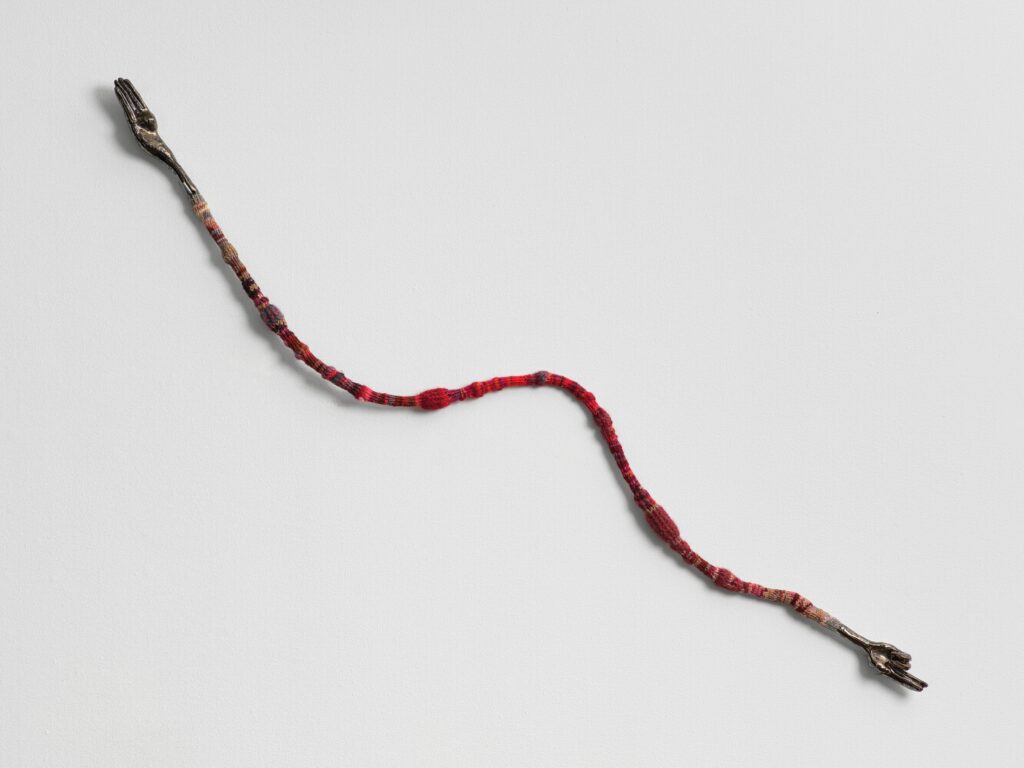
Artist Romina Chuls first became interested in Nasca, a society that flourished in southern Peru from 100 to 800 AD, after learning about a funerary shroud that archaeologists had found wrapped around a corpse “in a fetal position, almost like a placenta.” (The shroud is now a part of the Brooklyn Museum’s collection.) Chuls was struck by Nascan culture’s intrinsic connection to the earth—namely the belief that “the land can project fertility to the human body, and the human body can also project fertility to the land.” Chuls, who was born and raised in Lima but now resides in New York City, began thinking about reproductive justice—about how abortion is illegal in her home country and how many women have died because they were denied access to it. As she researched pre-Hispanic Peruvian life, she realized that the later Spanish invasion caused “the oppression of feminine and women’s bodies in direct relation to the colonization and the control of territories,” she says. Her textile and ceramic art about Nascan culture, reproductive justice, and their connection to the earth is now a solo exhibition at A.I.R. Gallery in New York titled La Cosecha (The Harvest).
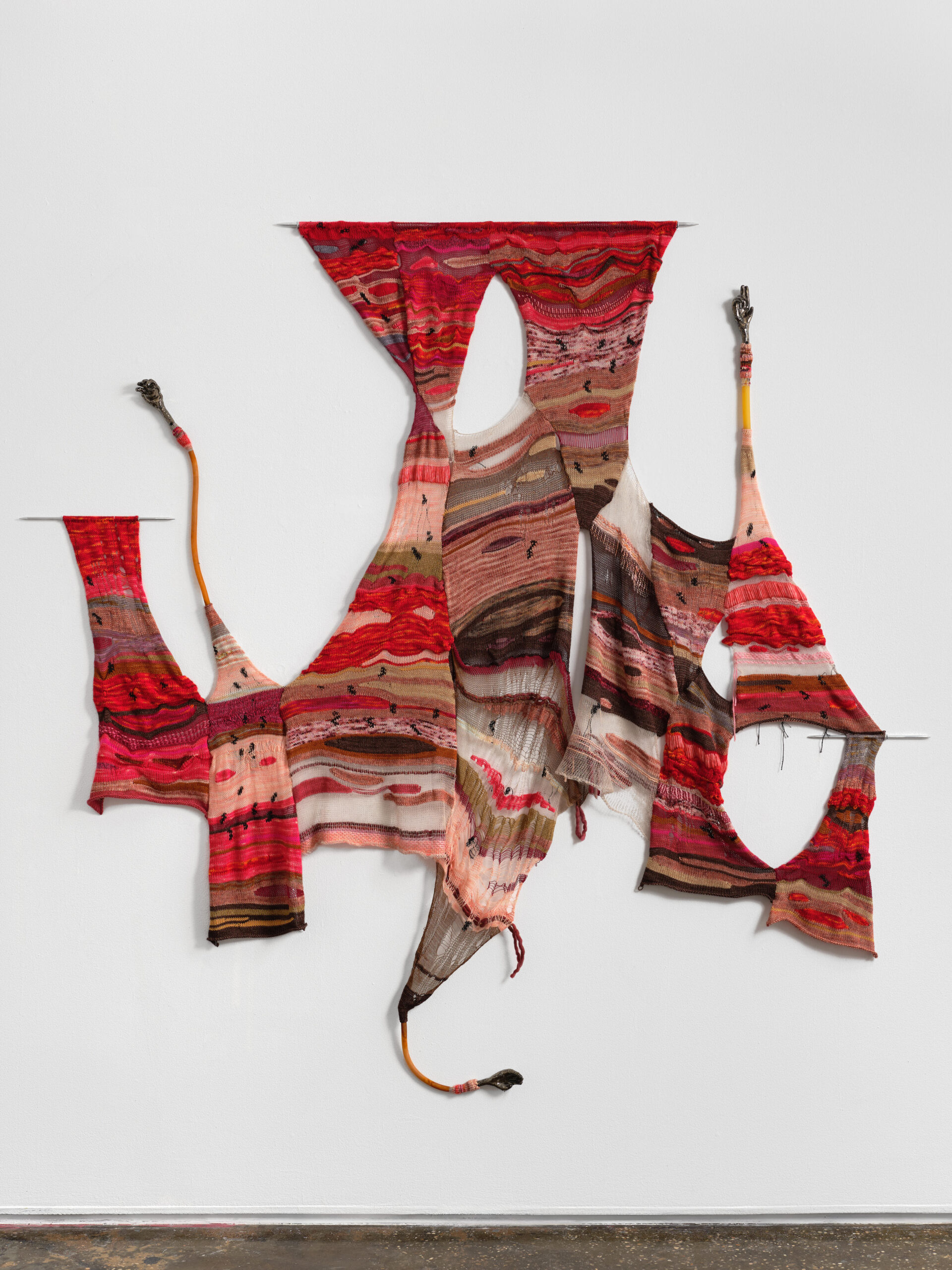 Las tres Marías (The three Marys), 2026, knitting (steamed with common rue), ceramic and aluminum rod, 74 x 79 inches. (Photo by Matthew Sherman.)
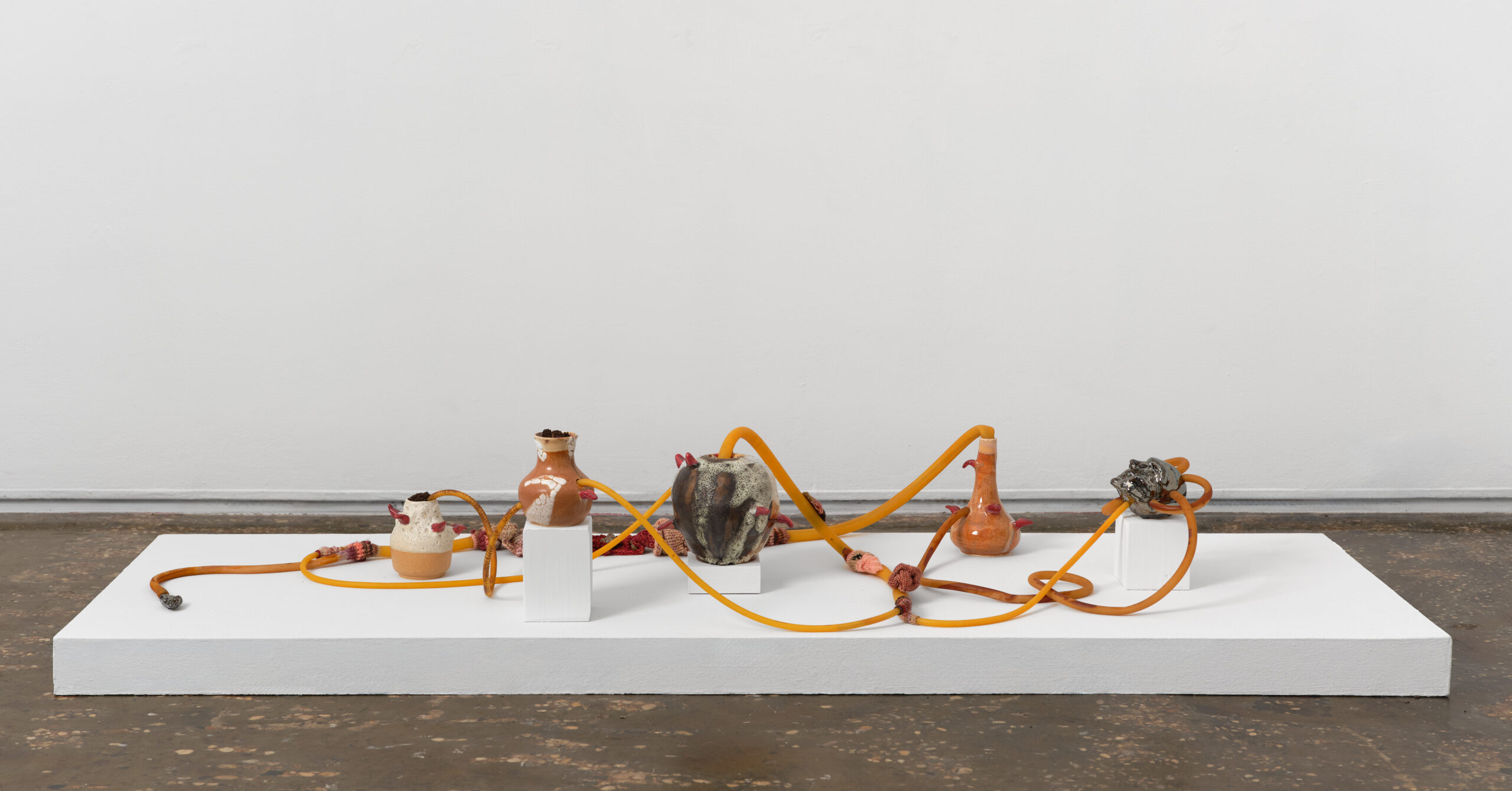
In her takes on a Nascan funerary shroud, Chuls imagined hands and tongues reaching out from beyond the grave. “The hands started to feel like spirits coming back to act as midwives,” she says. In one work, Las Tres Marias, three ceramic hands come through the center of a woven textile of white, red, and pink wool, the colors referencing “the Nasca mantle, which has such a strong red border. Even with time, it hasn’t faded away.” In another, a ceramic tongue peaks through a shroud instead, as if in conversation between the living and the dead—or even representing the land itself talking to women. “It asks, If we think of reproductive justice, how much would that mean to think of the land, as well?” Chuls says. She hopes her art inspires viewers to research pre-Hispanic South American culture and to understand the contemporary links between environmental harm and women’s health. She cites the 1999 Cochabamba Water War in Bolivia, where women in drought conditions suffered miscarriages at a higher rate than those who had access to water. “When there is lack of access to water or there is pollution in water, does that affect our amniotic fluid if we are carrying a pregnancy?” she asks. “Our body can be a full mirror of the land, where struggles over basic resources also become struggles over the body.”