
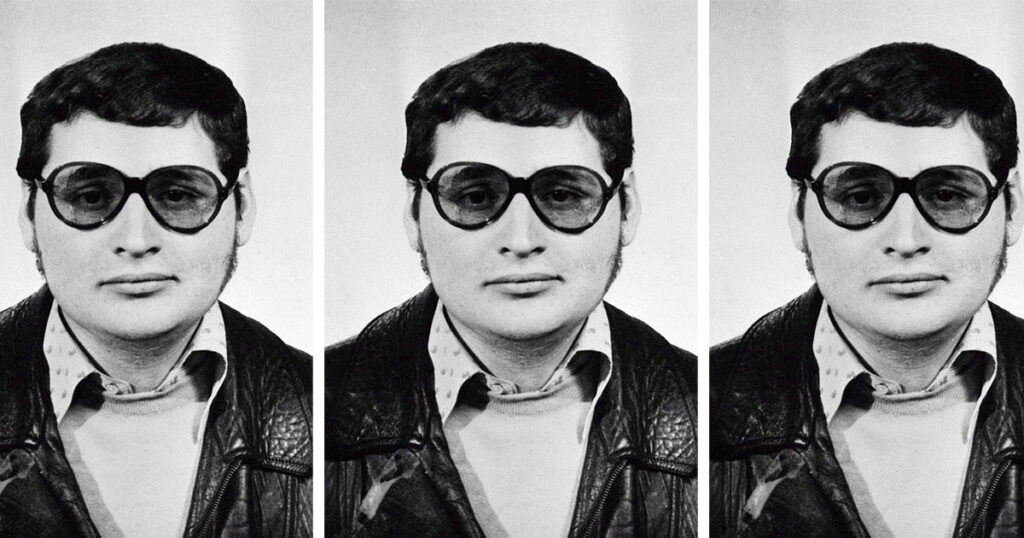
The Jackal: The Rise and Fall of Carlos, the World’s First Super-Terrorist by Joby Warrick; Scribner, 384 pp., $30
Even in the celebrity-mad 1970s and ’80s, the global mononym club was minuscule. Cher. Diana. Madonna. Pelé. Sting. And Carlos, the terrorist who captured an entire 1975 conference of oil ministers. He’d originally wanted to kidnap a bin Laden family member for big cash—preferably the 17-year-old Osama—but backers such as Libyan leader Muammar Gaddafi chose Plan B. Carlos led a six-man team into OPEC’s Vienna headquarters, killed three people, made the Austrian government broadcast statements on Palestinian rights, then forced 33 hostages onto a DC-9. Mission complete, he vanished. Escapes were his trademark, like shooting victims at close range and leaving his face uncovered. As journalist Joby Warrick writes, “Maximum exposure was the point.”
For two decades, Carlos the Jackal, the anti–James Bond, was the planet’s most-wanted fugitive. His motivations and character have remained fugitive as well, despite a half-century pile-up of documentaries, biographies, biopics, miniseries, and scholarly studies. To Warrick, he remains “indisputably, the most famous of the international terrorists who took up arms in the 1970s … an avatar for a newly emerging form of state-sponsored terrorism.”
As national-security correspondent for The Washington Post, Warrick has spent 30 years on the conflict beat, covering weapons proliferation, the terror industry, and Middle Eastern politics. His Black Flags: The Rise of ISIS won the 2016 Pulitzer Prize in General Nonfiction, and his new book, The Jackal, is the other half of a dark diptych. Long-form journalism at this level is sometimes a topic nobly worked up for the occasion—John McPhee on Alaska, say—or else the product of deep experience, as in this stellar biography, which Warrick constructs with a bricklayer’s confidence, scene on well-paced scene, sternly avoiding side trips and fact dumps.
Also, you can’t beat the material. The Jackal, born Ilich Ramírez Sánchez in Venezuela, was raised in bourgeois comfort by an aristocratic mother and a leftist lawyer father, was sent to school in London—“snide little blighter,” one instructor recalled—and then majored in debauchery at a Moscow university. At 20, he headed for Lebanon, a plump, entitled volunteer who baffled Popular Front insurgents with his flashes of charm, comically robust ego (“The whole world will hear of me!”), and firm career plan. Classical communism was too rigid, too dull. He wanted to be the Che Guevara of the Palestinians. A professional revolutionary. A star. “Bullets are real here,” the Beirut recruiter warned Sánchez.
He owes his full nom de guerre to a Guardian reporter who happened to notice a copy of Frederick Forsyth’s assassination chiller The Day of the Jackal in an abandoned safe house used by Carlos. Probably he never read it, but the core conceit—a ruthless, elusive free-
booter—was catnip to assignment editors worldwide. Tabloids and TV marketed Carlos the Jackal as a glamorous antihero who soon commuted between the headlines and the fiction shelves, notably as the model for the master killer in Robert Ludlum’s Bourne spy stories. The real Carlos, as Warrick amply documents, was a vicious incompetent who believed his own press clippings, sulking when rewards for his capture were set too low. But by anatomizing both the postmodern myth and the punk gunsel, Warrick creates a nonfiction novel in the mode of Truman Capote’s In Cold Blood, minus the whoppers.
The age of the Jackal is fading, but his one big idea—and the teenager he failed to kill in 1975—led to 9/11, and the reverberations persist. Carlos saw that a new techno-wonder, the global satellite TV feed, made terrorism into show biz. The channels of the day were full of masked men performing the unthinkable—the takeover of the Munich Olympics, the kidnapping of heiress Patty Hearst—but the dashing lone superterrorist was the role of a lifetime, especially when broadcast live. Bombings, kidnappings, raids, hijackings: The Jackal’s fame bloomed along with his body count until French intelligence and law enforcement, together with the CIA, managed, in 1994, to seize him in the Sudan. (He was in Khartoum for surgery to correct a low sperm count.)
Warrick clarifies this bloody picaresque by foregrounding the members of the Jackal’s crew, making them human as well as heinous, from Carlos’s chief associates to his wives and girlfriends, his Palestinian colleagues and their Arab allies, Jordanian leaders and advisers, and some truly scary German accomplices. Warrick’s command of the Jackal’s quicksand world yields a first-rate criminal biography, gliding from Aden to Algiers as Sánchez ascends from commando to terror boss, and gruesome tension turns to giddy relief when law enforcement finally prevails, just a few years too late for the guillotine. The French courts imposed three life sentences instead.
Warrick’s acknowledgments and notes are a master class in the reporting and sourcing of nonfiction, not least the KGB thumbs-down on young Sánchez (“appalling record as a student”). But no obituary closes this transnational paper chase. Carlos, vague and shuffling at 76, is alive at the high-security prison of Poissy, in the Paris suburbs. Warrick ends the book with a rare face-to-face interview. Prisoner 11939 is unrepentant. He has only one regret: not punishing his betrayers.
“I should have killed a few more people,” he grumbles. “I killed eighty-three people by my own hand. Another thousand were killed on my orders. … Good food, good music, pretty girls, clean girls. I always had a good life, all my life.”
That cold blank core, that motiveless malignity, has kept the field of Jackal studies evergreen, for Carlos’s real attack was not on institutions but on rationality. Why does a spoiled schoolboy turn monstrous? Warrick’s tenacity pulls at least the who, the where, and the how from history’s shadows: “While he claimed to be a revolutionary, Carlos was, at his core, a criminal narcissist. He killed seemingly without feeling, often wantonly. His cruelty toward his targets—and occasionally, his allies—issued from a brain that also craved celebrity and insisted on living a life of luxury and dissolution.”
Ilich Ramírez Sánchez did follow at least one lodestar principle, instilled by his Marxist father and honored lifelong: never, ever drink Coca-Cola. The Jackal, it seems, had three rules. Kill without pity. Lay off the imperialist sugar water. And always know where the cameras are.