
True Nature: The Pilgrimage of Peter Matthiessen by Lance Richardson; Pantheon, 736 pp., $40
Think twice before learning too much about your literary heroes. That is the lesson of Lance Richardson’s engrossing life of Peter Matthiessen (1927–2014), the globetrotting, Zen-minded author of such modern classics as The Snow Leopard (1978) and Shadow Country (2008). The biography shelf of great male writers of the 20th century is hardly a field of glory—rarely does ego yield to humility or self-awareness win the day. Matthiessen may have seemed like a special case, revered as much for his mystical ethos and wayfaring spirit as for his books. Yet this adventure-cool iconography is hard to sustain in the face of a long-suffering wife who called herself a “handmaiden” to Matthiessen’s work or a son who described him as “the most self-centered man I’ve ever known.” Not since Patrick French’s life of V. S. Naipaul has a major writer’s image taken such a hit from his biography.
Richardson’s book is aptly titled True Nature. It is no hatchet job. Matthiessen is not presented for cancellation, and his misdeeds do not include sexual harassment. Richardson undertook the project as an admirer of his subject’s work and gives an evenhanded account; the facts (and letters) simply speak for themselves. True Nature is enthralling, expertly told, and based on extraordinary research. Richardson conducted more than 200 interviews, including with Matthiessen’s children, and trekked high enough into the Himalayas to experience pulmonary edema while retracing Matthiessen’s most famous expedition. The portrait that emerges is of a gifted but insecure and very fussy writer, a paragon of egotism, an absent father, a dreadful husband, and a man who allowed his talent and charisma to offset emotional distance and occasional cruelty.
A child of New England wealth, Matthiessen grew up in New York and Connecticut, “the product of an old-fashioned WASP upbringing: nannies and emotionally frigid parents.” He never managed to shake his patrician accent or connect with his father; a memory of being flung into the waters of Fishers Island Sound in a sink-or-swim moment haunted him for years. Richardson contends that Matthiessen carried the wounds of his childhood through his life, giving him a vulnerable, wounded aspect and an aloof bearing. After attending Yale, he got engaged and moved to Paris. As a CIA agent.
Matthiessen had always been cagey and evasive about his work for the CIA in the 1950s. Richardson performs a valuable service by quoting from a personal narrative of the experience that the writer left behind. Matthiessen called his years reporting on potential subversives and carrying messages between agents in Paris “the one adventure of my life that I regret.” His cover was as an expatriate writer—at the time, he was working on his first novel. An even better cover emerged when Matthiessen and a group of friends, including Harold Humes and George Plimpton, created The Paris Review. Its early years have been romanticized in publishing lore, but Richardson provides a welcome corrective by adopting the perspective of Matthiessen’s first wife, Patsy Southgate. A writer herself, she found that “her literary aspirations were mostly ignored by Matthiessen and his ‘boys club.’ ” When she tried to speak, he told her to lower her voice.
It was an early example of Matthiessen’s dismissive treatment of women. Years later, when his second wife, Deborah Love, wanted to submit a short story to The Paris Review, Matthiessen could have smoothed the way. Instead, he told her to use a pseudonym. In the mid-1980s, he sent a jaw-dropping letter to Elisabeth Sifton, his editor at Viking Press and his champion, despite his irascibility, neediness, and interminable rewrites. He cited her “over-work and perhaps unsuitability to simultaneous managerial and editorial roles and motherhood.” Matthiessen’s worst offense toward women was a lifetime of secretive philandering, including when Love was dying and then, years later, in the weeks before he died. That the affair at the end of Matthiessen’s life appears to have been emotional rather than sexual did not diminish the pain felt by his third wife, Maria Koenig. When caught, he hid behind hippie nonsense: “I am not centered. … I feel sure these imbalances of feeling, of loss of oneness with my own aging, with a deep, quiet sadness about my children … none of these are excuses.”
A dichotomy runs through Matthiessen’s writing life. He saw himself as a novelist and poured his greatest artistic efforts into fiction like Far Tortuga (1975) and Shadow Country. But his best-known books were nonfiction expedition accounts, to shark-filled seas in Blue Meridian (1971) and to Africa in The Tree Where Man Was Born (1972). Richardson ably diagrams the magic Matthiessen brought to these chronicles, beginning his narratives “as the unsentimental observer attuned to minute details” but soon giving way with lyrical writing to a deeper, philosophical tone. “Nature becomes a sublime conduit carrying the attentive, open-minded observer to glimpses of ultimate truths.”
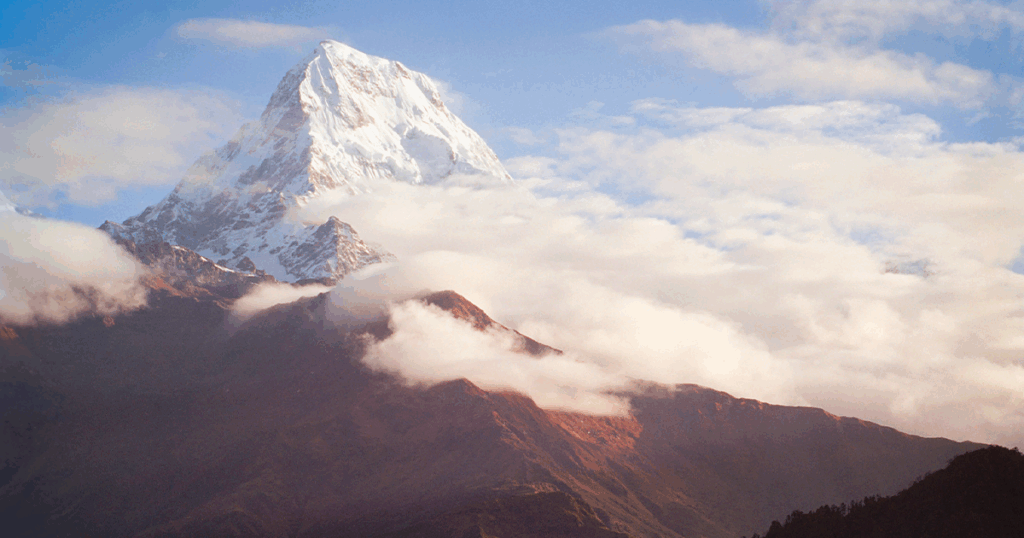
No work achieved this delicate power like The Snow Leopard, which chronicled a 1973 expedition to a Buddhist monastery deep in the Himalayas. It is an exquisite book, full of radiant prose that singularly captures the freedom of a journey through the alpine. “In the clearness of this Himalayan air, mountains draw near, and in such splendor, tears come quietly to my eyes and cool on my sunburned cheeks,” Matthiessen wrote. Yet as Richardson deftly explains, The Snow Leopard was also an act of careful self-presentation. Matthiessen went to Nepal 20 months after Love’s death from cancer and framed the journey as a pilgrimage in her memory—yet he was already seeing (and two-timing) Koenig. He made his nine-year-old son, Alex, a character in the drama by depicting a tearful leave-taking and his own guilt about staying away. Yet Matthiessen wrote almost nothing about his teenage daughter, Rue, because, as she put it to Richardson, the “lonely little boy yearning for his father is archetypal.”
That lonely little boy has always troubled Matthiessen’s readers. What kind of man leaves his young children who have just lost their mother and goes on a months-long expedition? True Nature shows the cost of this abandonment as well as many others. Matthiessen consistently failed to show up for his four children at their most vulnerable moments. Instead, he was traveling, studying Zen Buddhism, or pursuing environmental causes or activism on behalf of Native Americans. His son Luke told Richardson that his father, when around, was cold and distant: “It was probably safer not to go there, because you were going to be disappointed. He was going to leave again.” Matthiessen conceded his absenteeism but excused himself in the name of art. He was a writer first. His coldness is devastating.
Ultimately, Peter Matthiessen emerges from his own biography a diminished figure. He spent years looking for paradise: a simpler life, stripped free of urban consumerism and purified by the clarity of Zen. Noble goals. Yet selfishness takes many forms, and Matthiessen’s restless searching ultimately served his own needs. The cost of his disregard and duplicity to those around him was painfully high. What do you call a seeker who travels the world and keeps seeing himself? Someone who was looking in the wrong direction.