
The Matriarch of Spiritual Revolution
Was Mary the real source of her prophet son’s teachings?
The Lost Mary: Rediscovering the Mother of Jesus by James D. Tabor; Knopf, 240 pp., $29
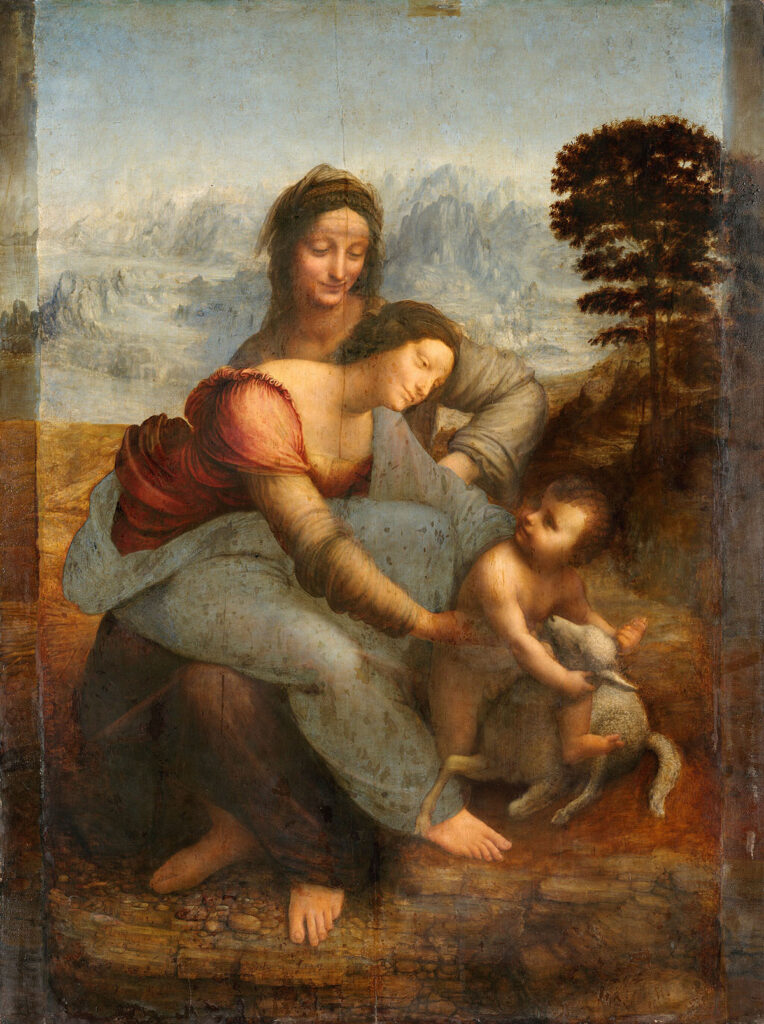
While traveling in Italy earlier this year, I saw hundreds of paintings of the Annunciation, Pietà, and Madonna and Child. I wondered how many of the museum and church visitors around me were aware that they were marveling at, even worshipping, a worried Jewish mother. That’s who Mary really was, but most people don’t think of her that way. Religious studies scholar James D. Tabor aims to rectify this oversight with his long-awaited new book, The Lost Mary: Rediscovering the Mother of Jesus. Stripping away the “mythical and legendary”—and meek—Holy Virgin Mother of God we typically encounter, Tabor tries to recover who Mary was as a historical person: a Jewish woman, a widowed mother of eight children, and the matriarch of a revolutionary spiritual movement.
The reason most people don’t think of Mary as a Jewish matriarch, Tabor argues, is because her identity been deliberately erased as such—written out of the story by later Christian writers “obsessed with maintaining Mary’s virginity and bodily purity, to the point of denying her normal body functions like urination, defecations, and menstruation,” and likening her to “an angel, beyond the human even from birth.” This erasure was “not systematic, nor was it orchestrated,” Tabor clarifies, but it was nevertheless deliberate. It began with Paul of Tarsus, in whose letters we see “a process of blotting out Mary’s life,” and who intended “to shift Jesus and his revolutionary significance from earth to heaven, and thus away from the Jewish mother who helped to shape him.” Tabor, meanwhile, hopes to present Mary “as she was in her own time and place.”
Here are what I’ll call the “facts” of Mary’s life, gathered from Tabor’s book:
- Mary was born to parents Joachim and Anna, part of a wealthy family in Sepphoris, the capital of Galilee, and raised in an educated household “exposed to the diverse and cosmopolitan culture” of the city.
- Growing up in a time of political and spiritual upheaval, amid a messianic rebellious movement for Jewish independence against the Roman-backed Herodian regime, Mary witnessed several massacres and mass crucifixions in her youth.
- At age 14 or 15, Mary became pregnant. To “get away from village gossip,” she went 100 miles south to the Judean hills, staying with her relative Elizabeth (pregnant with John, the future baptizer).
- After several months in Judea, Mary moved to Nazareth, a suburb of Sepphoris and the home of her betrothed, a skilled craftsman named Joseph—who was not the father of her child.
- Mary eventually gave birth to eight children; at some point, Joseph died, leaving her a widow.
- She moved to Jerusalem around the time the Romans kill her firstborn son, Jesus, by crucifixion.
- She resided on Mount Zion for the rest of her life, the matriarch of the Nazarene Movement that Jesus started and her second-oldest son, James, continued.
Tabor bases these “facts” on archeological evidence; the Jewish-Roman historian Flavius Josephus; a close reading of the New Testament, in which he follows “hidden clues strewn along an uncharted path”; and a comparative study of non-canonical sources, such as the Gospel of Thomas and the Jewish Mishnah. In other words, Tabor knows his business—he’s written 10 books on Early Christianity. But though he makes a strong case for the above “facts,” his main propositions remain suppositions.
Most of this slim book provides the political and historical context for Mary’s life, particularly the throne dramas of Herod, who was the official “King of the Jews” at the time. Born to an Arab mother and a converted father, however, Herod was a half-Jew at best, without a prestigious pedigree. That’s why he, like his successor Herod Antipas, was so obsessed with killing potential rivals, particularly those descended from the Hasmonean dynasty (the last Jewish ruling family before the Roman occupation). Tabor spends many pages establishing that Mary, by contrast, could trace her genealogy to both priestly and kingly royalty, including King David and the Hasmonaeans. That is to say, those biblical lineage lists in Luke and Matthew that many readers view as irrelevant were actually of extreme importance at the time, because the gospel writers wanted to establish that Jesus had both the necessary political and religious pedigree to be the Messiah.
This notion that Mary’s lineage was crucial to Jesus’s success is intriguing, even if not entirely persuasive, but Tabor’s main theory, however, is much flimsier: that “Mary was the mind and heart” of Jesus’s movement. Tabor is “convinced” it was Mary’s teachings that Jesus gave throughout his ministry. Yet Tabor offers zero evidence for this claim. Because he can’t: As he’s established, Mary has been erased, marginalized, and metamorphosed. Of course it’s true that mothers influence their children. But, just as Tabor writes regarding Jesus’s true patrimony, “we’ll never know” if Jesus got his radical ideas from his mother, from himself, or someone else.
Another of Tabor’s points, though, seems likely: that throughout her life, “Mary was busy being the consummate Jewish mother, making sure her sons and daughters were properly educated and inspired to participate in this revolution that only God could bring about”—not to mention properly fed. This means that if we’re ever in Jerusalem, the best place to find the real Mary is not in the churches of the Christian Quarter or Armenian Quarter, or the sites honoring her just outside the Old City’s walls. It’s in “the Jewish Quarter of the city, with its rhythms of Sabbaths, Jewish holy day festivals, and the strains of the Hebrew prayers and liturgical songs intoned at the Western Wall.” Because that’s where Mary herself would feel at home.