The Synthesis Is Here
Our future depends on how successfully we fuse the liberal arts and technology
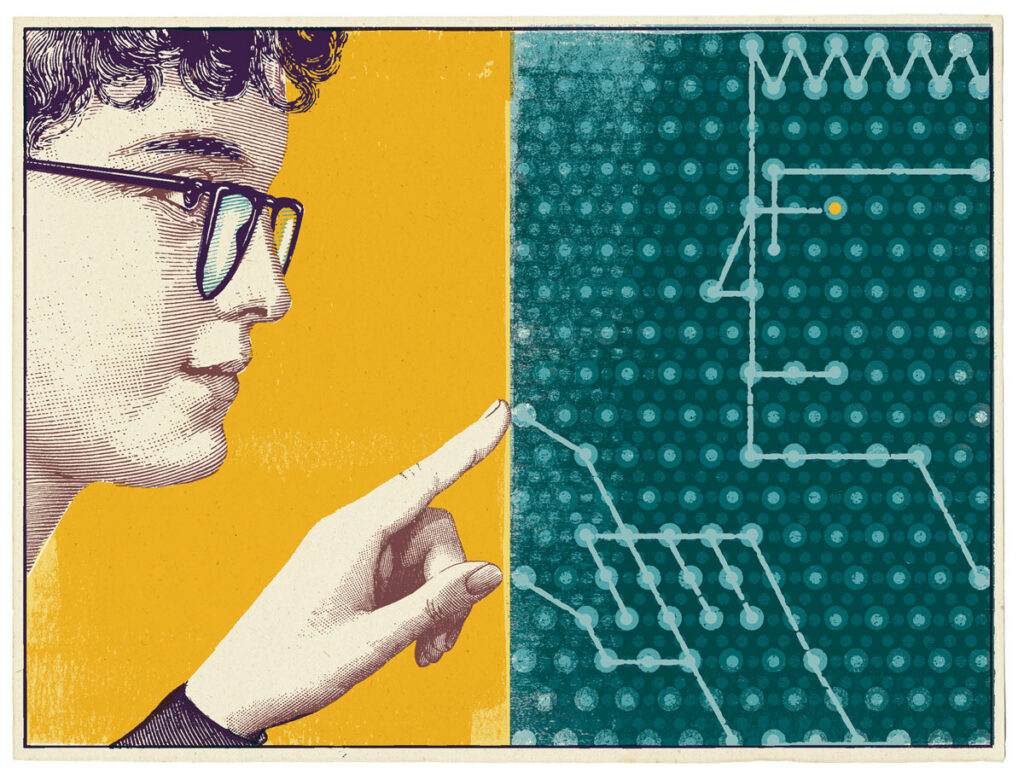
In an era defined by breathtaking technological advancement, a fundamental question has emerged that concerns nearly everyone on the planet: How do we best navigate a future in which artificial intelligence will replicate or exceed many, if not most, human capabilities? This question has been a focus of attention on campuses and in boardrooms, in the halls of government and around kitchen tables. And it has taken seemingly endless forms.
What happens if AI transforms the workplace, rendering many forms of traditional work obsolete? Is there intrinsic value in work? What should we learn and how do we best do so? What are the most productive and ethical ways to interact with AI systems? How and to what end should societal norms and governments influence individual behavior, when AI provides popular near-term benefits but its complex long-term consequences are potentially problematic? How do we organize political and economic systems given AI’s capabilities and pervasiveness? To what extent is this a matter specifically concerning AI and to what extent do we need to address the broader role of technology in our collective future—whether directly, such as with augmented reality or brain-machine interfaces, or indirectly via its collective influence on nearly all aspects of human life?
Scientists and technologists will, of course, have much to say on these matters. But they should not be the only ones. These questions, after all, are intrinsically related to those considered for millennia by philosophers and historians, playwrights and poets, and many others in the fields of the liberal arts. We believe that a deeper connection must be fostered between humanists and technologists. At the moment, however, a significant gap exists between them. The technical advances we are witnessing have made the need to bridge this gap more relevant and urgent than ever before.
The problem is hardly new. In the 1959 “Two Cultures” lecture delivered at Cambridge, British physicist C. P. Snow famously asserted that the schism between scientists and humanists hindered global problem solving. Referring to his interactions with scientific and literary colleagues, he said, “I felt I was moving among two groups … who had almost ceased to communicate at all, who in intellectual, moral and psychological climate had so little in common that instead of going from Burlington House or South Kensington to Chelsea, one might have crossed an ocean.”
Natural scientists Stephen Jay Gould and E. O. Wilson later advocated for bringing together ideas from the liberal arts and the sciences. And Steve Jobs, in one of the last speeches he delivered before his death, declared that “technology alone is not enough,” that “it’s technology married with the liberal arts, married with the humanities, that yields us the result that makes our heart sing,” a sentiment perhaps born from his own brief college studies, which focused mainly on the humanities. The broad, deep, and rapid penetration of technology in contemporary life has intensified this notion: Only the collective application of humankind’s wisdom, embodied in the liberal arts, can harness rapidly evolving innovations for good while minimizing their negative consequences.
Because humanists, social and physical scientists, and technologists take different approaches, we need a multidisciplinary way to understand and ultimately benefit from the relentless pace of innovation. Ideally, changes would occur in the workplace, with technologists and applied scientists devoting more attention to using methodologies and insights from the liberal arts in their work and with liberal arts educators and practitioners addressing technological challenges and incorporating innovations in theirs. But change must also take place on our college and university campuses, where technologists and humanists are best positioned to work together, potentially improving both research and pedagogy. At a time when institutions of higher education face widespread criticism for a lack of intellectual balance, increased collaboration across traditionally balkanized domains will foster greater tolerance of different worldviews.
It will help, first of all, to define our terms. The liberal arts, rooted in Latin, refer to the skills (artes) that enable individuals to think freely and independently (liberales) and to participate competently in complex societal undertakings. Today, the liberal arts include the humanities, social sciences, mathematics, and the physical sciences—disciplines that emphasize understanding and reasoning over vocational training. Technology, although not strictly vocational, is the application of science for practical benefit, with the aim of generating new products, services, treatments, and even modes of living.
Spurred by both unprecedented opportunities to make rapid advances and intense competition among researchers, firms, and nation-states, the technological changes we are witnessing today will, we believe, eclipse any in history, including the advances of the Industrial Revolution, the creation of clean water systems, and breakthroughs in nutrition. Contemporary innovations are creating systems capable of replicating and even exceeding many human capabilities—from memory and learning to planning and analysis—and of performing autonomous physical actions. As of early 2025, for example, fully automated robotaxis, by one measure, accounted for 25 percent of San Francisco’s rideshare market. But technology has more imaginative applications than that. Consider the vast body of digitized personal information that we produce throughout our lives. This body of information is so large that it has become possible to train personalized avatars to take on a startling number of our characteristics, behaving much as we do. These digital twins could continually adapt to changes and interact with, educate, and perhaps even comfort others long after the individuals on whom they are trained are gone.
Given the ease with which digital technologies can be distributed via networked smartphones and other personal devices, technology’s influence will potentially extend to nearly everyone, profoundly affecting social interactions, employment, political and economic systems, and even human lifespans. Biomedical advances in neuroscience, genetics, precision medicine, and brain-computer interfaces offer the promise of augmented physical capabilities and longer lives. AI is already accelerating science and engineering research, as evident in its capacity to synthesize new proteins, improve robotics, and design new computer programs and chips. Whether predictions of the technological singularity—a self-accelerating loop of technical advances—prove true, AI researchers are aggressively pursuing recursive self-improvement techniques to speed technical progress. Governments, companies, and investors are expecting enormous gains in economic efficiency from AI’s ability to enhance human productivity and scientific discovery.
There are, of course, concerns, and not just with the speed with which these changes are taking place. Many of these innovations will have long-term, cumulative consequences, both direct and indirect, for individuals and their communities. How will workplace disruptions caused by automation reshape society, risking widespread displacement but potentially unlocking greater leisure time? And what about the recommendation systems used by websites and social media apps? These algorithms, which promote information to users based on their previous behaviors, navigate the overwhelming ocean of content so as to meet the economic needs of content providers; however, they can also alter individual preferences and contribute to societal polarization. Governments could utilize these algorithms to exert top-down influence—for good or ill. On a global scale, how governments utilize technology will directly influence the balance of power among nations, affecting peace, national wealth, and international relations.
In her 1951 monograph, The Origins of Totalitarianism, Hannah Arendt presciently raised the concern that a deluge of factual and erroneous information would cause people to lose their ability to distinguish truth from falsehood and accept immorality. Today, these risks are patent in AI’s ability to create, summarize, and personalize content of all types and the internet’s power to distribute it. One of the prime justifications for a robust system of free expression is a functioning “marketplace of ideas.” In his classic 1644 essay “Areopagitica,” a sustained argument for civil liberties and free expression, John Milton wrote, “Let [Truth] and Falsehood grapple; who ever knew Truth put to the worse, in a free and open encounter?” Arendt’s well-placed fears, amplified by AI’s power to “curate” information, threaten the existence of Milton’s free and open encounters. But though increasingly customized and individualized recommendation engines alter this marketplace in positive and negative ways, setting limits for such systems is difficult for practical and ethical reasons.
What is needed, we contend, is a context for understanding and contextualizing all of these changes. We propose a new concept, which we call synthiety. A portmanteau of synthetic intelligence and society, synthiety refers to an evolving social order in which humans and various forms of synthetic intelligence are inextricably integrated. The rationale underlying this neologism is to help us accept the changes and to focus our attention on their myriad implications.
We have, in many ways, already entered such a social order: Small teams, corporations, schools and universities, governments, advocacy groups—all of these societal units already incorporate varying degrees of synthetic intelligence. And just as traditional societies are regulated by norms, laws, religions, markets, and other structures, so, too, must our synthiety be governed—in ways that explicitly address the opportunities and challenges presented by synthetic, artificial intelligence.
This is where the liberal arts—and the traditional goal of eudaimonia—come into play. Eudaimonia can be translated as “good spirit” or “good soul” or even “good god,” and it refers to how individuals best flourish in society. The ancient Greek philosophers viewed eudaimonia as the highest good that humans could attain. It has to do with living a life worth living, one that is satisfying and ennobling. Although Plato, Socrates, and Aristotle interpreted eudaimonia in slightly different ways, the concept was associated with wisdom, virtue, justice; with understanding the essence of things as well as their function; with how we act and what we do.
The goal of the present and the future is to achieve eudaimonia in our synthiety. But that is possible only if we understand how eudaimonia has been pursued in the past. In other words, we need humanists and technologists to come together, to talk deeply, to solve problems together, to navigate the numerous implications of artificial intelligence. After all, AI is ineluctable. Retreating into Luddism is not an option. We must recognize that the decisions being made now and in the very near future will affect all of humanity. And so, the conversations must begin. With discipline and openness to change, these conversations may result in both clear approaches to maximizing technology’s benefits and productive responses to the historic challenges facing the liberal arts today.
Technology without the liberal arts will make the world a worse place. The liberal arts without technology will make the world a static place—at best.
Previous generations, when confronted with new products, widely accepted the presumption of caveat emptor. When it comes to today’s technology, however, we demand higher standards concerning safety, privacy, fairness, and the avoidance of unintended consequences. There is another marked difference from the past: Whereas the harnessing of fire, the development of antibiotics, and the introduction of washing machines offered self-evidently “necessary” economic and health benefits with relatively straightforward trade-offs, many innovations, particularly in wealthier societies, are seen as optional rather than needed. In these cases, a more thorough and holistic analysis of their value is needed.
Assessing this complex notion of value falls largely outside the expertise of technologists, who may not even be able to ask the right questions. Understanding ethics is not enough on its own. A broader knowledge of many other fields is needed to understand the implications of powerful data science and AI capabilities. Specifically, we must recognize technology’s potential for growth and improving welfare alongside its complex effects on politics, international relations, privacy, and more. Technologists with a broad-based liberal arts education will make better decisions and collaborate more effectively with other stakeholders.
At the AI Conference 2024, held in San Francisco, computer scientist Peter Norvig—coauthor of the influential textbook Artificial Intelligence: A Modern Approach—quipped that “we are getting to the point where the broadest problem in many applications of AI is not how to engineer a solution but rather deciding what the solution should be.” This flips the Rolling Stones lyric on its head: You can always get what you want / But, if you try sometimes, you’ll find / You don’t get what you need.
If innovators do not draw from liberal arts expertise, technology’s effects could well be harmful. Even from a purely self-interested perspective, commercial innovators need the liberal arts for a holistic view of benefits, risks, and societal concerns that will ultimately influence their market success. But more crucial is a deep engagement with the essential questions that affect individuals and societies.
Ideally, tech leaders and innovators would both educate themselves and involve domain experts in the following fields:
- Economics, which examines how to optimize resource allocation for prosperity and fairness, striking a balance between individual freedom and societal needs. Behavioral economics and game theory help students understand the nature of decision making, particularly relevant to applications of technology such as internet recommendations.
- Political science, which examines how societies and nations are governed, interact, and utilize laws to shape behaviors. The field prompts normative questions about system improvement—questions related to personal and societal standards and ethics that link innovation with governance and international relations.
- History, which enables us to understand the consequences of previous decisions and to make more informed choices for the future.
- Fiction, poetry, drama, art, and music, which allow us to explore the human experience and open our minds to transcendent possibilities.
- Philosophy, which prompts deep thinking about reality, knowledge, and ethics. This discipline helps us frame the right questions to assess whether an innovation improves the world.
- Art history and the history of design, which inquire into the history of objects that express the most deeply felt human emotions.
- Sociology, psychology, and anthropology, which improve our understanding of individuals and societies through the lenses of history and cultural change.
A liberal arts education, moreover, cultivates the enhanced critical thinking, communication, and leadership skills needed for directing and harnessing technological progress. It’s ever more clear that just being a good programmer may not be enough, when advances in AI–generated engineering and programming greatly amplify the need for context and judgment over the details of coding.
By advocating for this multidisciplinary approach, we are not arguing in favor of government control. Nor are we saying that we can overcome the Collingridge dilemma, which states that the effects of technology cannot be readily assessed until it is widely used, at which point it becomes difficult to harness or change. We are not suggesting that the current pace of AI innovation needs to be arrested. As Henry Kissinger and his coauthors wrote in The Age of AI, “Attempts to halt [AI’s] development will merely cede the future for the element of humanity courageous enough to face the implications of its own inventiveness.” We do, however, need to be thoughtful in the broadest sense as we dig deeply into humankind’s collective wisdom and try to answer the questions that technology alone was never meant to answer. For regulation of AI to be appropriate and fair, not excessive and counterproductive, it must be informed by a profound engagement with this multidisciplinary wisdom. Questions that can appear overwhelming may have reasonable answers if we take the time to delve into the specific and contextual applications of technology.
The relationship is bidirectional: Practitioners of the liberal arts also need technology. A deeper understanding of technology empowers the liberal arts community to harness new methodologies more effectively, as seen in the emerging field of the digital humanities and the powerful capabilities of generative AI. In May 2023 (a lifetime ago in AI time), nearly a quarter of the respondents in an Authors Guild survey said they were using generative AI, and adoption in other creative disciplines is likely to be similar. Taking advantage of the deluge of omnipresent data and interconnectedness will allow humanists and social scientists to better understand the past and the present.
Most important, only by becoming knowledgeable about AI can those in the liberal arts become leaders and contribute needed insights to a world in which technology is omnipresent. The risk of not doing so isn’t just to be left behind; it means not having a say in the future of work, politics, and how scientific discovery ought best to be adapted to daily life. At the very least, those in higher education must realize that the effects of technology are already profoundly influencing the jobs available for highly skilled college graduates.
So how can the disciplines of the liberal arts expand their reach to explore, in an enriching way, these new and timely domains?
Philosophical concepts must expand to address the challenges that AI presents. As machines become more recognizably intelligent, how should they be governed? Do we believe that there should be limits on AI applications that affect humanity directly? At a time when widespread doubts exist about government competence, might technology be able to perform certain functions more effectively than people? For example, should AI be permitted to advise courts and parole boards on sentencing and parole, and if so, with what requirements and constraints? What are the pros and cons of AI in warfare? What would be the consequences of ceding certain military decisions to machines?
And what about our treatment of AI systems themselves? This, too, is a subject for philosophers. According to Nick Bostrom and Cal Shulman, experts in the field of ethics and AI, “Training procedures currently used on AI would be extremely unethical if used on humans, as they often involve: no informed consent; frequent killing and replacement; brainwashing, deception, or manipulation.” If, as other scholars maintain, AI systems are only machines, are questions related to sentient, sapient beings relevant? Perhaps a more basic philosophical question is this: If AI can duplicate an ever-increasing number of humankind’s most unique capabilities, how will our fundamental beliefs about humanity change?
Both the creation and the study of literature are already deeply engaged with technology. Tools such as Google’s Ngram Viewer, for example, can reveal historical language trends in the written record. But how will the nature of creativity and authorship change in a world in which generative AI can perform much deeper analysis and can even create custom materials for an individual reader, based on that reader’s background knowledge and style preferences—and even the kind of storyline the reader desires?
In the realm of linguistics and human language, machine translation has proven to be of great value. One system now offers automated translations between about 250 languages. That’s more than 60,000 language pairs—a demonstrably superhuman capability, even if the results are not quite at the level of the most expert human translators. Whether this innovation will ultimately support multilingualism in humans or minimize its value is still to be determined. There is little doubt that AI’s ability to summarize a vast amount of material will also enhance our ability to learn from the written record. In terms of creativity, we have much to learn about generative AI’s remarkable ability to create rhythm and rhyme in writing and, for that matter, similar patterns in music and art.
In the sciences, AI can now accurately predict three-dimensional protein structures—a result that earned David Baker, Demis Hassabis, and John Jumper the 2024 Nobel Prize in Chemistry. This and related discoveries hold great promise across the breadth of biomedicine. In mathematics, we have seen technology suggest new approaches to optimization and prove new theorems while finding flaws in others.
The field of bioethics must confront the implications of genetic screening and AI’s role in accelerating research into human traits and behaviors. The possibility that AI can enable us to communicate with other species could alter our relationships with other inhabitants of the planet.
The social sciences will be profoundly enhanced and challenged as predictive AI systems lessen the need for slow, expensive empirical studies and improve economic forecasting and risk mitigation. That simulations with AI agents might aid in understanding history and international relations was demonstrated not long ago, when Meta’s AI bot CICERO was victorious in the seven-player strategy board game Diplomacy, defeating even three-time world champion Andrew Goff. As Goff observed, CICERO “plays without a lot of the human emotion that sometimes makes you make bad decisions. So it just assesses the situation and makes the best decision, not only for it but for the people it’s working with.”
Meanwhile, increasingly intelligent systems, coupled with advances in manufacturing, distribution, transportation, and other service-sector robotics, will continue to compel efforts in social psychology, sociology, labor economics, and other domains to grapple with challenges arising from the changing nature of work.
Our sampling here is meant to be illustrative, not exhaustive. We imagine a wide-ranging and energizing reexamination of the liberal arts across the full spectrum of the curriculum.
There is, finally, the matter of practicality. Technologists have often undervalued liberal arts studies, considering them irrelevant to their careers. In similar fashion, humanists have generally resisted science and technology. For this to change, the academic advisory system, in both college and graduate programs, must pay much greater attention to students’ educational development beyond the courses of their major areas, providing them with more guidance in selecting their electives. Curricular requirements once demanded greater educational breadth across the liberal arts and sciences. Perhaps counterintuitively to some STEM advocates, technologists are now the ones who stand to gain greatly from broadened general education requirements.
For centuries, liberal arts studies have sought to develop the habits of mind aimed at answering life’s most probing questions of meaning and identity. In a world of accelerating change, they open up diverse possibilities for lifelong learning and the delight of discovery, addressing the profound uneasiness of responding to change. As psychologist Viktor Frankl taught, though we may not control the circumstances we face, we retain infinite control over how we choose to address them. Or as Maya Angelou put it, we may not control the events of our world, but we can “decide not to be reduced by them.”
The challenges we face are significant; they are coming at us quickly, and no one knows all the answers to all the questions. There will be no moratoria on the advancement of artificial intelligence—our synthiety has already taken root. Heraclitus was correct that the only constant is change, but even he would be struck by technology’s accelerating pace and the potential dislocations. By suggesting that we need to fuse technology and the liberal arts, we are explicitly affirming the need to balance topics like economic growth, political expediency, and human desires with the humanistic insights developed over the centuries. We need this fusion if we, as individuals and as an informed citizenry, are to navigate a future profoundly reshaped by technology. The coming changes present great opportunities but also enormous risks and challenges. We must pool our expertise if, as William Faulkner put it in his Nobel Prize address, we are not merely to endure, but to prevail.