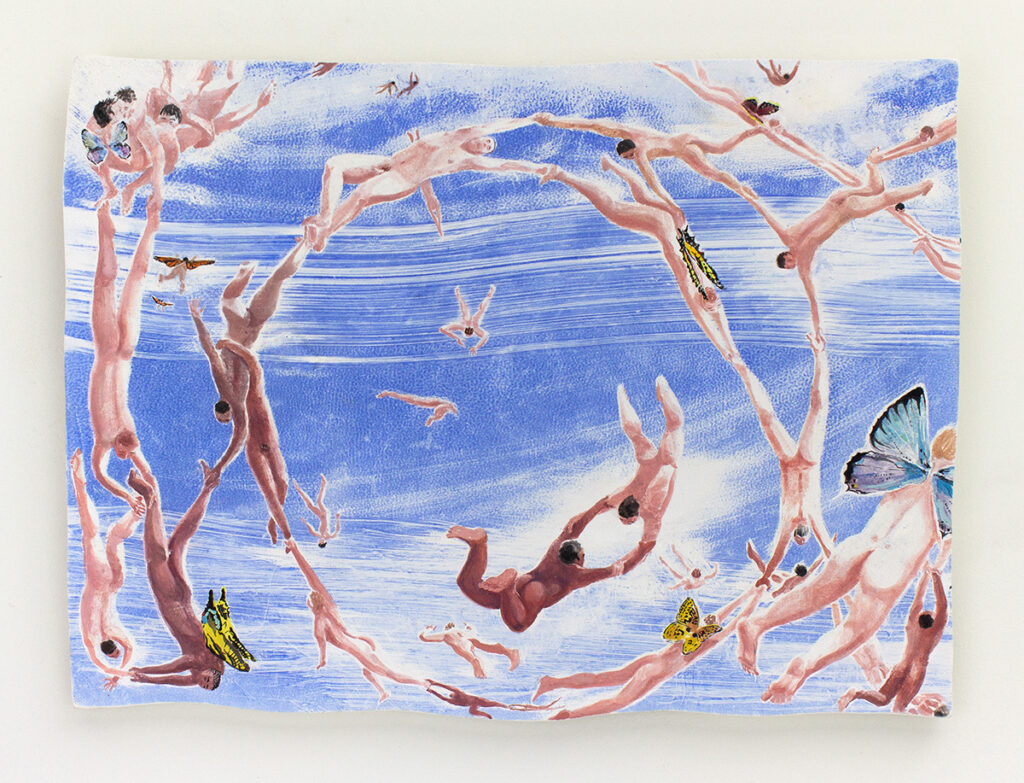
Multimedia artist Todd Stong believes that good art is “supposed to sharpen your awareness of the strangeness of what it is to be alive.” Five years ago, while studying abroad in Rome, Stong visited numerous galleries, tracing Michelangelo and Raphael’s footsteps through the city. He became captivated by how other Mannerist artists—Bronzino and Pontormo, for example—painted the human figure. “The Mannerists didn’t know how to draw; they just looked at other artists’ work and made stuff up,” he says. “The way that I was drawing my figures at the time was very Mannerist. I was just allowing the figures’ bodies to do whatever they needed to do to fit into whatever job they had in the drawing.” Stong’s large-scale, multimedia prints and graphite drawings on paper—inspired by the Italian Renaissance and Baroque painters—combine themes of memento mori, queer love, and contemporary politics. More than two dozen of these pieces are now on view at the Headstone Gallery in New York in a solo exhibition titled This World May Never Change.
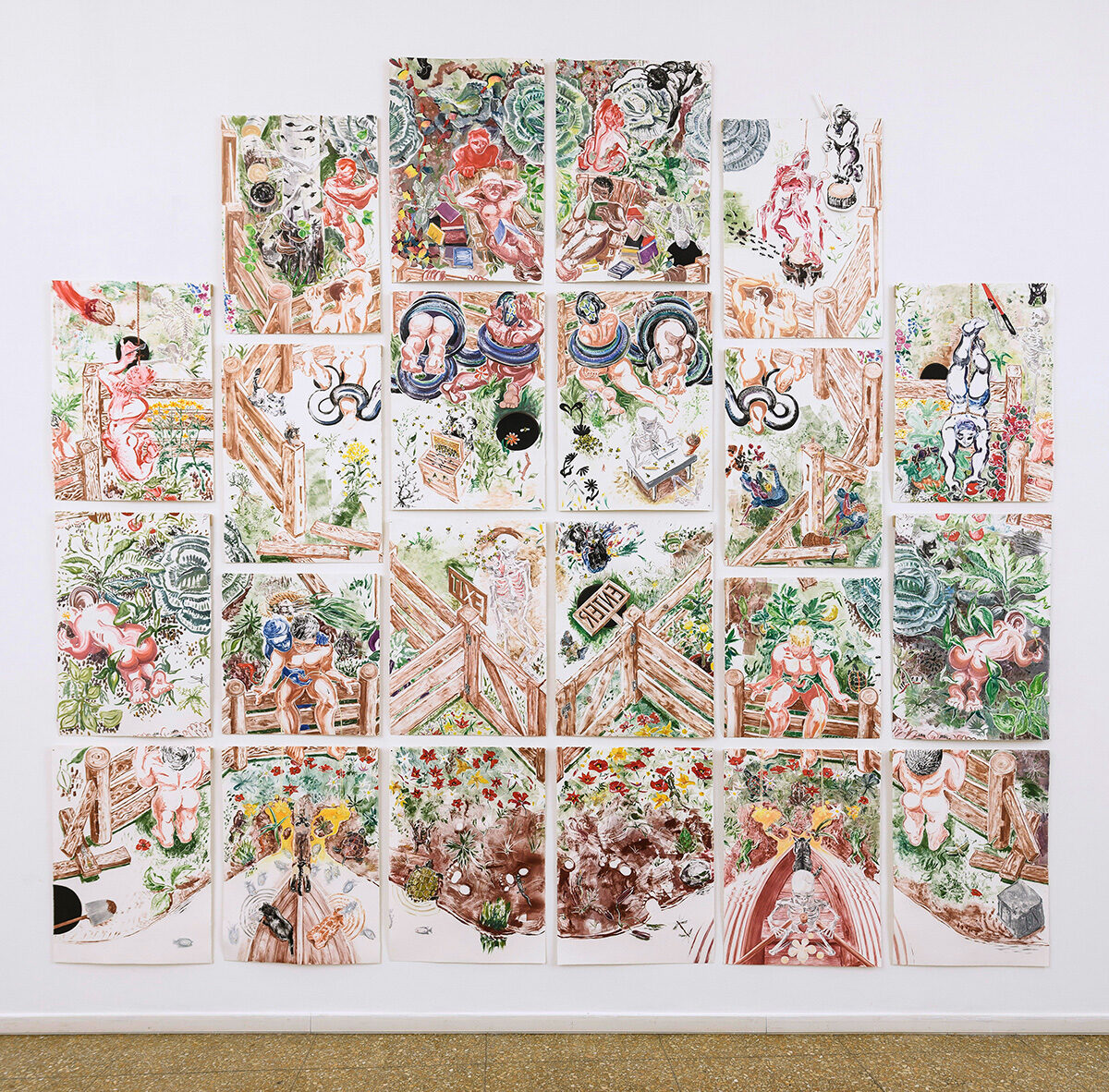 Silphium Garden (Archway), 2022, 22-panel monotype polyptych with ink, flashe, and collage on paper, 22-panel polyptych, 158 x 165 inches. (Photo courtesy of Giorgio Benni.)
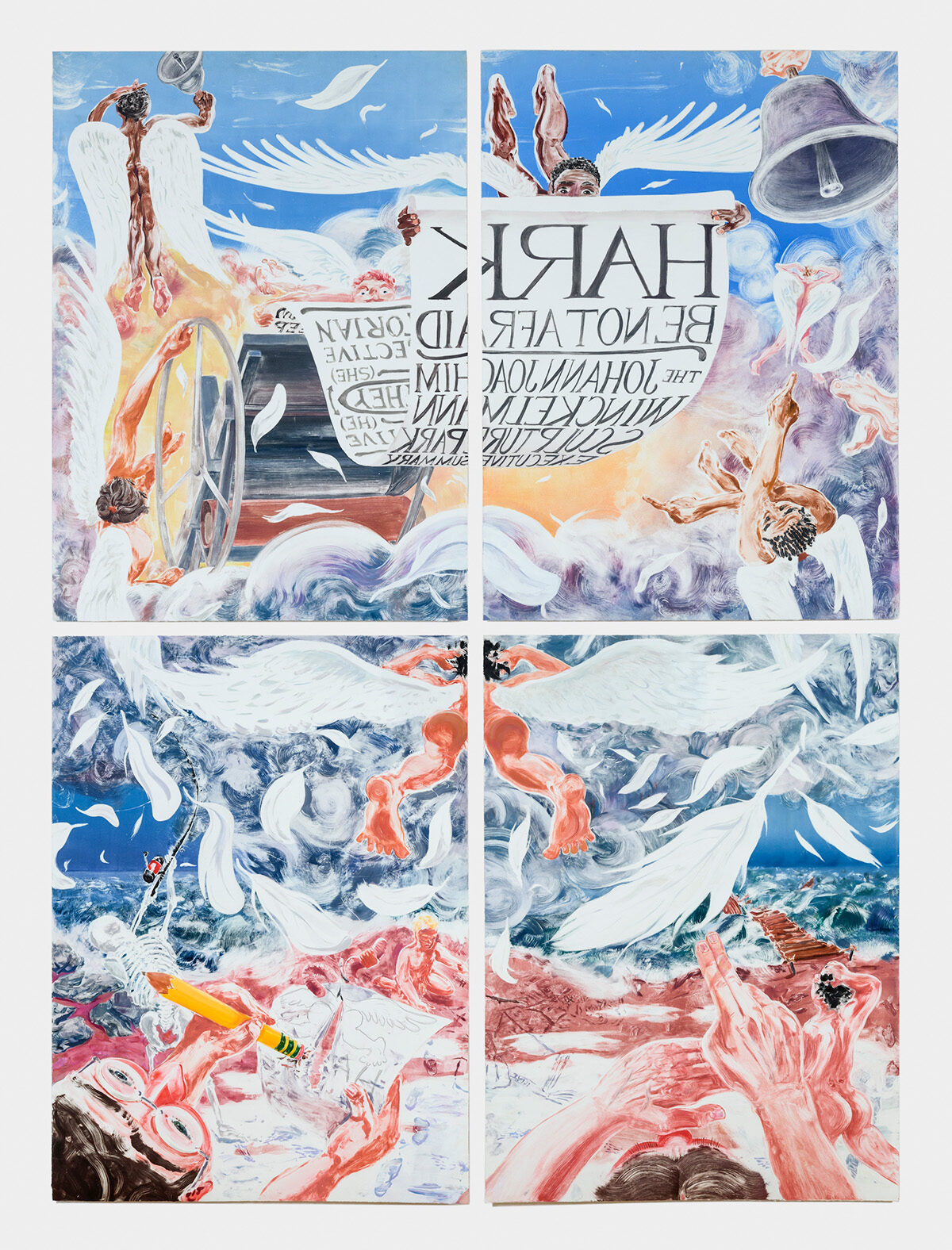
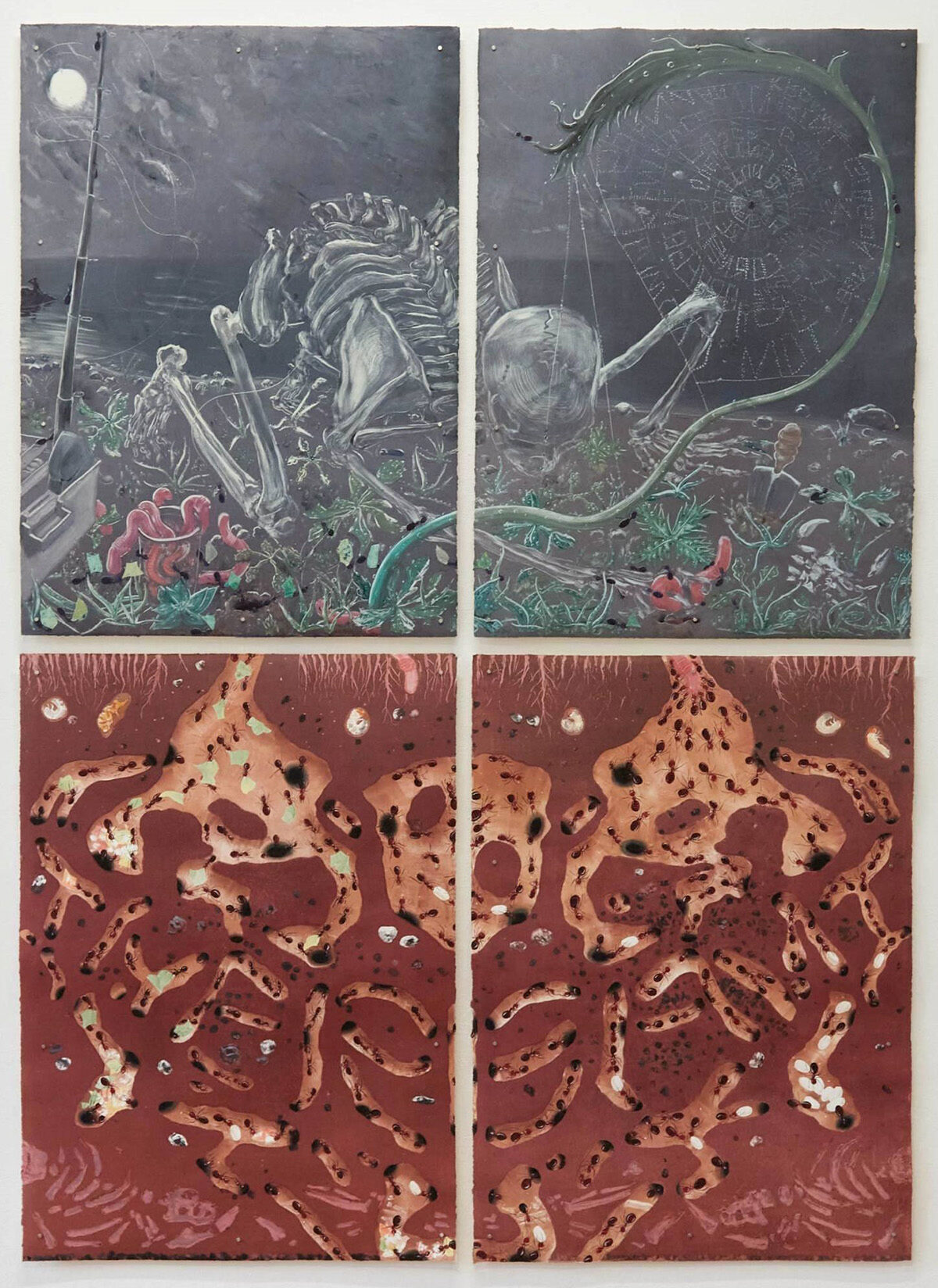
Stong begins each of his prints with a drawing on tracing paper, which he places under Plexiglas. He then uses Akua, a soy-based intaglio ink, to trace over the under-drawing before pressing the inked Plexiglas onto the paper substrate. The pigments are vibrant and luminous, he says, in part because the soy oil does not dry in an oxidative process. He’s also able to achieve a higher level of precision, in a nod to his favorite Northern Renaissance artist, Jan Van Eyck. “You’re working on this incredibly slick surface, so every minute detail of your brushstroke, all of the little bristles of the brush, will become evident,” he says. And these small, painterly gestures are the point. His prints, filled with curious minutiae—such as a cat with a snake in its mouth or a skeleton cultivating bees—should make viewers stop in their tracks and focus on the artmaking itself. “I want it to make you wonder if you’ve seen something like this before and to try to notice it the next time you’re out in the world, if you haven’t,” he says.