
The best student of the three in my upper intermediate class of high schoolers asked if she could leave early that day. It was our last class of the school year. “Yes, of course,” I told her. “You’ll be wanting to get back to studying.” She nodded.
I predicted her motive because in the previous class, she had also asked to leave early. “Sure,” I’d said. “Why?” The answer had been to study for the final tests of the school year. The other two students were boys, and one of them regularly left 10 minutes early for football practice. The other never did leave early, but if he’d wanted to, I’d have gladly let him. No sense demanding total allegiance when I would never get it.
We finished an exercise, and because this would be the last class of the school year, I’d prepared a game. But with the girl already glancing at her watch, I decided to start the game after she was gone. Instead, I had a last question for all three of them. It was from our textbook: “What do you do to relieve stress?”
I turned to the girl first. She said she talked to her friends. Not to get advice, she explained, but to distract herself from her school problems. I knew she got consistently good grades with little effort, so I was surprised that school was a source of stress. “What problems?” I asked.
She said she had difficulty making herself study. She felt pressure to establish good habits. She knew school would get successively harder in the coming years. She had recently begun to think about a career, and she was considering medicine, for which you need good grades in school and high marks on the university access exams. She wouldn’t be facing those exams for another three years, but she was already worrying, she said. Just because she knew she wasn’t doing all she could. I nodded.
The second student admitted that, like his classmate, he felt the pressure to do better, always better. You have to be very organized, he said, measuring his words. A balance was difficult to find between obligations and free-time activities.
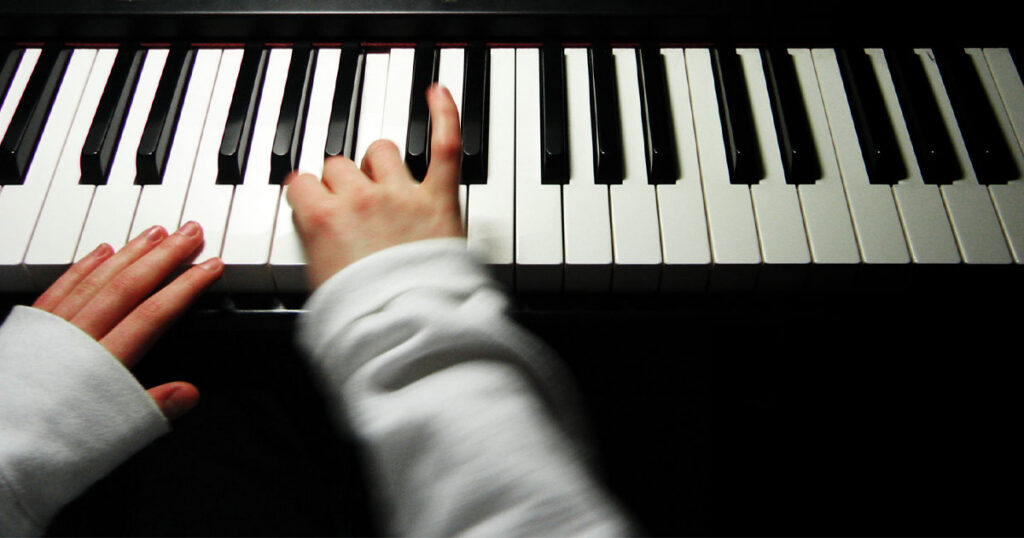
I mentioned that with his several hours of daily instruction at the music conservatory after school, he more than the others might feel obligations weighing on him. In a quick aside to the third, the footballer, I said, “I know you spend many hours at football practice, but somehow it doesn’t seem as demanding as music classes.” The footballer, always good-humored, smiled. Turning back to the musician, I said that many students have extracurricular sports activities, but a sport is often a way to disconnect. Was music just one more demand on him, or was it, like sport, a chance to relax?
Mainly it was an escape, he said, unless he was performing.
Then I turned to the footballer, the weakest of the three in English, but the most open and willing to speak. “What about you? What do you do to relieve stress?”
He said he didn’t really have stress. He did his work on time and didn’t put off studying for exams.
“You don’t worry that you’re not doing as well as your parents or teachers want you to?”
No, he said. He knew he was doing as well as he could. He smiled his rueful smile.
We have many moments like this, the footballer and I. I try to suggest that life is harder or more complicated than he lets on, and he gently refutes me. At these moments, when he shows both regret at contradicting me and amusement that I twist things around wrong, he is at his most charming. Others might emphasize their troubles or difficulties and accept my sympathy, but he seems good with where he is.
I turned to the girl. “Why aren’t you like that?” She heard the jocular note in my voice and shook her head, smiling. Then I told her to go ahead and leave if she wanted.
I pulled out the game. It was a board game, which involved throwing dice to advance and land on squares picturing random objects—a magnifying glass or old hat, some change or a baby carriage. Player B asks A, “What on earth are you going to do with that?” to start the conversation, and A responds with a spur-of-the-moment decision, a plan, or a prediction. He could also ask for advice. The more original the use, the better, I said. I warned the students that I’d adapted the game from a lower-level one, and this was the first time to use it. “This will be fun,” I predicted, “or it will be a flop.” Then I reminded them of my question to their classmate when she’d asked to leave early. What had I said?
The footballer said he didn’t remember. The musician frowned and looked away, searching his memory. I knew he could spend several minutes trying to come up with the exact words. So I told them. “‘You’ll want to be getting back to your books.’ Why will?”
The musician answered correctly that it was a prediction.
“I think you’re set,” I told them, and they started.
In retrospect, the instructions were too loose, the responses too free. I might have expected the musician in particular, who is such a precise and careful speaker, to have had trouble with impromptu speaking. But he didn’t have any trouble at all. He was a natural, making silly predictions about far-fetched consequences and giving outlandish suggestions as he invented uses for the objects. “What am I going to do with this magnifying glass? I’ll probably put it in a drawer and forget it. But I could start a fire.” Or “This old hat? I’m going to dip it in resin, then drill holes and give it to my mom to use as a pot for a plant.” The footballer, on the other hand, with nothing factual to report, seemed to have little to say. When he landed on the hat, he said he would give it to his granddad. As the musician offered objections and alternative suggestions, the footballer gave a shrug and said “Okay” or “Maybe.”
When the time was up and the students stood to leave, I wondered if the footballer looked relieved that the silliness was over. I couldn’t tell from his face. He smiled goodbye with his usual open, friendly demeanor. Soon he’d be on the football field, kicking something real back and forth with his teammates. The musician, on the other hand, still wore a satisfied grin. He’d been riffing, and doing it well. Judging from the look on his face, he’d had fun. Had he heard new music in the words?
So—fun or flop? A little of both.
“Have a good summer,” I told them. The footballer said goodbye exactly as he did every day. The musician paused for a beat. “Well, goodbye,” he said.
I’ll be glad to see them back in the fall.