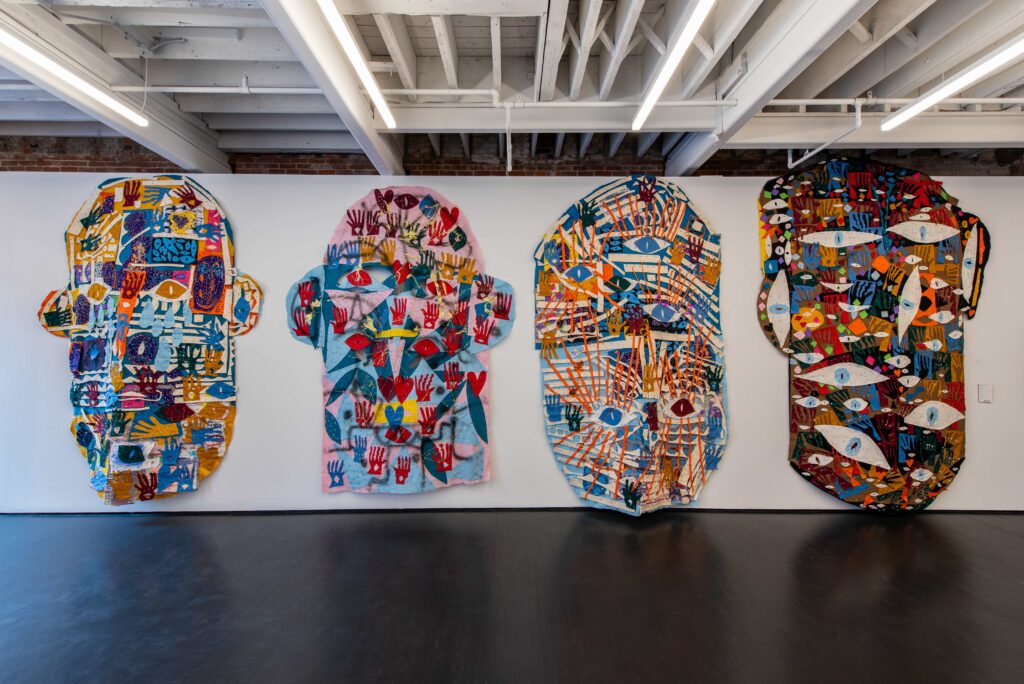
Some of William J. O’Brien’s happiest childhood memories involve competing on a unicycle drill team in his rural Ohio hometown. “It was influential in terms of absurdity and improvisation,” he says, which are crucial factors in his art today. After studying math in college, O’Brien realized he missed the spontaneity and play of working with his hands. Driven by a need for joyful pursuits, he turned to ceramics. He loved it so much that he began to experiment with other media: painting, drawing, bronze, steel, felt, installation works, and so on. “In some artist autobiographies, I think it’s a classic thing where they’ll say something like, ‘Oh, I was really good at drawing [early on] or blah, blah, blah.’ I think I was really good at playing outside,” he says. “My interest in using many different materials is also one about claiming space as a queer artist in history. There was a real part of me that really loved this idea of experimentation.” O’Brien, who currently teaches ceramics at the School of the Art Institute of Chicago, now brings a certain joie de vivre and experimentation to several wall-sized, mixed-media “masks” or portraits. These works constitute a site-specific installation, A Ceremony of Faces, on view through the end of May at the KMAC Contemporary Art Museum in Louisville, Kentucky.
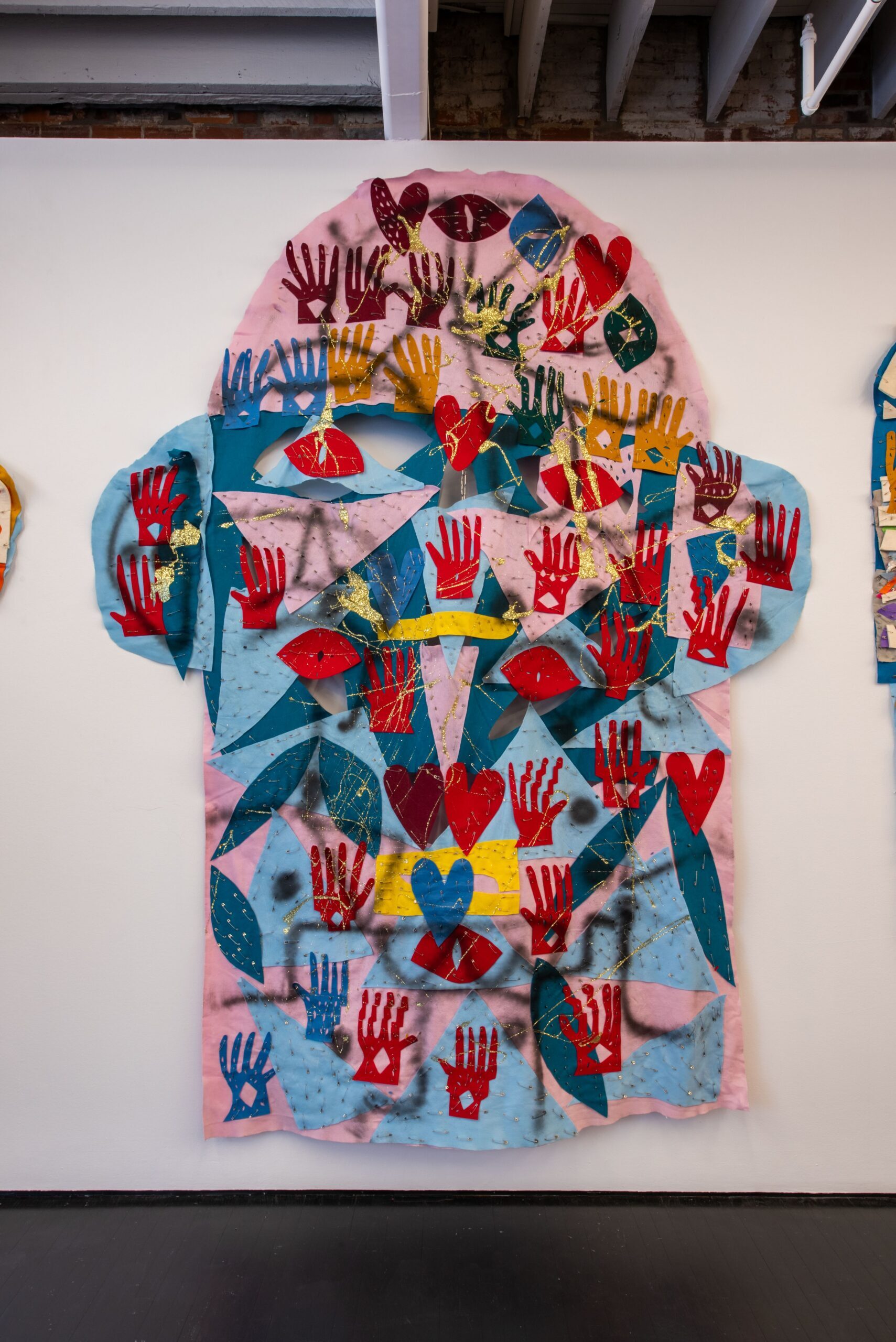 Lonely Lovers, 2026, felt, safety pins, spray paint, glue, glitter, stainless steel. 135 × 112 × 13 inches. (All images courtesy of the artist. Photos by Diane Deacon Street.)
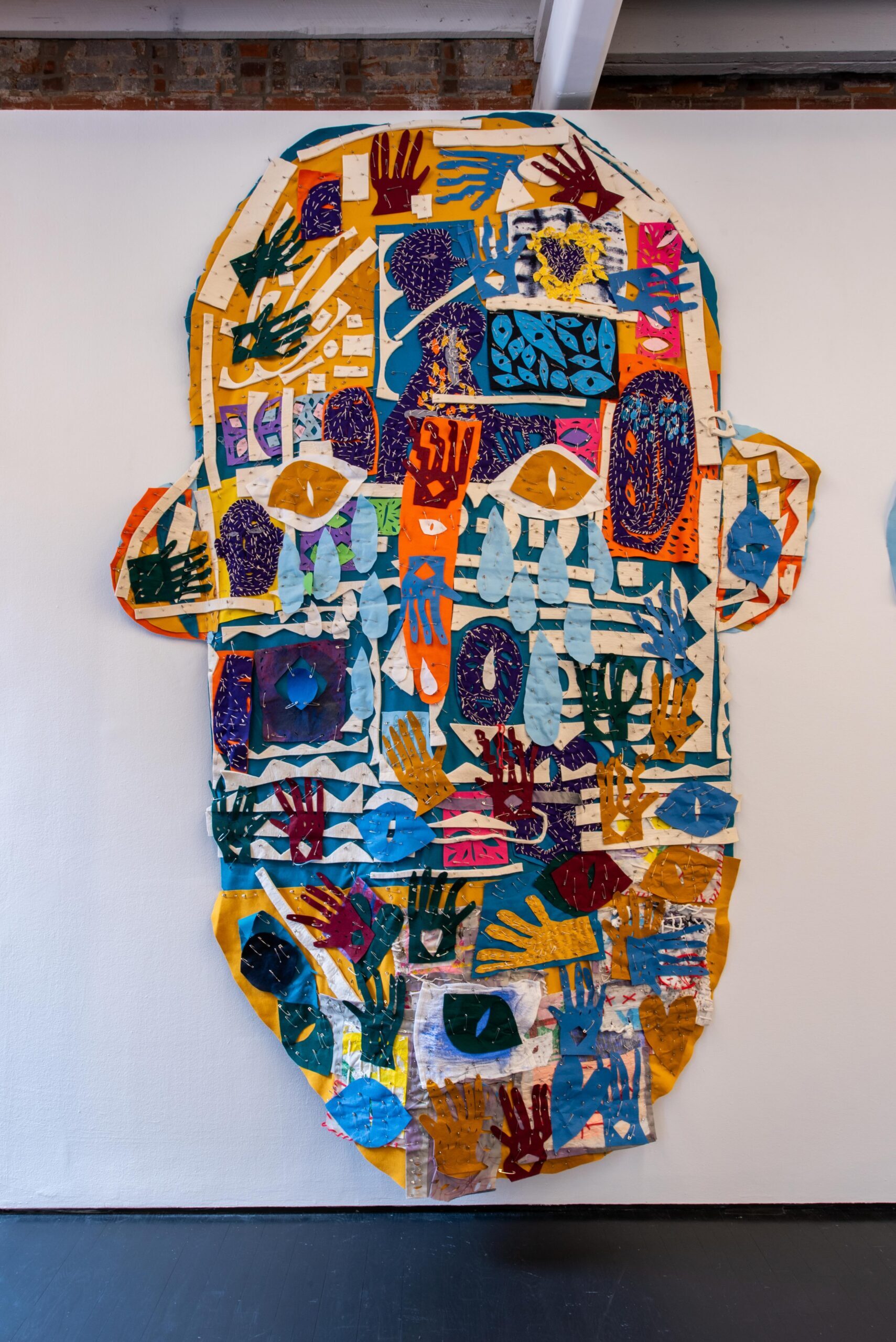
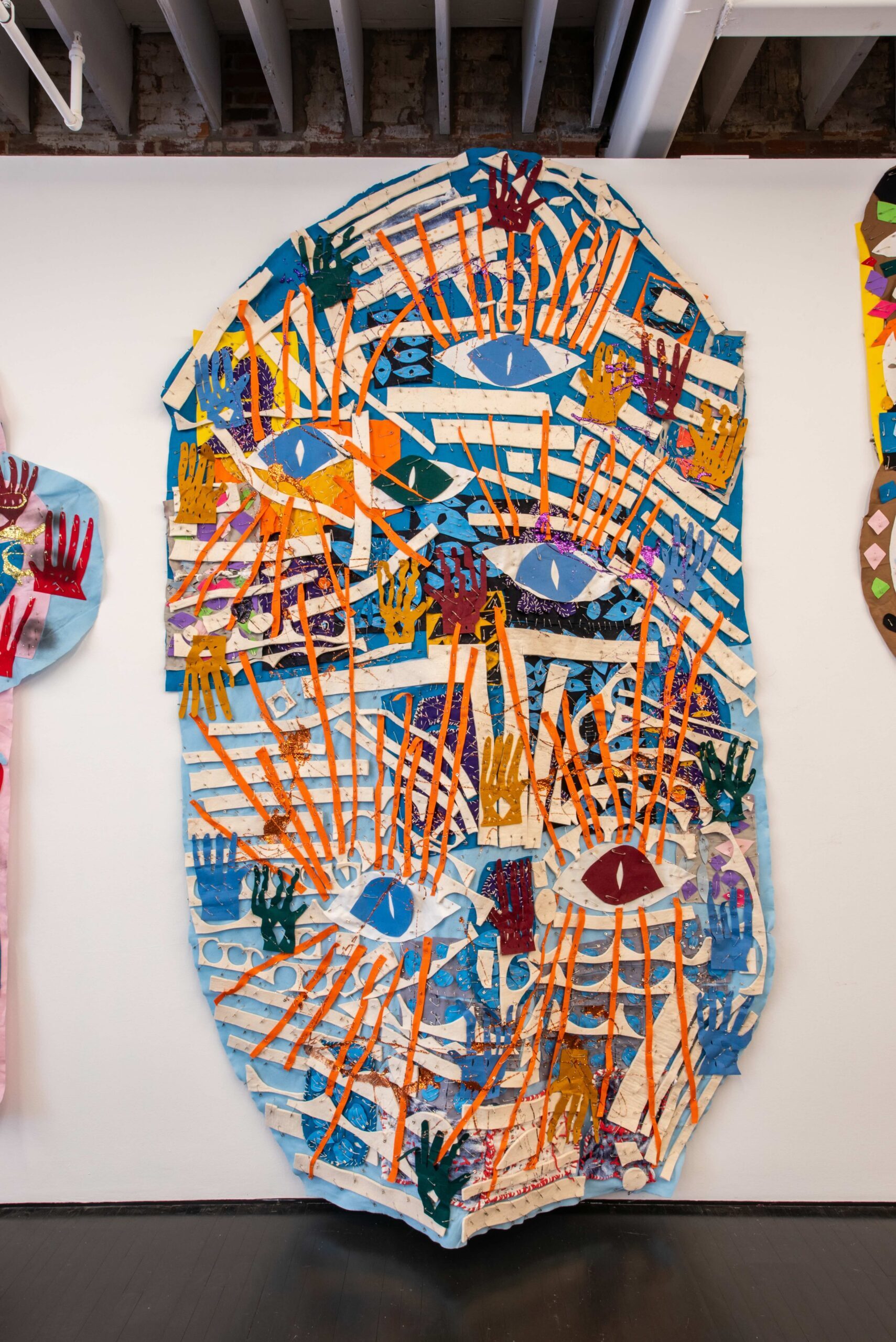
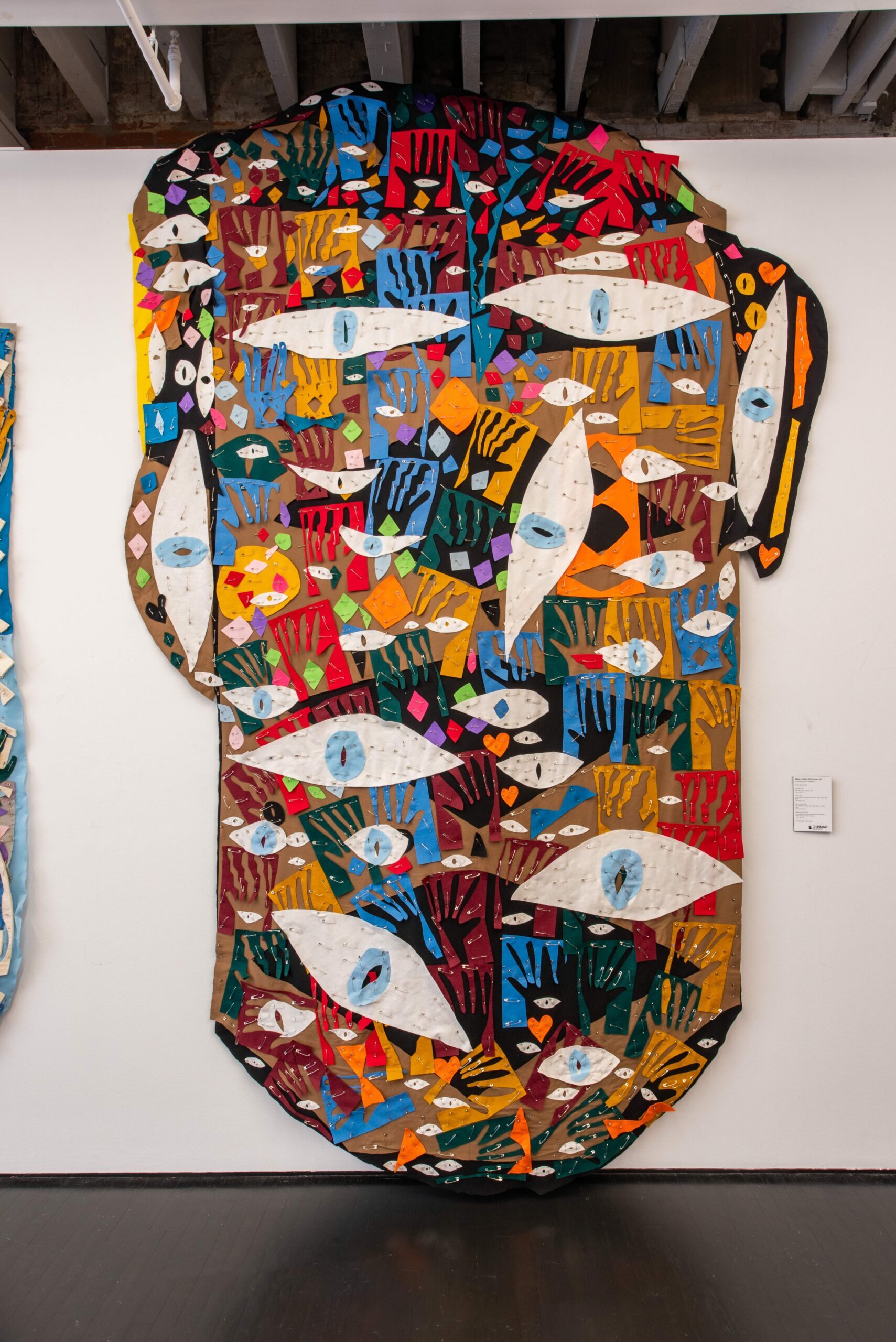
Whether it’s felt or ceramic or assemblage, O’Brien gravitates towards “materials that are more accessible so that the audience has an easier relationship to them,” he says. “You could take something very cheap and make something beautiful out of it. It doesn’t have to be only made out of expensive oil paint or art materials. Art materials are the first gatekeepers of the art world.” The works at the KMAC, for example, began during the pandemic, when O’Brien could only access materials he already owned. He begins his larger, multimedia pieces with a sketch, but he also utilizes somatic grounding exercises to let the “play” happen. “I’m interested in this [idea] of the body being smarter than the mind,” he says, and tries to let his intuition guide the artistic process. O’Brien isn’t concerned with whether a viewer understands the works—it’s all about emotional resonance. “What I tell people is it’s whatever you want to experience. If you have a reaction, if you don’t, that’s enough,” he says. “Art’s just meant for you to stop and not be in your mind. It doesn’t mean you have to understand. Just asking questions is enough.”