
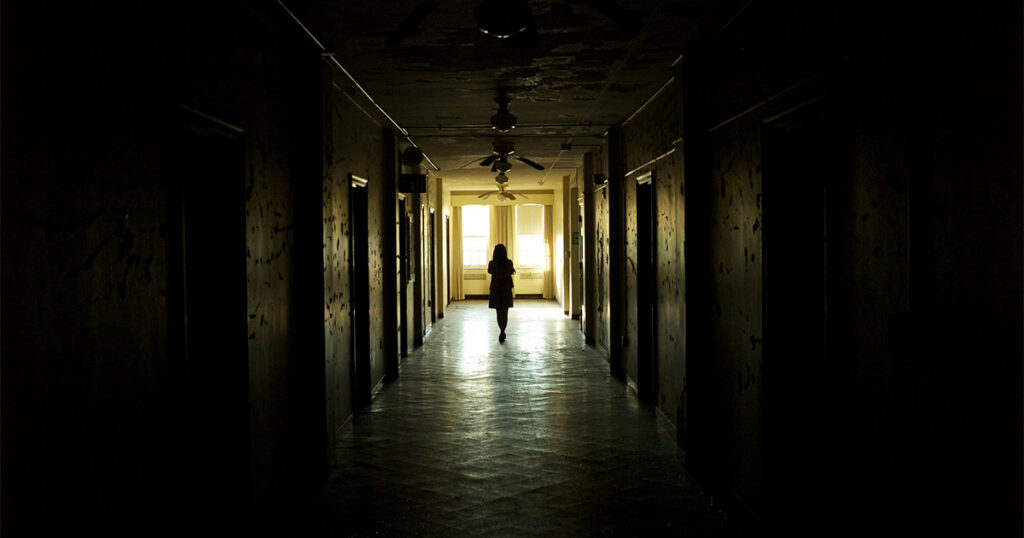
The dreams began in the last weeks of December 1999, soon after my husband, Peter, died at the age of 49. The plotlines were always similar. I would be working in the kitchen, tidying up the apartment, or staring at my computer screen when the front door clicked and Peter would be home, not dead at all, but alive and whole. In these visitations, he was my dream husband, my ghost husband—but never was he my dead husband. Was seeing him this way, even in a dream, the fulfillment of an unconscious wish or the denial of reality? Only gradually was I able to discern the answer.
The first few times, Peter’s phantom presence would sweep me away by sweeping away grief itself. He would greet me as he always did, in a manner that my dream self considered perfectly ordinary. Rather than jump out of my skin, as I tend to do at any sudden interruption, I would remain composed at his approach, reassured and calm as his beard grazed my cheek with loving familiarity.
Clearly, something odd was going on here. Yet in my muddled state of blissful disorientation, all I could say was, “But you’re dead.”
“Am I?” he’d shrug in response. The reports of his death had been greatly exaggerated, he contended. (He always had favored Mark Twain’s quips.) He only appeared to have disappeared from the land of the living. And now he was back—from the dead, so to speak, even though he never really was dead.
In daylight, my logical, Freud-savvy mind would attempt to interpret his words. Why was he suggesting that he wasn’t really dead? Was he inhabiting this world or another? Why were his words always the same?
In my dreams, of course, reason did not prevail. At least not at first. All I knew was that his presence was palpable and that in his ghostly embrace, he was with me—and I with him—still. When the alarm clock rang, I’d find myself alone in my bed, looking forward to nightfall, when the next visitation would comfort me.
Part of this comfort derived from the fact that my dreamscape had brought Peter not only back to life but also to health. Peter had suffered from both cancer and chronic illness, and during his final, devastating weeks in the hospital, his pale skin had turned the sickly yellow-green of a Van Gogh portrait. One morning, toward the end, I was shocked to see his cheeks and chin for the first time in decades, no beard or mustache, only splotched razor nicks. It turned out that the nurses had given him a shave in the aftermath of his coughing up a geyser of blood all over himself.
How reassuring it was, then, to see him in my dreams sporting once more his neatly trimmed pepper-and-salt beard. How distinguished and dapper he looked in the handsomely tailored business suit he’d barely had a chance to wear before his final hospitalization. And how happily I glowed as I took all this in.
By the end of his life, Peter had also become so weakened that he could barely talk. But at night, our repartee flowed as of old, our conversations taking on the familiar patterns of private jokes, shared enthusiasms, gossip, current events. Yet—increasingly, perhaps unavoidably—as time went on, the painful questions of daylight kept seeping through. Where had he gone? Was he back for good—or was this just a ghostly fling?
Login to view the full article
Need to register?
Already a subscriber through The American Scholar?
Are you a Phi Beta Kappa sustaining member?
Register here
Want to subscribe?
Print subscribers get access to our entire website Subscribe here
You can also just subscribe to our website for $9.99. Subscribe here

true