
On the Trail with an Arkansas Traveler
Charles Portis looked past our national mythology to portray the real America
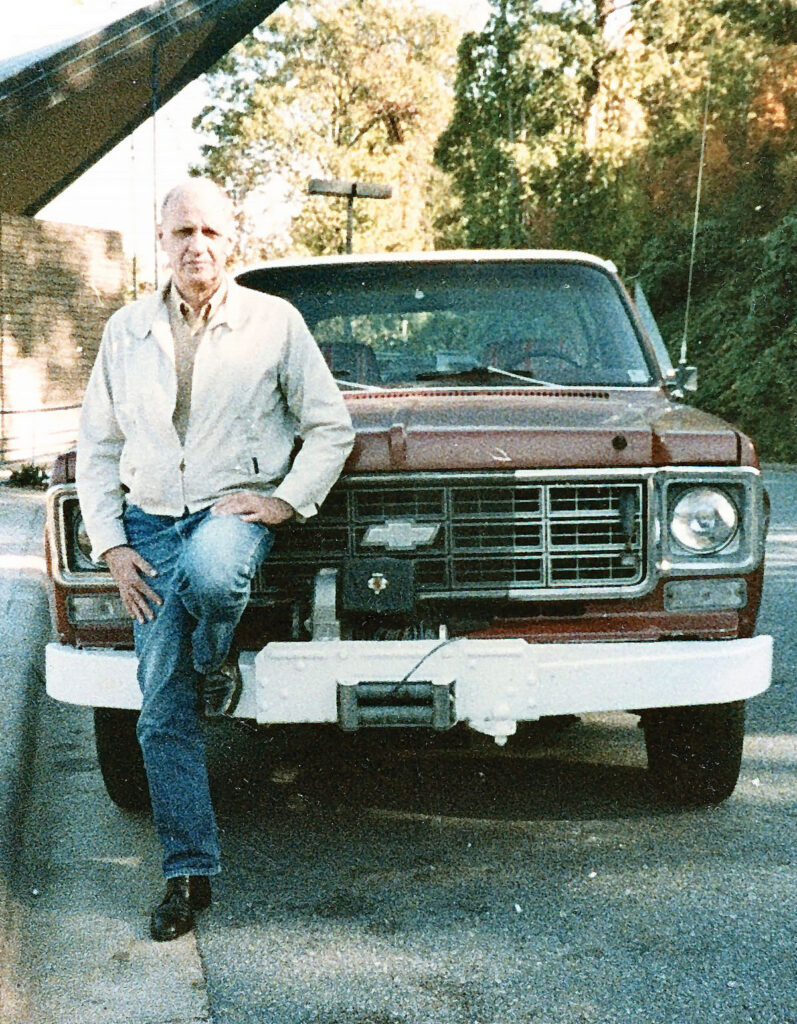
That will-o’-the-wisp, the great American novel, at least in the modern period, almost inevitably features an automobile. The fatal plot twist of The Great Gatsby is triggered by Gatsby’s car hitting and killing Tom Buchanan’s mistress on Long Island, with Buchanan’s wife, Daisy, at the wheel. Jack Kerouac’s On the Road narrates long car trips across the continent, during which its slightly fictionalized author rides shotgun while his friend Neal Cassady is in the driver’s seat. Kerouac himself couldn’t drive. And can you picture F. Scott Fitzgerald changing a tire? Somehow we expect a member of the literati to be an English-major type and not to know about things like carburetors and head gaskets. But when it comes to the American novelist and humorist Charles Portis, the situation is different. Portis, whom the critic Ron Rosenbaum called “our least-known great novelist,” died in 2020 and has now had his work collected in a Library of America volume. He was also as much at home under the hood of a car as he was with character and plot.
Portis was a newspaperman by trade, starting off at the Arkansas Gazette, moving to the Memphis Commercial Appeal, and becoming, in the early 1960s, part of the legendary stable of feature journalists (Tom Wolfe, Hunter S. Thompson, Jimmy Breslin) at the New York Herald Tribune, before going on to head the Herald Tribune’s London bureau. In his reporting on the early days of the civil rights movement—reports that are classics of understatement—Portis uses references to cars as a tongue-in-cheek way of summing up dubious characters. At the end of a Ku Klux Klan rally in Birmingham, he writes, “Everyone drifted away and the grand dragon of Mississippi disappeared grandly into the Southern night, his car engine hitting on about three cylinders.”
“An Auto Odyssey Through Darkest Baja,” published in the Home magazine of the Los Angeles Times in 1967, is an automotive adventure that begins with Portis’s search for just the right vehicle for the trip, which he finds on a used-car lot in Santa Monica: “It was a rat-colored 1952 half-ton Studebaker pickup. Just the thing. It had character and looked eager to please.” Because the pickup sports a diamond-shaped ornament on its tailgate, Portis and his companion Andy decide to call it, “in our humorous way,” “the Diamondback Rattler.” Rumbling along more than 1,000 miles of rutted, sandy, head-rattling Baja California roads, the Studebaker truck becomes as much a character as Portis and Andy. From the opening chapter of Portis’s first novel, Norwood, published in 1966, we learn not only that the eponymous main character is a Korean War veteran who has hopes of becoming a country music star on the Louisiana Hayride, where Hank Williams got his start, but also that he “had bought a 1947 Fleetline Chevrolet with dirt dobber nests in the heater and radio for fifty dollars. He put in some rings and ground the valves and got it in fair running shape.”
The first couple of sentences of Portis’s third novel, The Dog of the South, tell us, “My wife Norma had run off with Guy Dupree and I was waiting around for the credit card billings to come in so I could see where they had gone.” Ray Midge is upset that Dupree has absconded with his “good raincoat and a shotgun and perhaps some other articles” and that he was “cruising the deserts of Mexico in my Ford Torino with my wife and my credit cards and his black-tongued dog.” But what really gets Midge’s goat is that in place of the Torino, Dupree has left behind his 1963 Buick Special, “a compact car, a rusty little piece of basic transportation with a V-6 engine.” I used to drive a Buick Special of that vintage myself, so I can sympathize. “That car had 74,000 miles on it and the speedometer cable was broken. There was a hole in the floor on the driver’s side and when I drove over something white the flash between my feet made me jump.”
Portis likes to tell his stories in the voice of first-person narrators. Some of these characters, like Midge, are delightfully full of themselves and comically self-deluded. In The Dog of the South, we get some insight into the conflicts of his marriage from Midge’s obsession with the tape he has made of a lecture by one Dr. Buddy Casey, a history professor at Ole Miss, concerning the Siege of Vicksburg. Portis, like some of his characters, came from one of the last generations of southern men to have real knowledge of the Civil War. But few men carried their interest in military history to such extremes as Midge:
I liked to play [the tape] in the morning while I was shaving. I also played it sometimes in the car when Norma and I went for drives. It was one of those performances—“bravura” is the word for it—that never become stale. Dr. Bud made the thing come alive. With nothing more than his knuckles and the resonating sideboards of his desk he could give you caissons crossing a plank bridge, and with his dentures and inflated cheeks and moist thick lips he could give you a mortar barrage in the distance and rattling anchor chains and lapping water and hissing fuses and neighing horses. … I say I “had” the tape. It disappeared suddenly and Norma denied that she had thrown it away. After making a few inquiries and turning the apartment upside down I let the matter drop. That was my way.
Much less has been written about Portis’s native state than most of the other 10 states of the old Confederacy. When you cross the Mississippi River into Arkansas, you feel you have left the Deep South and entered an in-between region bordering on the Southwest. You start to see people wearing cowboy hats and boots, farms being called ranches, oil beginning to rival cotton as a way of making money. Roy Blount Jr., comparing Portis to another southern-born novelist who was drawn to the West, has commented that the Arkansan “could be Cormac McCarthy if he wanted to, but he’d rather be funny.” Portis was born in a small town just outside El Dorado, Arkansas, a city of some 17,000 inhabitants that struck it rich during the oil boom of the 1920s. A friend of mine hailed from nearby Smackover, a name he explained as being derived from the town’s location “smack over the river” from El Dorado. But Portis was a scholar of history; he contended the name was “an Arkansas rendering of ‘chemin couvert,’ covered path, or road” from the days when this territory belonged to France before the Louisiana Purchase. Who knew?
No other novelist captures the modern American attraction to unsupported fringe beliefs, crackpot schemes, and cults and renders it with such mordant glee as Portis. One of my favorite purveyors of this sort of hogwash is Dr. Reo Symes, owner of the broken-down school bus from which Portis’s third novel takes its title: “ ‘The Dog of the South’ … was painted in black on one side, but not by a sign painter with a straight-edge and a steady hand. The big childish letters sprawled at different angles and dribbled at the bottom.” Symes is a man with a dubious past: “He said he had had very little trouble with the law in recent years, although he had been arrested twice in California: once for disturbing divine service, and again for impersonating a naval officer.” Symes’s mother owns some property in Louisiana, and he has some ideas about how to develop it:
How about a theme park? Jefferson Davis Land. It’s not far from the old Davis plantation. Listen to this. I would dress up like Davis in a frock coat and greet the tourists as they stepped off the ferry. I would glower at them like old Davis with his cloudy eye and the children would cry and clutch their mothers’ hands.
But real estate development is not Symes’s only area of interest. He also has ideas about literature. As they drive into Mexico together in the Buick Special, Midge describes his interest in Civil War history to Symes. “I have more than four hundred volumes of military history in my apartment,” he says. “All told, I have sixty-six lineal feet of books.”
“All right, now listen to me,” says Symes. “Throw that trash out the window. Every bit of it.” He pulls a little yellow book out of his bag. “Throw all that dead stuff out the window and put this on your shelf. Put it by your bed.”
The book is With Wings as Eagles, a manual for salesmen by one John Selmer Dix, M.A. “Dr. Symes turned through the pages. ‘Dix wrote this book forty years ago and it’s still just as fresh as the morning dew. Well, why shouldn’t it be? The truth never dies.’ ” When Midge mentions that Shakespeare is reputed to be the greatest writer who ever lived, Symes replies, “Dix puts William Shakespeare in the shithouse.”
Before turning his comic genius to characters like Symes and to a New Age cult called Gnomonism, the subject of his fourth novel, Masters of Atlantis, Portis published his masterpiece, True Grit (1968), the book most people know him for, and with good reason. Set largely in the 1870s, the novel contains nothing automotive—its action occurs back in the day when horsepower was literal. True Grit’s main character and narrator is young Mattie Ross, whose father has been murdered by one of his hired hands. Mattie is nothing if not precocious: Even though she is only 14, she has a head for numbers and keeps the books for her father’s prosperous cotton farm. The self-assurance of her voice establishes her, in the book’s opening lines, as someone who is going to hold our attention:
People do not give it credence that a fourteen-year-old girl could leave home and go off in the wintertime to avenge her father’s blood but it did not seem so strange then. … I was just fourteen years of age when a coward going by the name of Tom Chaney shot my father down in Fort Smith, Arkansas.
“I know many fine people live in Fort Smith,” she continues, “and they have one of the nation’s most modern waterworks but it does not look like it belongs in Arkansas to me.” Her narrative is peppered with citations from scripture and old-fashioned expressions one seldom hears anymore. In 1959 Portis published a charming feature called “Remember?” in the Arkansas Gazette, celebrating the many regionalisms of southern speech that even back then were going out of style: adjectives like “tacky,” “much obliged” as a way of saying thank you, and that curious locution, “right smart,” as in, “You can catch a right smart of catfish in that lake if you have the right bait.” He also invokes the kind of prayers offered up on social occasions like church picnics, or “dinner on the grounds,” which used to be a common feature of life in the rural South. “There were Presbyterians, Methodists and a sprinkling of Baptists at these get-togethers we attended,” Portis writes, “and when it came time to eat, the honor of returning thanks usually fell to the windiest old man there.”
Young Mattie herself is a devout Presbyterian with high standards of personal behavior, but when it comes to choosing a marshal to journey over into Indian Territory and hunt down her father’s killer, Christian principles and social niceties play no role whatsoever in her choice among the several men recommended by the local sheriff. “The meanest one is Rooster Cogburn,” the sheriff says. “He is a pitiless man, double-tough, and fear don’t enter into his thinking. He loves to pull a cork.”
Unhesitatingly, Mattie asks the sheriff, “Where can I find this Rooster?”
The partnership between these two makes for one of the great stories in American fiction. A self-confident adolescent who is just as comfortable bargaining for a horse or discussing the market price of cotton as quoting scripture teams up with an over-the-hill marshal whose past is just as iffy as his current reputation. In the late war, he served with two of the most notorious guerrilla chieftains on the southern side. As Colonel Stonehill, the livery stable owner, tells Mattie, “Report has it that he rode by the light of the moon with Quantrill and Bloody Bill Anderson. I would not trust him too much.” William Clarke Quantrill was among Arkansas’s most notorious figures, his gang launching the criminal careers of Frank and Jesse James, teenagers during the Civil War. Quantrill’s last words to a man he had shot five times and left for dead: “Tell old God that the last man you saw on earth was Quantrill.”
Rooster Cogburn was portrayed by John Wayne in the 1969 Hal Wallis production and by Jeff Bridges in the 2010 Coen Brothers film. John Wayne, of course, always plays John Wayne; Bridges comes a little closer to portraying Cogburn’s meanness and lack of sentimentality. The supporting cast assembled by the Coen brothers is choice—Dakin Matthews, for example, plays Colonel Stonehill to comic perfection. Fortunate not only in having been turned into two memorable movies, True Grit has also been fortunate in having Donna Tartt, the Mississippi novelist, as an advocate. She narrates the audiobook and becomes Mattie. It’s the perfect thing to listen to on a long western road trip. In her introduction to the Bloomsbury edition of the novel, Tartt nicely sums up Cogburn as he appears in the book and in the movie:
The Rooster of the novel is somewhat younger, in his late forties: a fat, one-eyed character with walrus mustaches, unwashed, malarial, drunk much of the time. … Mattie runs Rooster to ground in his squalid rented room at the back of a Chinese grocery store (“Men will live like billy goats if they are let alone,” she remarks, disapprovingly) and he’s happy enough to take Mattie’s money to ride out after her father’s killer.
The duo of Mattie and Rooster quickly becomes a trio when Rooster agrees to let a vainglorious Texas Ranger named LaBoeuf (pronounced La Beef), who is also on Chaney’s trail for a murder he committed in the Lone Star State, join the hunt. “Get crossways of me, LaBoeuf,” Rooster tells the ranger, “and you will think a thousand of brick has fell on you. You will wisht you had been at the Alamo with Travis.” LaBoeuf doesn’t want Mattie going along with them into the Indian Nation: “Run along home, little britches,” he derides her, “your mama wants you.” But Mattie is having none of it: “ ‘Run home yourself,’ said I. ‘Nobody asked you to come up here wearing your big spurs.’ ”
A crucial moment in the story occurs when, after the girl has swum her pony, Little Blackie, across a raging river swollen with winter rain to catch up with Cogburn and the ranger, LaBoeuf pulls Mattie off Little Blackie, takes her over his knee, and starts whipping her with a switch. Bursting out in tears of humiliation and rage, Mattie says to Rooster, “ ‘Are you going to let him do this?’ He dropped his cigarette to the ground and said, ‘No, I don’t believe I will. Put your switch away, LaBoeuf. She has got the best of us.’ ” When the ranger refuses to stop, Cogburn “pulled his cedar-handled revolver and cocked it with his thumb and threw down on LaBoeuf. He said, ‘It will be the biggest mistake you ever made, you Texas brush-popper.’ ”
Tartt makes the point that True Grit “begins where chivalry meets the frontier—where the old Confederacy starts to merge and shade away into the Wild West.” For all his slovenliness, shady background, and questionable methods, Rooster Cogburn, if not what Mattie or anyone else would call a gentleman, is certainly a man in whom chivalry has not quite died.
Every country has its own myths of origin and national character. We don’t expect our poets and fiction writers, our songwriters and moviemakers simply to tell stories, as vital as narratives are to us. We look to them to establish myths of national identity and create exemplars of these myths, as Whitman does when he sings of the open road in Song of Myself; to ratify and expand those myths, as Kerouac does in On the Road; to challenge and question myths like the idea of the self-made man, as Fitzgerald does in The Great Gatsby. You’d search far and wide before you found a better yarn than the adventures of Mattie Ross and Rooster Cogburn, in which, as Mattie puts it, “I avenged Frank Ross’s blood over in the Choctaw Nation when snow was on the ground.” But storytelling is far from all that Portis is up to. After fairly demolishing any notion of chivalry that readers of an earlier generation might have associated with the Confederacy and undercutting Rooster’s credentials as a Wild West hero, the overweight, hard-drinking, bounty-hunting marshal emerges as a kind of chivalric hero after all—not through any mythic identity, but simply because of who he shows himself to be when the chips are down: a man with true grit.
Portis is one of our great and quintessentially American writers because, like Hemingway, he never abandoned his journalistic sensibilities. His ability to see things as they are is bracing. There is something of the investigative reporter’s determination to discover the truth in the sure-handedness with which Portis gleefully ridicules the gimcrack “secret brotherhood” of Gnomonism in Masters of Atlantis, and how he takes down the grandiose delusions of characters like Symes in The Dog of the South. It’s as if Portis can never quite get over the capacity we have for self-delusion. Americans’ readiness to believe something like Q-Anon wouldn’t have surprised him in the slightest. It’s no accident that Jimmy Burns, the narrator and protagonist of Portis’s last novel, Gringos, is not some mythical road warrior like Kerouac’s Dean Moriarty but a shade-tree mechanic scraping out a living in Mexico. In Portis’s treatment of the West, there’s some truth in Roy Blount Jr.’s statement, quoted earlier, that the author “could be Cormac McCarthy if he wanted to, but he’d rather be funny.” I would amend that judgment slightly and say that he’d not only rather be funny, he’d also rather base his stories on actuality than follow the siren songs of myth. A humorist by temperament, he knew instinctively that, as Charlie Chaplin knew in making The Great Dictator and as Saturday Night Live knows in lampooning our current president, laughter is a powerful weapon in dealing with the folly of those who think they have all the answers.