
The Bread Loaf Diaries
A novelist’s record of many years spent at the famed summer conference reveals the joys to be found in the company of fellow writers and
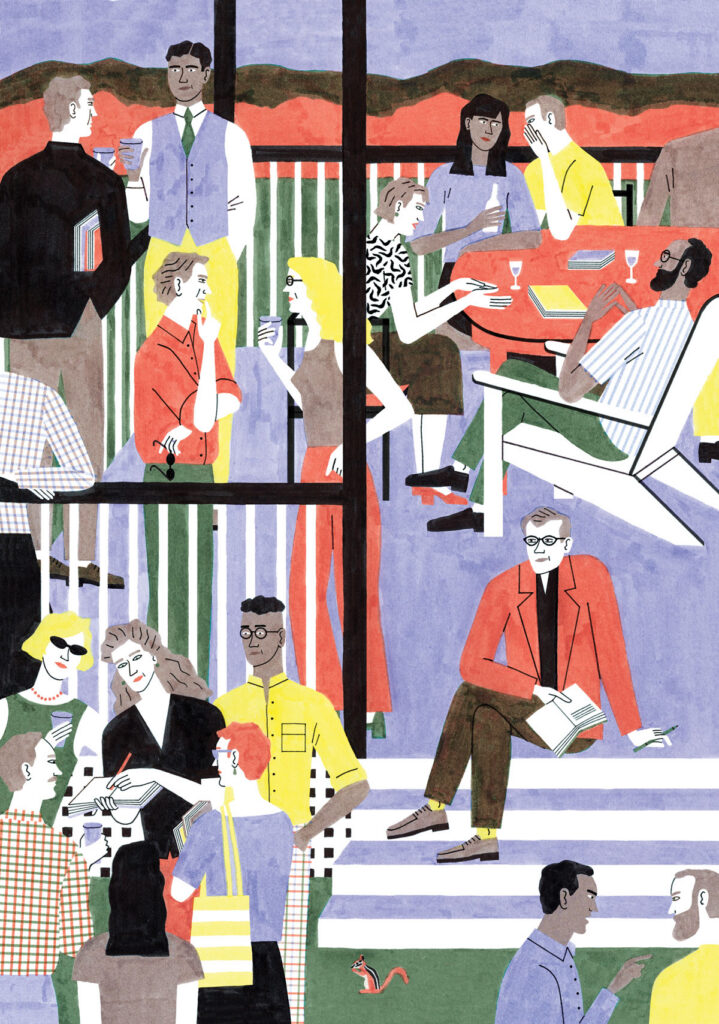
The first Bread Loaf Writers’ Conference was held in Ripton, Vermont, under the auspices of Middlebury College and with the encouragement of Robert Frost, 100 years ago this August. I taught fiction writing at the conference during 11 summers between 1996 and 2016, the era when the poet Michael Collier was director.
I was 44 when I first arrived “on the mountain,” as conferees say, and I always took along my diary, making a record of Bread Loaf’s frantic routine of lectures, workshops, student conferences, readings, cocktail parties, and dancing.
The writer friends who most often appear in these entries are the novelists Andrea Barrett, Richard Bausch, Charles Baxter, Lynn Freed, and Margot Livesey; the poets Edward Hirsch, Ellen Bryant Voigt, and Michael Collier; and the memoirist Patricia Hampl.
The “Fellows” were writers who had published their first books and now assisted the faculty; the “waiters” were the winners of highly competitive work-scholarships, an elite corps that participated in all the activities listed above, while also serving meals to the conference’s participants in the dining room of the Bread Loaf Inn.
1996
August 13: Had dinner with Andrea [Barrett], Michael Collier (the very sweet, toothy new director, who’s been brought in to dismantle some of the old comical hierarchies here), and Margot Livesey, an old friend of Andrea’s, very brisk, Scotch, chummy.
August 17: I’m struck by how much better behaved writers are to one another up here. In New York all the talk would be about contracts, reviews, who’s up, who’s down, but enough about you, let’s talk about me. Here everything is sort of loose and silly, with even a word or two about writing (as opposed to the Writing Life) thrown in.
August 18: … Lunch was a picnic at Frost’s old summer house on the way toward Ripton. I walked home from that, stopping in the little graveyard on the southern side of the road. One marker for two young men, brothers, Winfield and Perley Smith, not twins but each about twenty. Both died in 1894, Winfield in January (“Killed by an overturning log wagon” is the explanation carved into the modest obelisk) and Perley on July 4: “Killed by the explosion of a cannon.” At an Independence Day celebration? Could it be anything else? Well, here is God’s plenty, a whole other novel waiting for me if I ever need one.
Login to view the full article
Need to register?
Already a subscriber through The American Scholar?
Are you a Phi Beta Kappa sustaining member?
Register here
Want to subscribe?
Print subscribers get access to our entire website Subscribe here
You can also just subscribe to our website for $9.99. Subscribe here

true